How Europe Can Generate More High-Growth Companies
ZEW Lunch Debate in Brussels
17.06.2026
ZEW Lunch Debate in Brussels on EU Strategy for Start-ups and Scale-ups
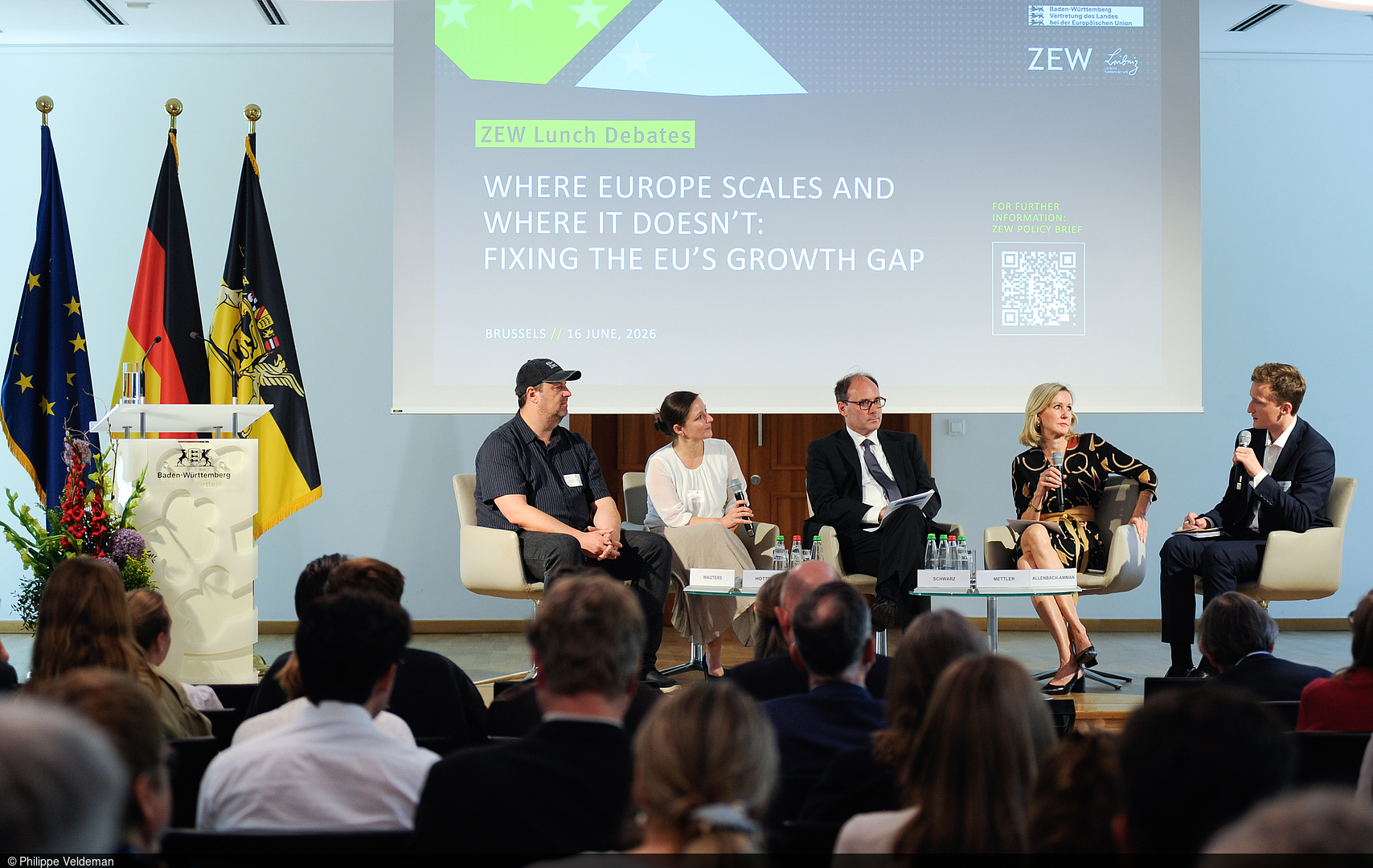
The ZEW Lunch Debate, which was held on 16 June at the Representation of the State of Baden-Württemberg to the European Union in Brussels, focused on the question of how Europe can generate more high-growth companies and hold its own in global competition. The event was entitled “Supporting Firm Growth in Europe: Evidence and Policy Options for the EU Start-up and Scale-up Agenda”. ZEW economist Professor Hanna Hottenrott chaired the panel, which discussed barriers to growth, differences between European ecosystems and specific economic policy options. The discussion was moderated by János Allenbach-Ammann, Senior Correspondent at The Capitol Forum. The event was attended by around 90 guests and was made possible with the kind support of the ZEW Sponsors’ Association.
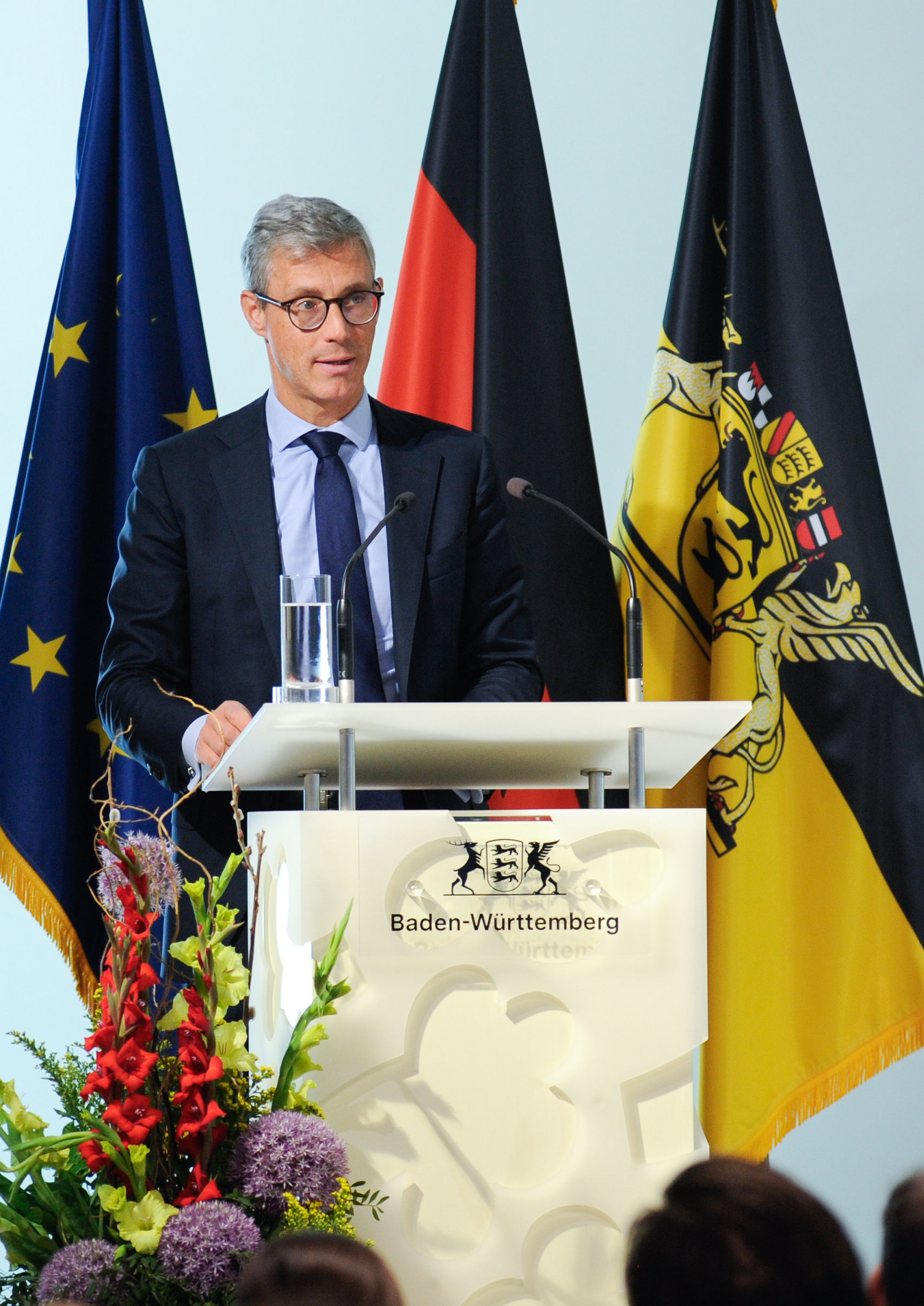





With the current debate on a European start-up and scale-up strategy in mind, Hottenrott, who is head of ZEW’s “Economics of Innovation and Industrial Dynamics” Research Unit, said: “There is a lack not only of capital, but also of an integrated market that enables scaling. National borders still hold back growth in Europe.”
She also emphasised the importance of evidence-based policymaking: “If we want to create the right business conditions, we need to understand, based on empirical findings, exactly where the biggest bottlenecks exist for start-ups and scale-ups. These do, in fact, vary considerably from country to country.”
Barriers to growth in the European single market
In her keynote speech, Hottenrott explained that the EU’s funding policy plays a central role in the development of start-ups and, in particular, scale-ups. Targeted funding instruments such as grants, venture capital programmes and innovation policy measures could provide crucial support to young companies during their growth phase. She also pointed out that the EU’s bureaucratic hurdles were a persistent challenge. Overall, Hottenrott advocated a more coordinated and growth-oriented funding strategy to strengthen the competitiveness of European start-ups in the long term.
The key requirement: more private capital and less bureaucracy and regulation
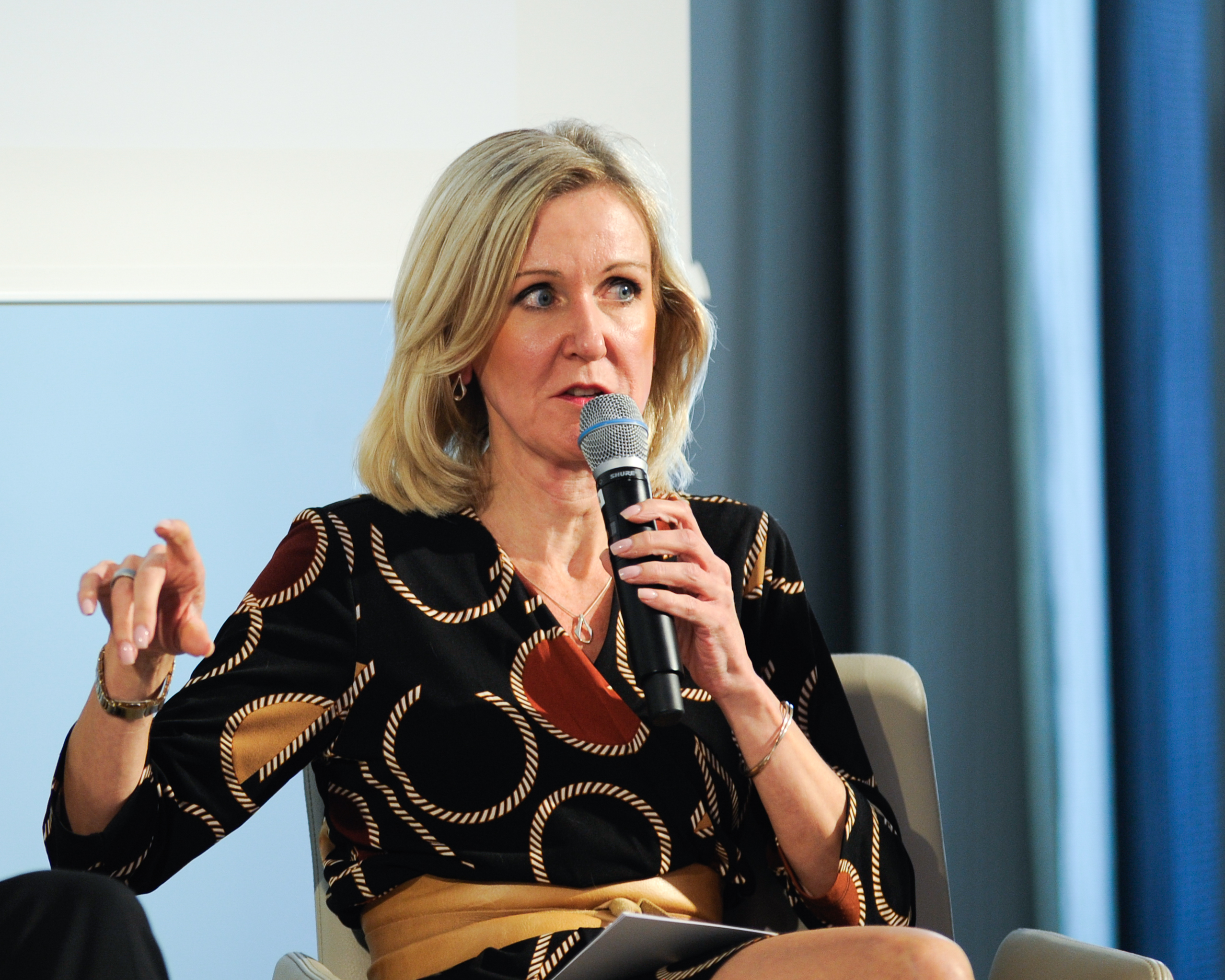
The discussion that followed highlighted that Europe has reached a crucial phase in its innovation policy. Ann Mettler, President of Catalyse Europe, argued that Europe had to make better use of its innovation potential by improving the conditions for scale-ups. Although many countries had a solid start-up base, the transition to the growth phase often failed due to structural hurdles. She underlined that it was crucial for Europe to mobilise more private capital, cut red tape, use public instruments in a more targeted manner and create reliable demand for new technologies.
Andreas Schwarz, Head of Cabinet to the EU Commissioner for Start-ups, Research and Innovation, Ekaterina Zaharieva, addressed the implementation of the European Commission’s policy initiatives. He said that the EU was working intensively to improve the business conditions for start-ups and scale-ups, for example through measures to strengthen the Capital Markets Union and simplify regulatory requirements. The harmonisation of regulations also played a central role in this regard.
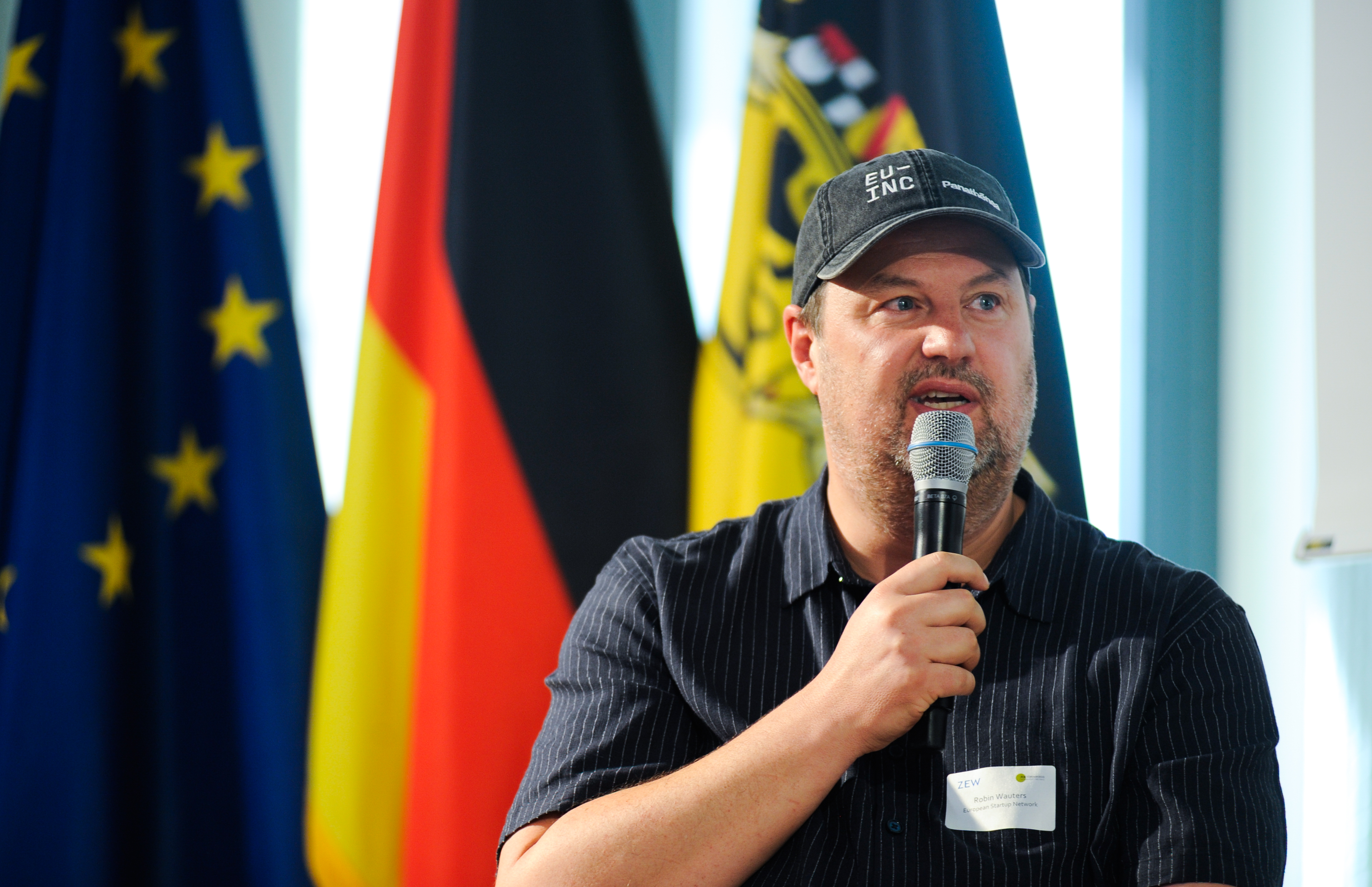
Robin Wauters, COO and Board Member of the European Start-up Network, pointed out that despite its strong research activity, talented people and many innovative start-ups, Europe was as yet often unable to facilitate the long-term scaling of these companies across Europe. He said that the EU’s new start-up and scale-up strategy was an important step forward, but only if it moved beyond mere announcements and actually addressed fragmentation in the single market, reduced bureaucracy and substantially improved access to growth capital and international markets.
There was consensus on the panel that targeted reforms are necessary to promote business growth and reduce market fragmentation. The panellists advocated close interlinking of data-driven research and policymaking in order to successfully advance the European start-up and scale-up agenda.
About the study
To accompany the Lunch Debate, ZEW Mannheim has published a policy brief which particularly examines the transition from young companies to high-growth scale-ups. For further information please refer to the press release.