Pension Commission Presents Final Report
Dates and NewsZEW Economist Tabea Bucher-Koenen Contributes Expertise on Old-Age Provision and Funded Pension Schemes

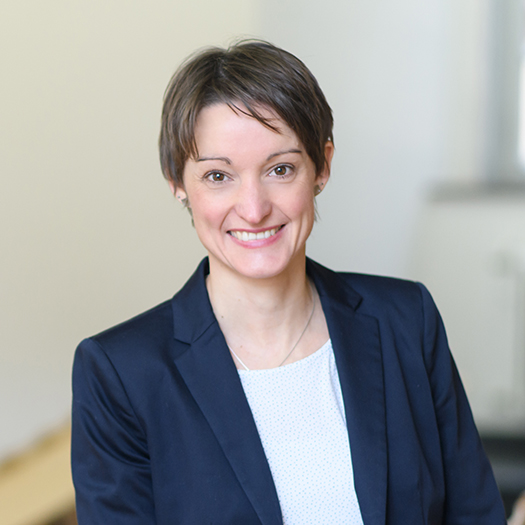
The Pension Insurance Commission today presented its final report to Federal Chancellor Friedrich Merz and Federal Minister of Labour Bärbel Bas in Berlin. As a member of the commission appointed by the German Federal Government, Professor Tabea Bucher-Koenen, head of ZEW’s “Pensions and Sustainable Financial Markets” Research Unit, contributed her academic expertise in the areas of pension provision, household finance and funded pension schemes. The commission developed proposals for a long-term and sustainable reform of pension provision in Germany. The focus was on the sustainable financing of the pension system, intergenerational equity and ensuring adequate retirement incomes.
“The pension system in Germany is facing major challenges. Demographic change is increasing the pressure on the statutory pension insurance system. At the same time, pensions must remain reliable and old-age poverty must be effectively prevented. It was therefore important to the Pension Insurance Commission to develop a viable overall concept that considers statutory, occupational and private pension provision together,” explains Bucher-Koenen. “Our central aim was to stabilise the pension system in the long term. In doing so, we focused on pension levels, contributions and the burden on the federal budget. The proposed measures concern, among other things, working life, the pension coverage of civil servants and the self-employed, the prevention of old-age poverty and the strengthening of funded pension schemes. In doing so, we paid particular attention to distributing the burden fairly across different social groups and avoiding additional one-sided burdens.”
Sustainable Financing Remains a Key Priority
In the coming years, the baby boomer generation will increasingly enter retirement, while the number of younger contributors will decline. At the same time, life expectancy is expected to continue rising. This will significantly shift the ratio of contributors to pension recipients. For pension policy, this means that the statutory pension should remain reliable in the future but must not place a permanent strain on either contributors or public finances. “An isolated debate about individual adjustments does not go far enough. That is why we propose a carefully balanced overall package. We need a long-term structural reform that takes into account both the interests of today’s pensioners and the burdens on current and future generations of workers,” explains Bucher-Koenen.
Strengthening Funded Provision Across All Pillars
Among other things, the commission proposes strengthening the pay-as-you-go system of the statutory pension through a funded pension scheme based on the Swedish model. To this end, two percentage points of contributions should be financed equally by employers and employees and additionally flow into public or private funds. “This will enable us to reverse the current trend and allow pensions to rise significantly above today’s level in the future,” says Bucher-Koenen.
“According to our projections, the so-called standard pensioner could receive an average of additional 150 euros per month after a 20-year savings period in the funded pension scheme, and even more than 770 euros after 45 years. Even in crises such as the last major financial market crisis, the pension level would, in the long term, remain above today’s level.”
Projections for the Funded Pension Scheme
Among other things, ZEW has provided evidence-based input to the discussions in the Pension Insurance Commission through its projections on the capital pension. A summary of the methods and key findings can be found in the ZEW report. (In German)
Register for the Webinar
On 2 July 2026 at 1:00 pm, Tabea Bucher-Koenen will discuss the reform proposals in the #ZEWlive webinar with Constanze Janda, chair of the Pension Insurance Commission and professor at the German University of Administrative Sciences Speyer. Registration is now open.
About the Pension Insurance Commission
The Pension Insurance Commission was established by the Federal Government to develop proposals for a long-term, sustainable reform of the pension system in Germany. It is composed of experts from academia and politics. Professor Tabea Bucher-Koenen is a scientific member of the commission. The commission was tasked with developing reform options that stabilise the statutory pension, take complementary occupational and private pension provision into account and consider the interests of both current and future generations.