Half a Full-Time Job Lost for Each US Soldier Withdrawn
Research
27.05.2026
Study by ZEW and University of Cologne on US Troops Withdrawal After Cold War
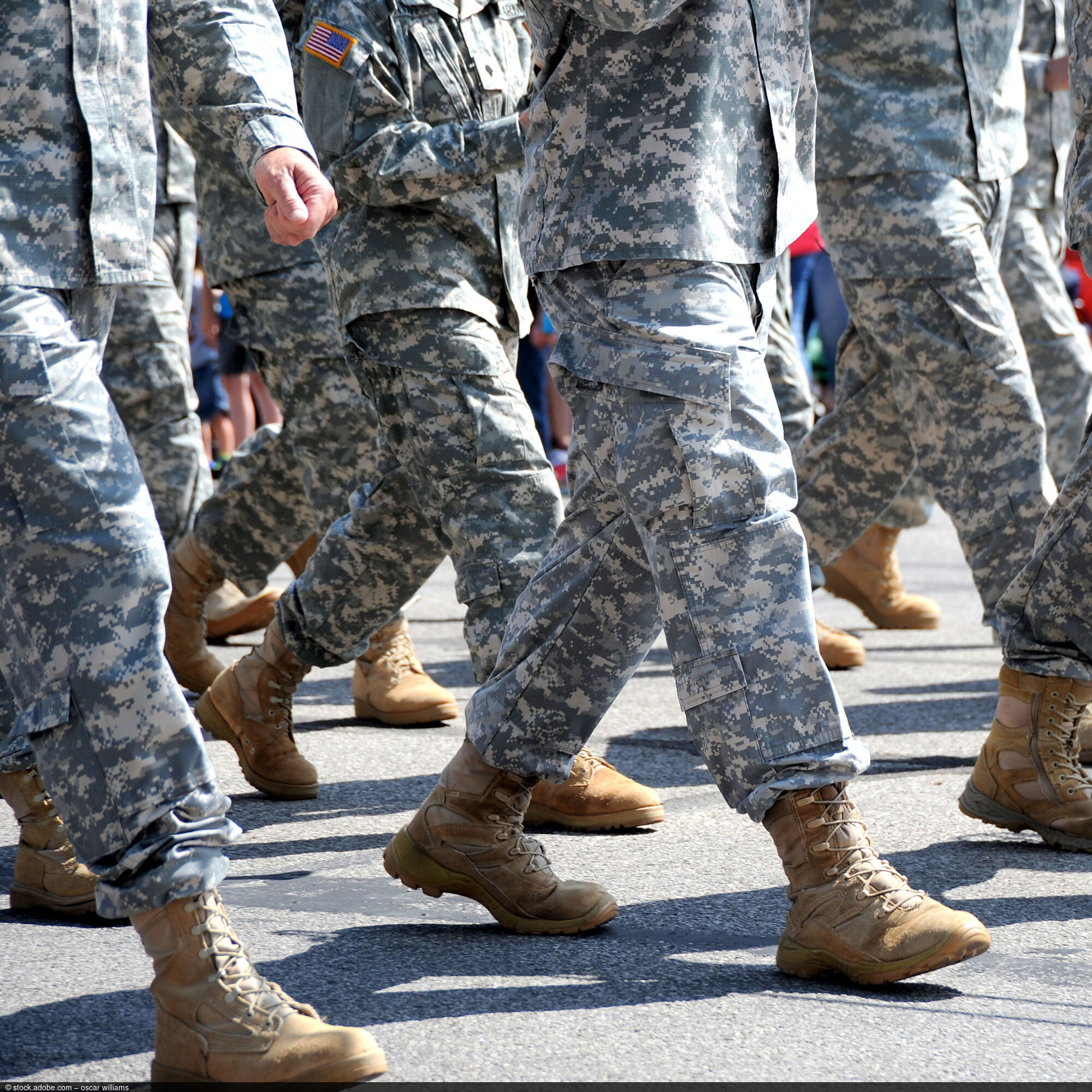
The US has announced that it will reduce its troop numbers in Germany by 5,000 personnel. In the 1990s, following the end of the Cold War, around 200,000 US soldiers were withdrawn from Germany over a period of roughly five years. The drawdown had a negative impact on the regional economy, a joint study by ZEW Mannheim and the University of Cologne shows. For every US soldier withdrawn, half a full-time job was lost in the vicinity of the respective base.
“The move to reduce the number of troops was primarily a security policy decision, but it caused local economic shocks. The effects of the troop withdrawal went far beyond direct layoffs at US military bases: Around 61 per cent of the jobs lost were in regional businesses. The departure of the soldiers and their families led to a decline in consumer spending and thus to significant revenue decreases. Regions with already weaker labour markets were hit hardest by this shock,” says Jakob Schmidhäuser, co-author of the study and researcher in ZEW’s “Inequality and Public Policy” Research Group.
Johannes Kochems, co-author from the ECONtribute Cluster of Excellence and the Faculty of Management, Economics and Social Sciences at the University of Cologne, adds: “The affected locations and their neighbouring municipalities responded to the loss of revenue – around nine per cent of their budgets – with consolidation measures. The municipalities cut their public spending and increased the multipliers for property and business tax. In the long term, the decline in revenue levelled off at three per cent. The presence of the US troops was a significant economic factor for the region, and their withdrawal has had long-lasting, negative effects on public spending in the affected municipalities.”
Long-Lasting Effects
The negative impacts on employment and public finances remain measurable to this day. The consequences were particularly severe for employees who were directly laid off by the US military. Even 15 years later, those who had lost their jobs following a base closure still had lower employment prospects. Their wages, too, were around 9.2 per cent lower in the long term than those of workers in comparable jobs. Women and older workers were particularly hard hit.
About the Study
The researchers combined newly digitised data from the US Department of Defence on military bases with administrative labour market data provided by the Institute for Employment Research (IAB) and municipal financial data from the federal states of Baden-Württemberg, Bavaria, Hesse and Rhineland-Palatinate. On this basis, the authors were able to estimate the local economic effects of the troop withdrawal at the level of municipalities. Following the end of the Cold War, around 200,000 US soldiers – representing some 80 per cent of US troops – were pulled out of Germany within a period of about five years in the 1990s. At the time, the decisions to close bases came largely as a surprise to the affected local communities.