Implement Germany’s High-Tech Agenda Now
Public Events
13.03.2026
#ZEWLive on the 2026 Annual Report of the Expert Commission on Research and Innovation (EFI)
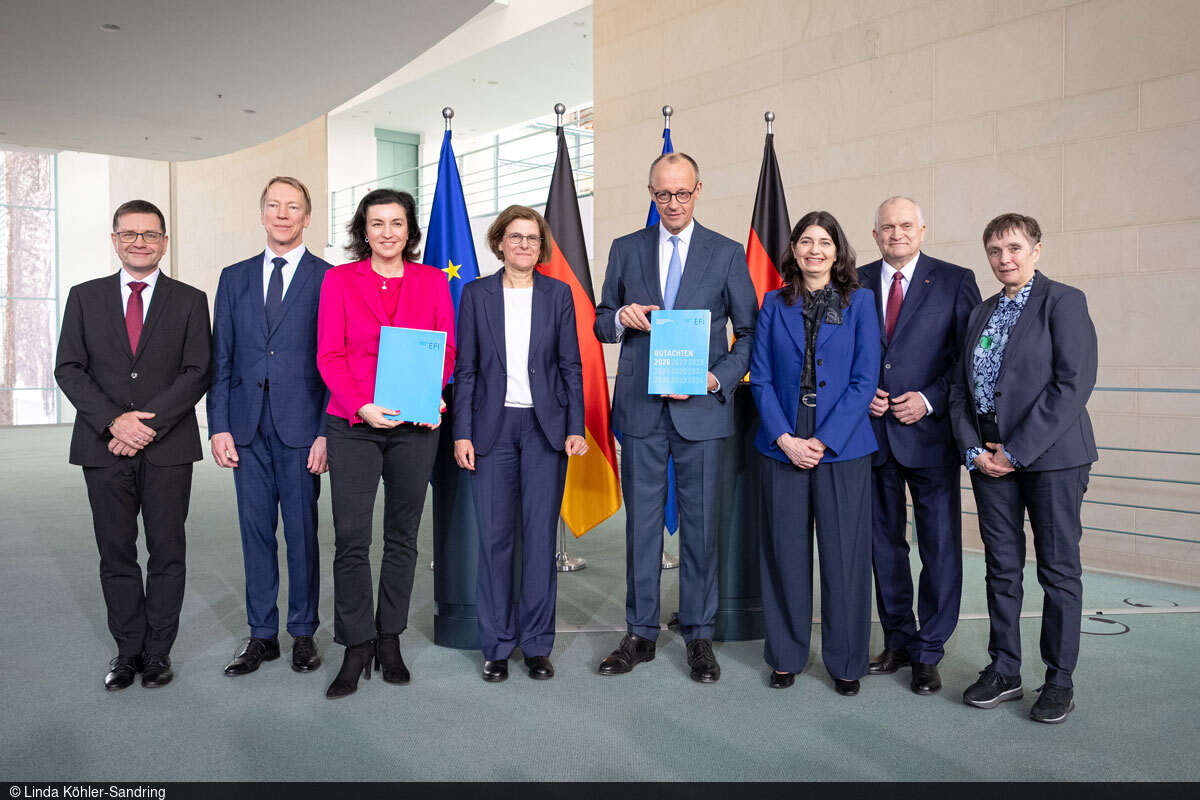
The EFI Commission presents this year’s report to the German government. From left: Guido Bünstorf, Joachim Henkel, Research Minister Dorothee Bär, chair of the EFI Commission Irene Bertschek, German Chancellor Friedrich Merz, deputy chair of the EFI Commission Carolin Häussler, Christoph M. Schmidt and Friederike Welter.
Youtube
Click the button below to reload the content. (I agree to external content being displayed to me. Read more in our privacy policy).
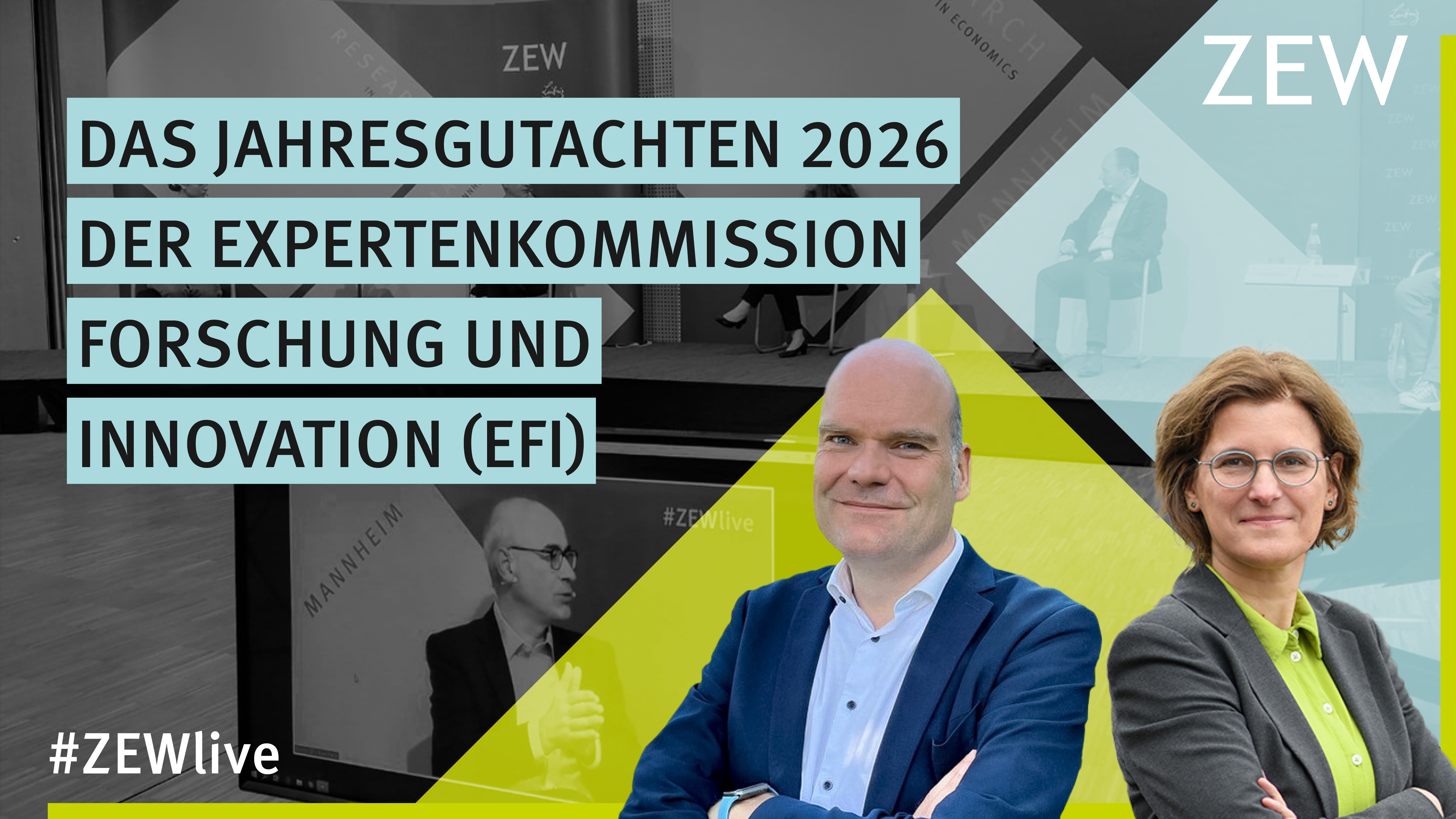
At an event in the #ZEWLive digital series, attended by around 200 people, Professor Irene Bertschek, chair of the German Government’s Commission of Experts for Research and Innovation (EFI) and head of the “Digital Economy” Research Unit at ZEW Mannheim, presented the key findings and recommendations of the EFI’s latest annual report.
Her presentation focused on the High-Tech Agenda for Germany (HTAD) and innovation in small and medium-sized enterprises (SMEs). The commission’s recommendations were discussed further in the subsequent dialogue with science journalist Dr. Jan-Martin Wiarda. A full recording of the event is available to watch here (in German language).
Germany’s High-Tech Agenda
Bertschek advocated that the HTAD agenda should focus on the key technologies of artificial intelligence (AI), quantum technologies, microelectronics, biotechnology and technologies for climate-neutral energy generation and mobility. However, analyses by the EFI point to weaknesses in the development and practical application of key technologies. Bertschek therefore recommended systematically tracking the diffusion of key technologies and actively using the HTAD to mobilise industry and research.
The success of the HTAD did not depend solely on the actions of the Federal Government, Bertschek said. She added that the commitment of the actors in the German innovation system was also crucial. Furthermore, it was important to strengthen societal acceptance and openness towards new technologies.
Innovation in SMEs
As SMEs account for the majority of businesses in Germany, their innovation activity is essential to the country’s innovation landscape. Bertschek explained that, considering characteristics such as company size and industry affiliation, SMEs were more successful than comparable non-SMEs in introducing product or process innovations in the period 2005 to 2023.
However, this innovative capacity was constrained by obstacles such as skills shortages and bureaucratic burdens. Measures were needed to strengthen innovative capacity, promote innovation, reduce bureaucratic burdens and secure skilled labour, Bertschek said.
EFI Report 2026
The Commission of Experts for Research and Innovation (EFI) has been engaged in advising the German government on scientific policy since 2008. Professor Irene Bertschek of ZEW has been a member of the EFI since 2019 and chair of the six-person body since 2025.
In 2026, the expert commission will focus on the following topics:
- Implementation of the High-Tech Agenda Germany
- Security-related Research and Innovation
- European R&I Policy
- A 28th Regime for the European Single Market
In addition, the following core topics will be addressed:
- Innovation in German Mittelstand
- Competition and Innovation in the German Higher Education System
- Development and Application of Artificial Intelligence in Germany and Europe