Professor Hanna Hottenrott Appointed to the Scientific Commission of the German Science and Humanities Council
PersonnelFurther ZEW Researcher Appointed to Prestigious Advisory Board
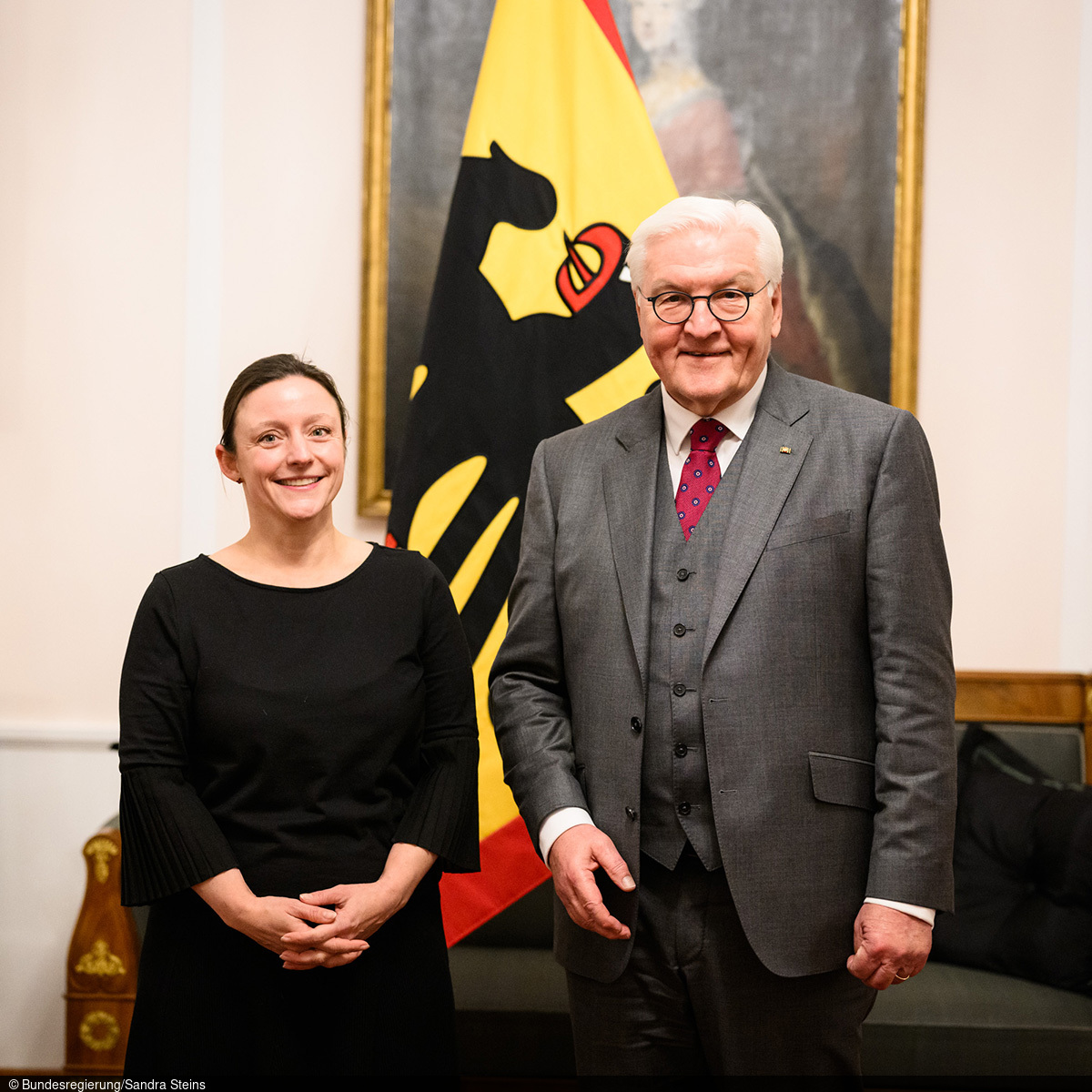
Professor Hanna Hottenrott has been appointed as a member of the German Science and Humanities Council by Federal President Frank-Walter Steinmeier, effective 1 February 2026, for an initial term of three years.
The German Science and Humanities Council is the oldest and most important science policy advisory body in Germany. It advises the federal and state governments on key issues relating to scientific, research-related and higher education development and makes a significant contribution to the further development and international competitiveness of the German science system.
Professor Hanna Hottenrott has headed the “Economics of Innovation and Industrial Dynamics” Research Unit at ZEW – Leibniz Centre for European Economic Research in Mannheim since April 2023. She is also professor of economics of innovation at the Technical University of Munich (TUM). Her academic work focuses on innovation and science economics, the drivers and consequences of technological transformation and the design of innovation and science policy.
“The appointment of Professor Hottenrott to the German Science and Humanities Council is a great recognition of her academic excellence and her proven expertise in innovation and science economics. We are delighted that a leading researcher from ZEW will now contribute her expertise to this key science policy body and we warmly congratulate her,” says ZEW’s President Achim Wambach, PhD.
“Being appointed to the German Science and Humanities Council provides me with the opportunity to actively contribute to shaping the future viability of the German science system. I am delighted and look forward to working with my colleagues,” comments Hanna Hottenrott.
About Hanna Hottenrott
Hottenrott studied economics at the University of Heidelberg and received her doctorate from KU Leuven (Belgium). Her research interests span corporate innovation activities, business start-ups as well as innovation, technology and research policy. She has held a professorship at the TUM School of Management since 2016 and heads the corresponding research unit at ZEW Mannheim. She is a member of the Scientific Advisory Board of the EU's DG Growth and co-speaker for the Cluster of Excellence TransforM.
About the German Science and Humanities Council
The German Science and Humanities Council was founded on 5 September 1957 by the federal and state governments and is considered Germany's central science policy authority. It develops recommendations on the structural and content-related orientation of science, research and higher education and over several decades has contributed to the development of an internationally competitive science system. Outstanding scientists who combine academic excellence with scientific policy expertise are appointed to the council. Together with representatives from public life and politics, the 24 scientific members develop guidelines for research, universities and science policy.