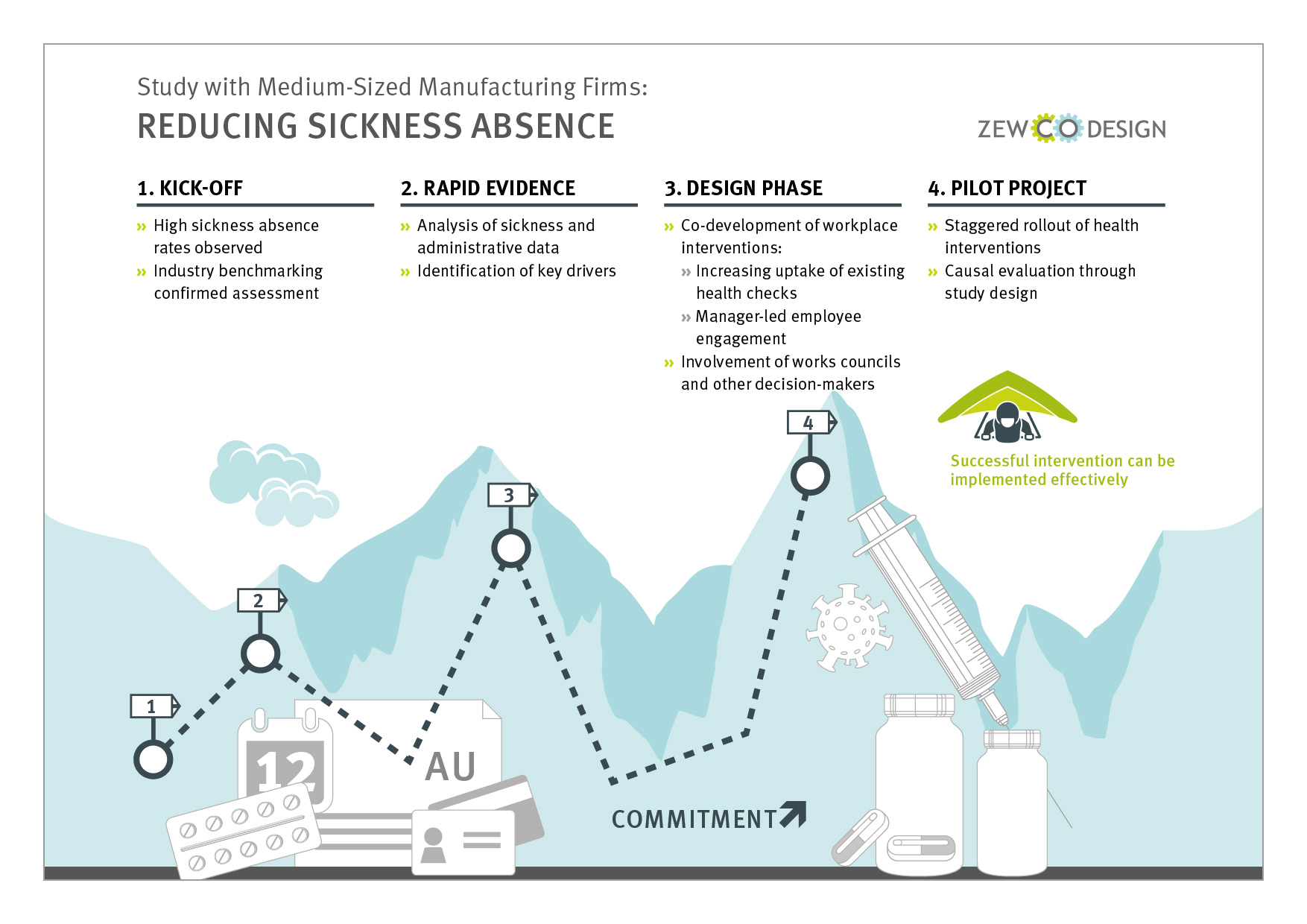
Reducing Employee Absence and Promoting Workplace Health
High Rates of Sickness Absence – What Can Organisations Do to Support Employee Health?

Germany is likely to record one of the highest levels of employee sickness absence worldwide. This trend is particularly concerning, as absenteeism places an additional burden on firms in an already challenging economic environment. It leads to rising labour costs, further amplified by higher social security contributions, while also dampening wage growth for employees, thereby reducing the attractiveness of many jobs.
Moreover, frequent and unpredictable absences impair firms’ competitiveness and are a locational disadvantage. They also present substantial organisational challenges as absenteeism disrupts operations and compromises the fulfillment of customer demand. To compensate for staff shortages, firms often resort to costly alternatives such as temporary agency work or overtime arrangements. Overall, this situation contributes to a further intensification of the shortage of skilled labour.