Rethinking Cohesion Policy: EU Funding Between Competitiveness and Solidarity
Events
10.07.2025
#ZEWlive Webinar on the European Union Budget

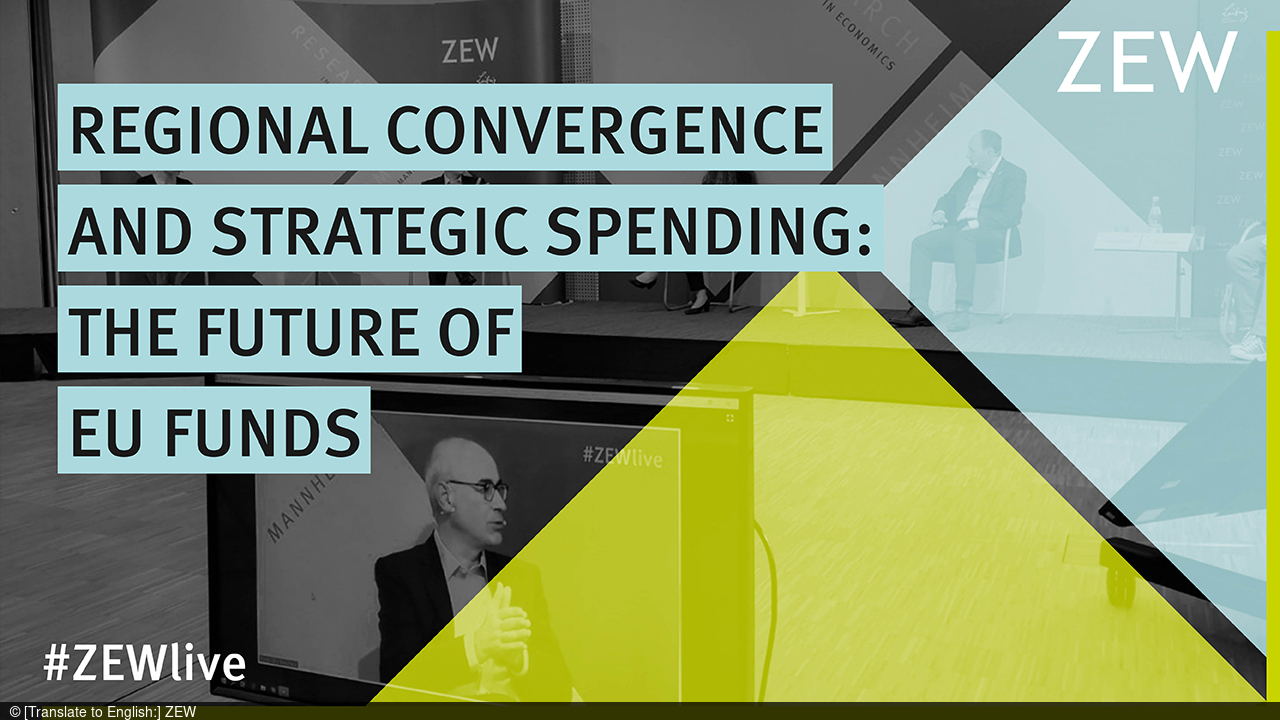
As part of the digital series #ZEWLive, Professor Zareh Asatryan, Deputy Head of ZEW’s Research Unit “Corporate Taxation and Public Finance”, hosted a webinar on the future of the EU budget on 10 July 2025. The challenges facing the future EU budget were discussed by Calin-Ion Chira from the European Court of Auditors and Eulalia Rubio from the Jacques Delors Institute in Paris/CEPS Brussels. More than 130 viewers followed the live debate on structural policy, competitiveness, and new spending priorities in light of global developments, such as defence spending.
Recording of the webinar on YouTube
Youtube
Click the button below to reload the content. (I agree to external content being displayed to me. Read more in our privacy policy).
Asatryan opened the event by noticing that around one third of the EU budget is currently allocated to cohesion policy. Regional imbalances among EU member states are primarily addressed through the funding of public investment programmes. Extensive research into cohesion policy has shown that such measures have a positive impact on the economies of recipient regions, even though there is no consensus on their effects on the EU as a whole.
However, Asatryan noted that this policy is now being scrutinised in light of various European and global challenges. The current proposals for the upcoming long-term EU budget aim to give greater weight to new priorities, such as defence and competitiveness. Institutional reforms are also being considered: For instance, linking funding to national reform plans, following the model of the NextGenEU approach, or making the allocation of funds more flexible.
A clear vision for the EU budget
Chira emphasised that the future EU budget must be flexible enough to enable regions to cope with structural challenges effectively. He argued that the core principles of cohesion policy – such as place-based approaches, the partnership principle and multi-level governance – should be incorporated into the new EU budget architecture as strong, legally binding conditions. According to Chira, this would allow cohesion policy to be further optimised without the need to reinvent the wheel.
Rubio stressed that, in view of major geopolitical tensions, the EU needs to define its spending priorities more clearly when preparing the budget. She advocated for improving the long-term performance of cohesion policy to better compete on the global marketplace. In her view, the EU budget should in future be structured around national plans, in order to align EU funds more directly with national reform processes and enhance their effectiveness.