ZEW Participates in Seventh Poverty and Wealth Report
Dates and News
20.10.2025
Holger Stichnoth and Lukas Riedel Meet with Federal Minister Bärbel Bas
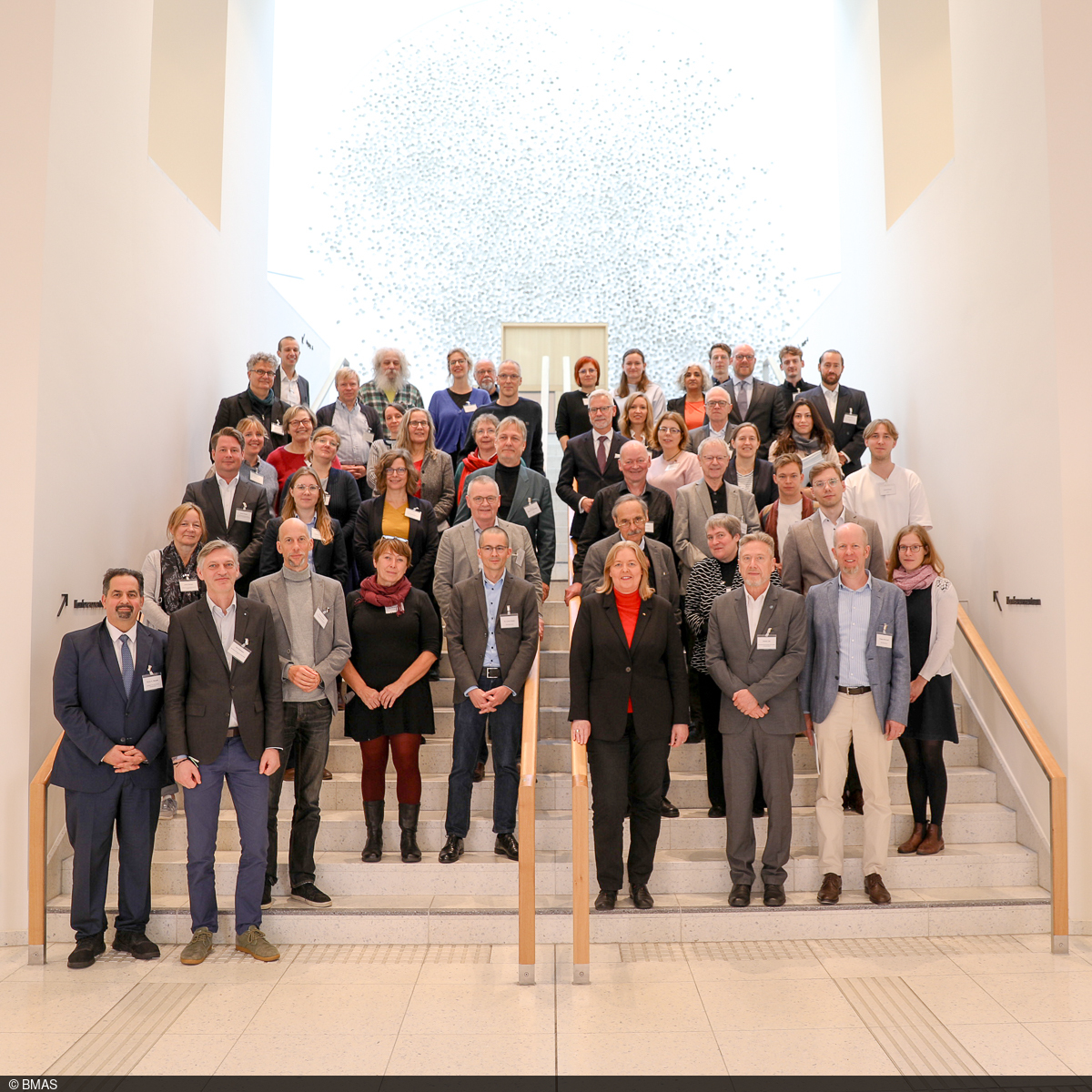
At a symposium in Berlin on 13 October 2025, ZEW researchers Professor Holger Stichnoth and Dr. Lukas Riedel discussed their research contribution on social mobility for the German government's 7th Report on Poverty and Wealth (Armuts- und Reichtumsbericht) with the Federal Minister for Labour and Social Affairs and experts in the field.
“We are pleased that the findings from our research are included in the report and contribute to an evidence-based assessment of social participation in Germany. The recognition by the federal ministry highlights the excellent research carried out at ZEW,” says Stichnoth, head of the ZEW Research Unit “Inequality and Public Policy”.
ZEW study on social mobility
The ZEW study for the 7th Poverty and Wealth Report shows how earned income and employment develop over the course of a lifetime. Differentiating by gender and year of birth, it investigates the role of factors such as level of education, number of children, migration background (if applicable), as well as whether a person lives in East or West Germany. The analysis also examines how important events in the course of life – such as the birth of the first child, divorce, periods of unemployment or recognised reduced earning capacity – influence income and employment trajectories.
“Gender inequality does not arise by chance, but along clear paths in the course of a career and the most important one is associated with starting a family. As long as part-time work remains the norm for women and long full-time work the norm for men, the income gap will only close very slowly,” emphasises Riedel, researcher in the “Inequality and Public Policy” Unit.
The study findings show that gender differences are only decreasing in small steps. It is true that female employment has risen, but this is not least due to lower birth rates. Only for the youngest birth cohort in the study (born in the 1970s), the employment rate is slightly higher, with the same number of children. Among men, there have been only minor changes across generations.
Publication expected in December
The final Poverty and Wealth Report is expected to be published in December 2025. Until then, the suggestions and feedback from the symposium will be reviewed within the ministerial working group, so that the coordinated final report can be adopted by the cabinet and subsequently presented to the Bundestag.
Since 2001, the Poverty and Wealth Report has been published by the German government every three to five years to assess the economic and social situation of citizens, with a particular focus on poverty. It contains information on the political measures adopted by the government to improve the living conditions and opportunities for self-fulfilment of disadvantaged members of society.