“The Paris Agreement was Ambitious from the Outset in 2015”
CommentThree Questions About the World Climate Conference for Environmental Economist Dr. Oliver Schenker
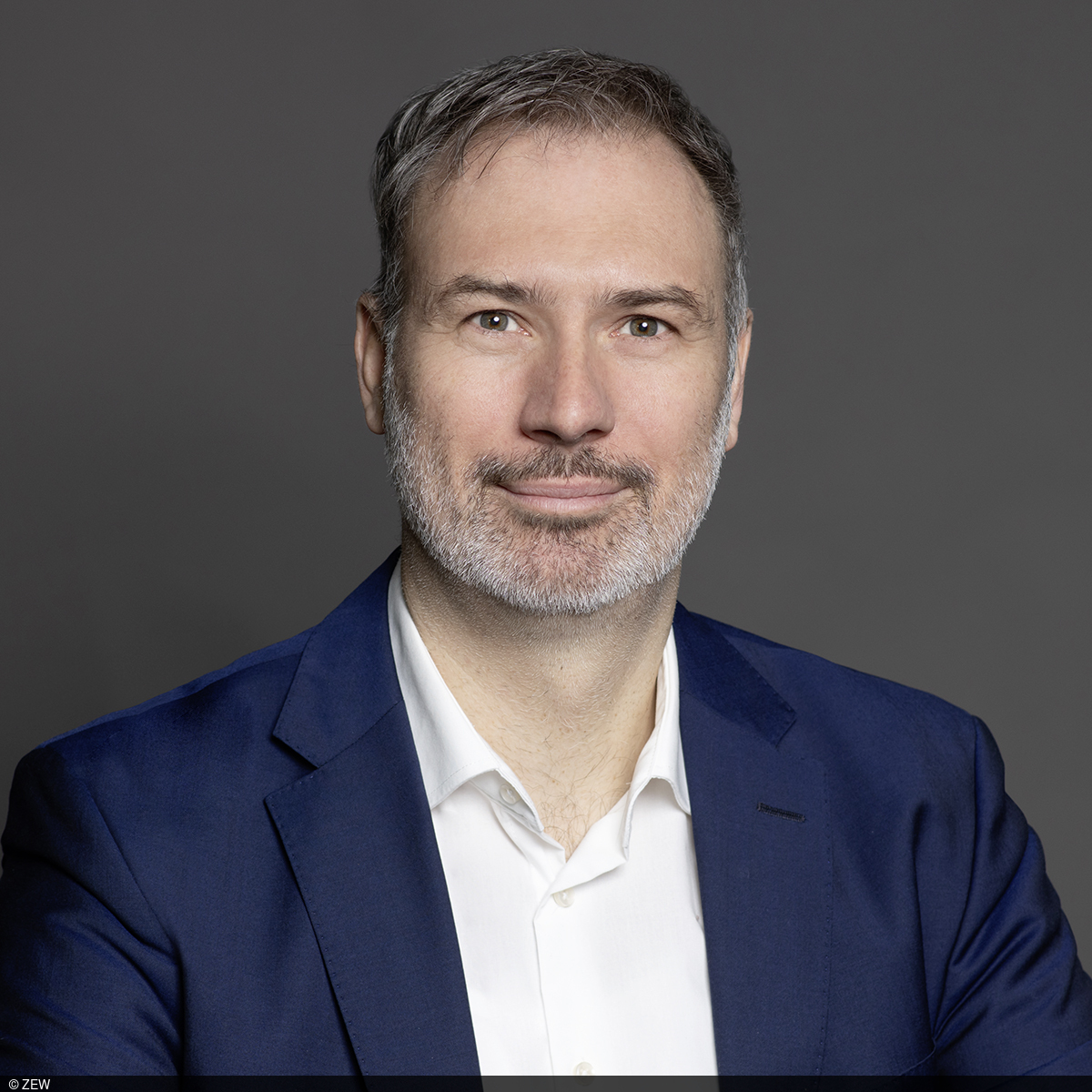
From 10 to 21 November, the 30th World Climate Conference (COP30) is held in Belém, Brazil. Yet, despite the climate summit, there is little cause at present for celebrating progress on climate action: In 2024, the USA once again withdrew from the Paris Climate Agreement, and the global temperature rose by 1.6 degrees Celsius compared to pre-industrial times. Dr. Oliver Schenker, deputy head of the ZEW Research Unit “Environmental and Climate Economics”, gives his assessment of the current state of the COP.
The COP is celebrating its 30th anniversary this autumn. What conclusions can be drawn?
That depends on your perspective. Considering the complexity of the problem, some progress has already been made. It is a huge challenge to come to a global understanding and completely transform – at high cost – our energy systems, which have brought us so much prosperity. Before the Paris Agreement was concluded in 2015, we were heading for a warming of around 3.5°C. Now, the figure is closer to 2.8°C. This is an improvement, but of course far too little given the urgency of the situation. We need to ask ourselves whether these major annual global summits are still the right forum if we want to make more solution-oriented and rapid progress.
Does the 1.5-degree target still make sense?
If we are honest, the 1.5-degree target has been extremely ambitious and rather unrealistic from the outset when the Paris Agreement was concluded in 2015. The wording in the Agreement (‘... pursuing efforts to limit the temperature increase to 1.5°C above pre-industrial levels ...’) also takes this into account. Today, we must unfortunately admit that the 1.5-degree target is not reachable. However, this is also because the climate is warming faster than previously assumed. The pressure to act is therefore increasing. We must focus more intensively on the effects of and adaptation to climate change, without losing sight of the need to reduce emissions.
What is the current situation regarding climate action in the EU?
This, too, is a question of whether the glass is half full or half empty. On the one hand, the EU has created investment uncertainty with its decision to delay the start of the second emissions trading scheme (which will put a price on emissions in the building and transport sectors) by one year to 2028, contrary to earlier plans. However, the EU must also be credited with having more or less stayed on course in geopolitically and economically challenging times. The planned crediting of international carbon offset certificates is both a risk and an opportunity. Experience with this so far has been rather sobering, but the lessons learned could help to develop better-designed mechanisms that actually contribute to cost reductions during the transition. However, one thing is clear: Climate neutrality can ultimately only be achieved through our own efforts.