Forward-Looking Approaches to Sustainable Fiscal Policy
Conferences
22.05.2026
ZEW Public Finance Conference 2026
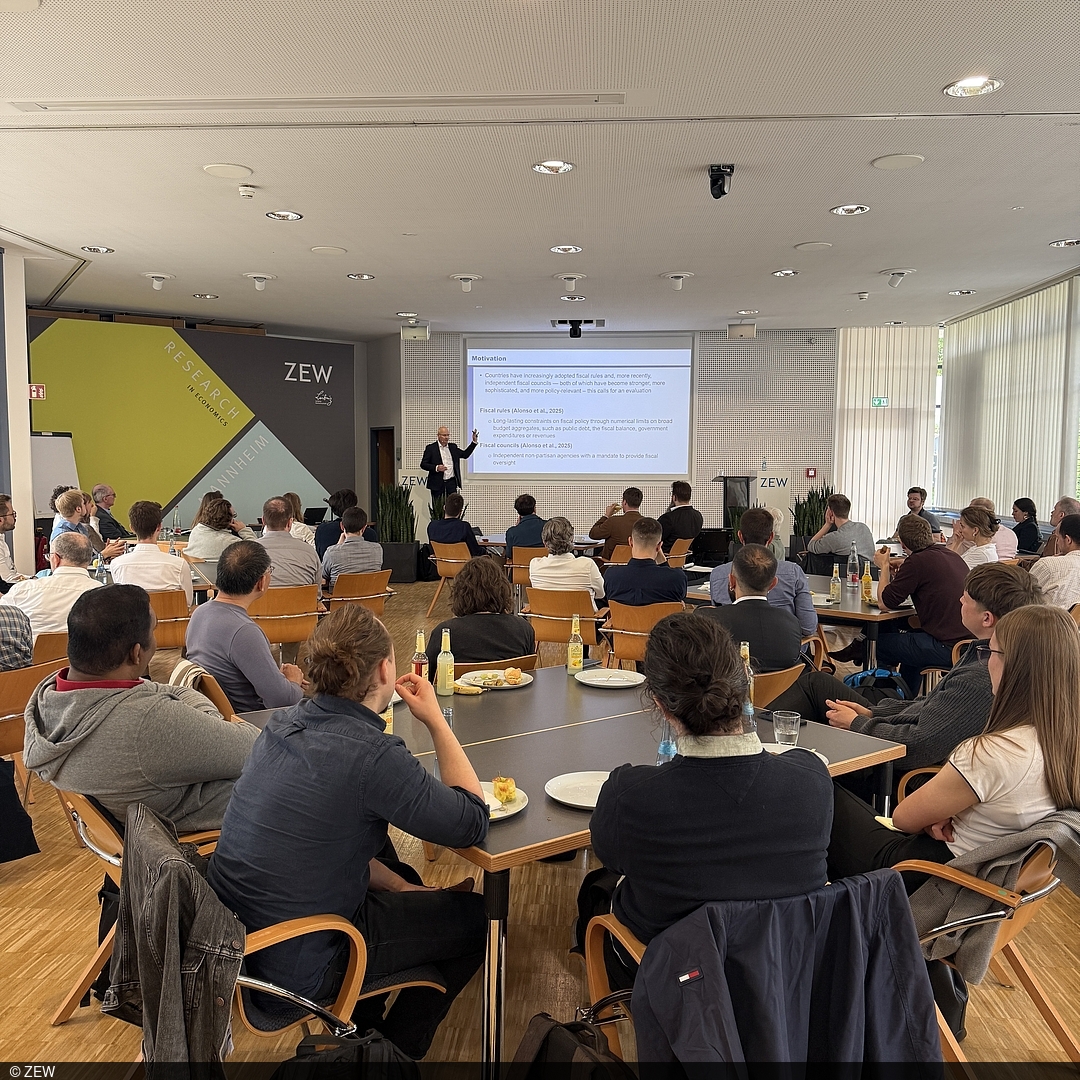
On 11 and 12 May 2026, ZEW hosted its annual ZEW Public Finance Conference in Mannheim, which was supported by the Arbeitskreis für Europäische Integration e.V. The conference brought together researchers and policymakers from Germany and abroad to discuss current challenges in public finance and political economy. This year’s focus was on forward-looking approaches to fiscal policy.
The conference opened with a keynote by Roel Beetsma (University of Amsterdam, Netherlands), who examined the role and effectiveness of fiscal rules and independent fiscal councils. On the basis of a theoretical model, he analysed their contribution to reducing primary budget deficits and improving fiscal forecasts.
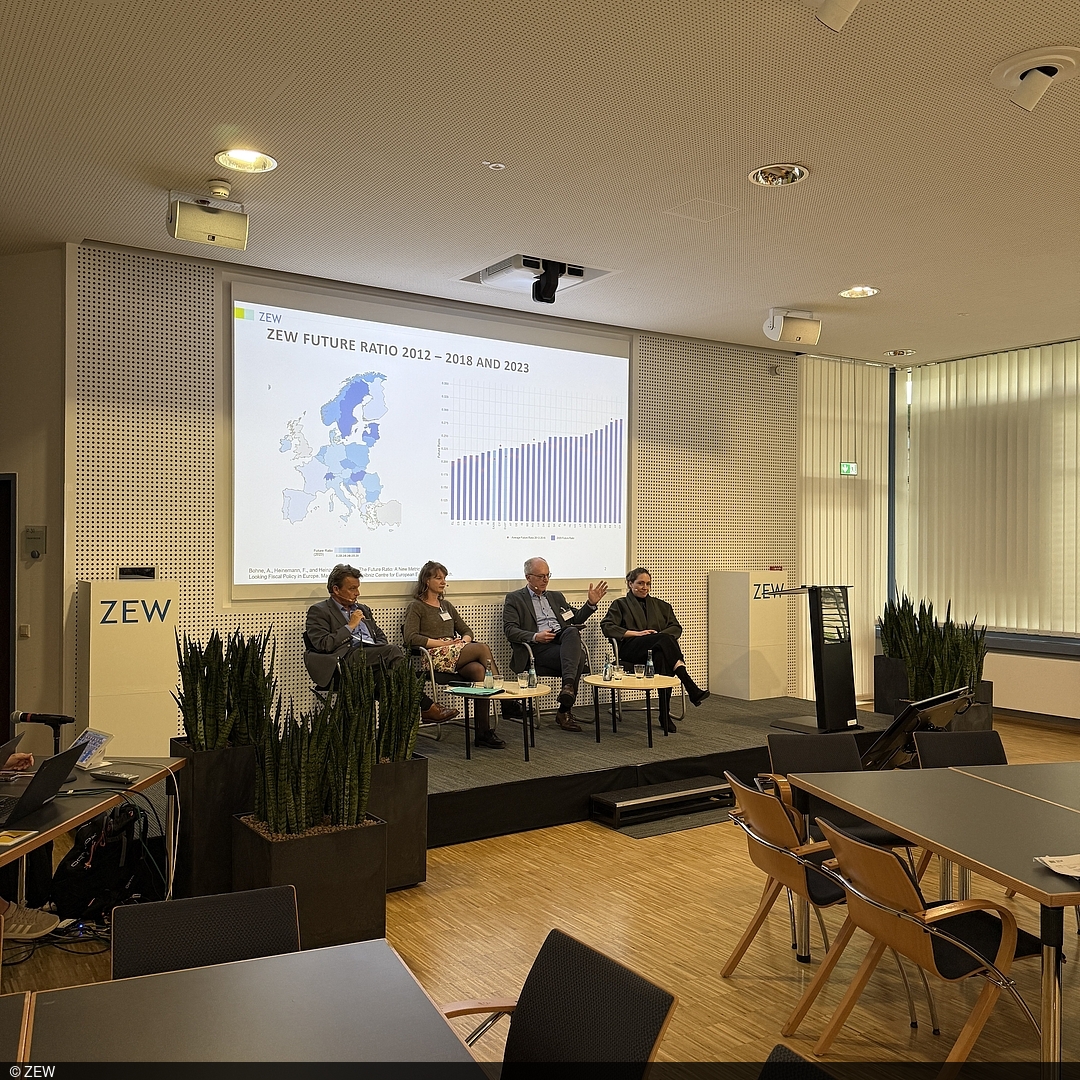
A policy roundtable on forward-looking policymaking, moderated by Friedrich Heinemann (ZEW), brought together Jana Birke-Belschner (University of Bergen, Norway), Philippa Sigl-Glöckner (Dezernat Zukunft) and Martin Weber (European Court of Auditors). The panellists discussed, among other topics, the representation of younger generations in the context of demographic shifts among voters, the design and enforcement of fiscal rules and practical experience with implementing forward-looking fiscal policy in the EU budget from the perspective of the European Court of Auditors.
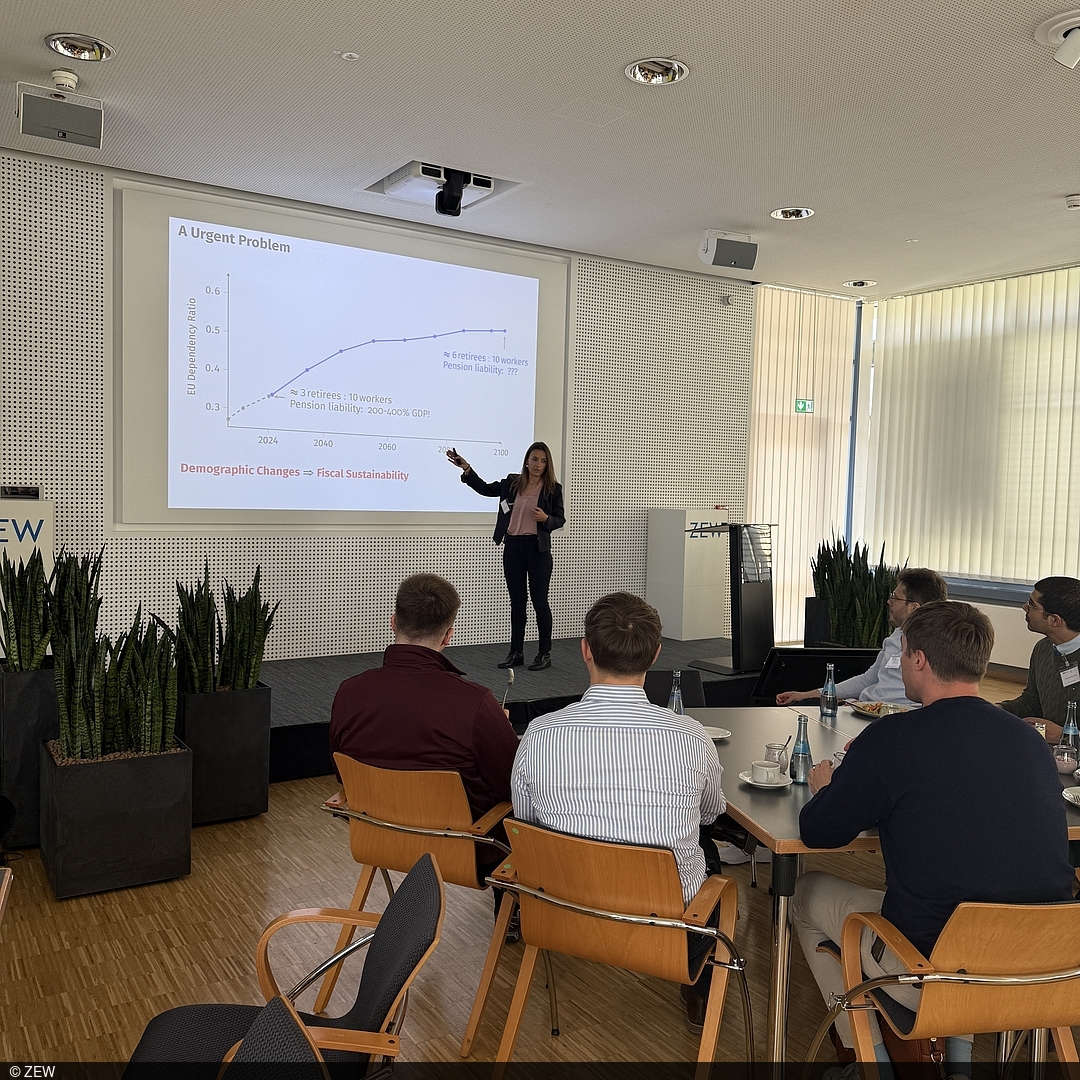
On the second day of the conference, Alessia Russo (University of Padova, Italy) delivered a keynote on sustainable social insurance systems, which are becoming increasingly important in the face of demographic change. Her presentation focused on how welfare states need to design their public pension systems to achieve a balance between fiscal sustainability and political feasibility.
In addition to the keynotes and panels, the conference offered a diverse academic programme with around 60 presentations by international researchers. The topics ranged from optimal taxation and the political enforceability of tax measures to investment decisions and real estate markets, social policy and political preferences. The contributions stood out for their high methodological quality and their relevance to current economic policy debates.