Few Companies Are Planning to Send Employees Back to the Office
Information Economy
13.08.2025
Representative Survey on the Advantages and Disadvantages of Working from Home

Only a small number of companies want to move away from working from home (WFH) by reducing or even completely discontinuing their remote work models over the next two years. However, firms are critical of some aspects of working from home, according to the findings of a representative survey conducted by ZEW Mannheim with around 1,200 companies in June 2025.
“Since the coronavirus pandemic, WFH rates have remained persistently high and they are not expected to fall. Firms' plans for the next two years even point to more employees working from home,” says Dr. Daniel Erdsiek, director of the study and member of ZEW’s “Digital Economy” Unit, as he comments on the results.
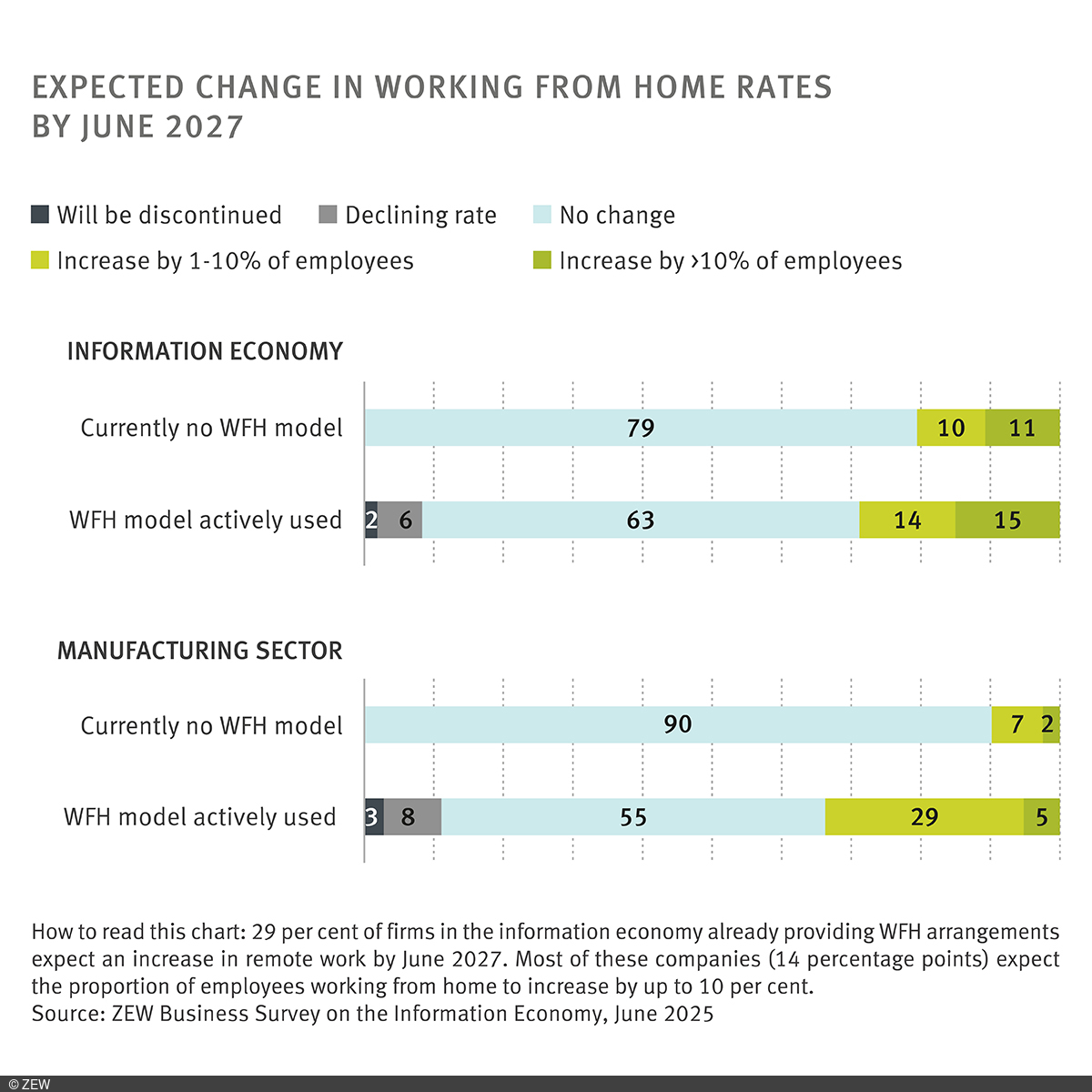
Almost one in three companies with working from home models is planning to expand the offer
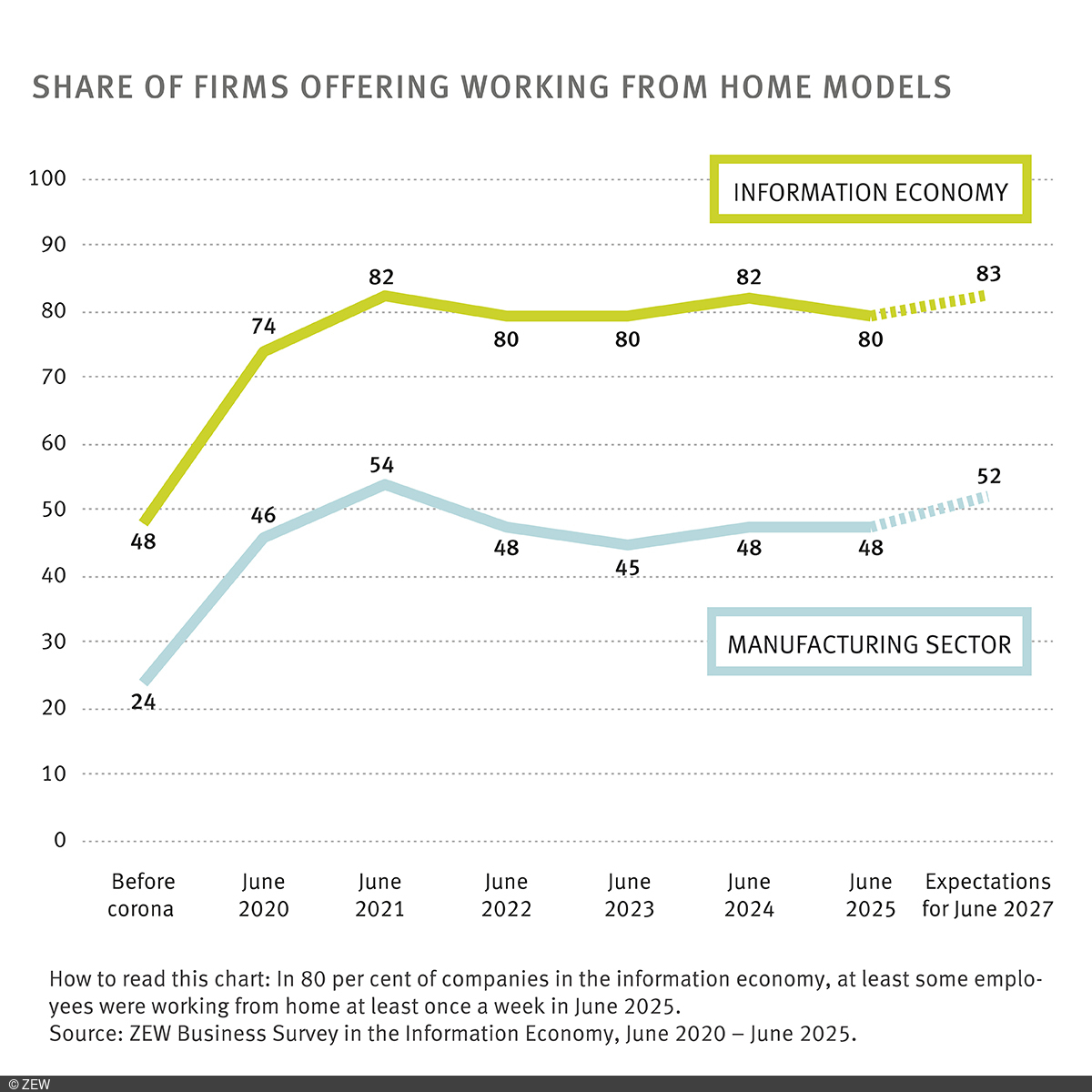
„Currently, 80 per cent of firms in the information economy and around half of companies in the manufacturing industry allow their employees to work from home at least one day a week. The adoption rate is significantly higher among larger companies with 100 employees or more: In the manufacturing industry, 88 per cent of such companies offer a WFH scheme, and in the information industry, 98 per cent – almost all of the companies – do so,” says Erdsiek.
It is true that around 10 per cent of the firms allowing working from home intend to reduce or discontinue these schemes. But a far greater number plan to expand these options and increase the share of employees using them (29 per cent and 34 per cent in the information economy and manufacturing sector respectively). Even companies that expect their employees to always work from the office mention plans for the introduction of remote work (21 per cent in the information economy, 9 per cent in the manufacturing sector).
Job satisfaction and recruitment of skilled workers perceived as benefits
“Working from home options can have a variety of effects. Companies rate the impact on employee job satisfaction particularly positively. Around two-thirds of companies see an advantage in hybrid WFH models with a mix of office days and days at home,” says Erdsiek. “In addition, more than half of companies report that hybrid models make it easier to attract skilled workers.”
However, when it comes to employee retention, company assessments differ. While about half believe that offering WFH schemes has a positive impact on retention, 31 per cent expect rather negative effects.
Challenges in internal communication and teamwork
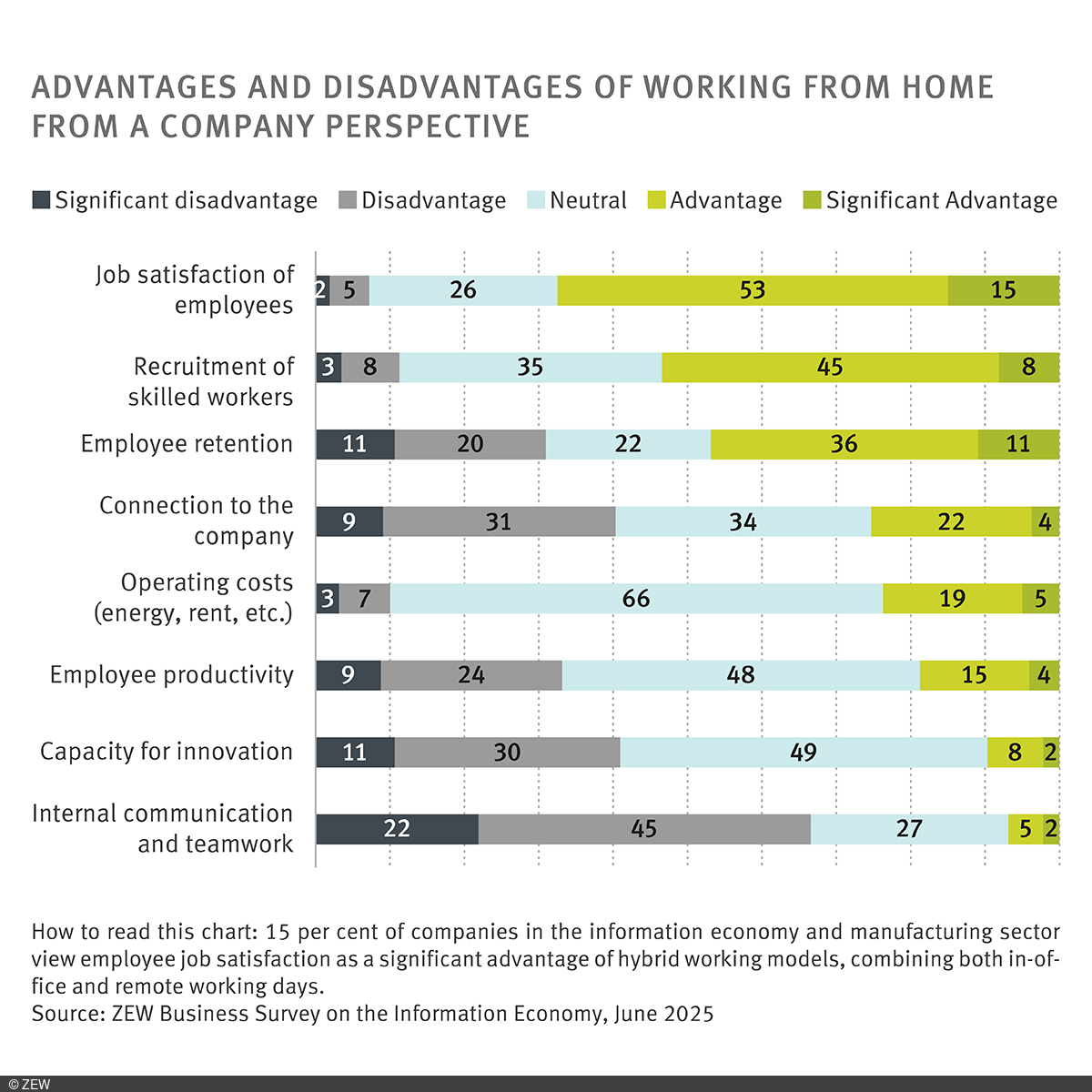
Firms are taking a particularly critical look at the impact of remote working on internal communication and teamwork. Around two-thirds of companies perceive this as a disadvantage of working from home. Possibly for this reason, 41 per cent of companies expect potentially negative effects on their capacity for innovation. Meanwhile, less than 10 per cent perceive any positive effects of hybrid working models on internal communication or capacity for innovation.
Opinions are more divided when it comes to the impact of hybrid work on employee productivity. While one third fear negative consequences, around 20 per cent of firms even see benefits for productivity. About half of companies believe that hybrid working models have no significant effect on productivity at all.
1,200 companies surveyed
In June 2025, around 1,200 companies in Germany took part in the survey for the ZEW Sector Report for the Information Economy. The participants are companies from the manufacturing industry and the information economy which comprises the ICT sector as well as media service providers and knowledge-intensive service providers.