Digital Euro: Little Enthusiasm
Information EconomyRepresentative ZEW Survey of Companies in Germany
The European Central Bank (ECB) could issue the digital euro as early as 2029, provided that the legislative process is completed soon. Companies in Germany are largely neutral or pessimistic about the development – only a negligible proportion expect clearly positive effects. These are the findings of a representative survey of around 800 companies in Germany’s manufacturing sector and information economy.
“The scepticism may partly be explained by the fact that many questions surrounding the digital euro remain unanswered. As long as its final design continues to be abstract, companies do not feel it is their responsibility to adapt to new circumstances. The ECB should try to highlight the benefits for companies more clearly. Unless there is an evident added value for businesses, an additional payment option that is voluntary for users but mandatory for companies will not increase the enthusiasm for the project,” says Vincent Rost from ZEW’s “Digital Economy” Research Unit.
Largely neutral to pessimistic expectations
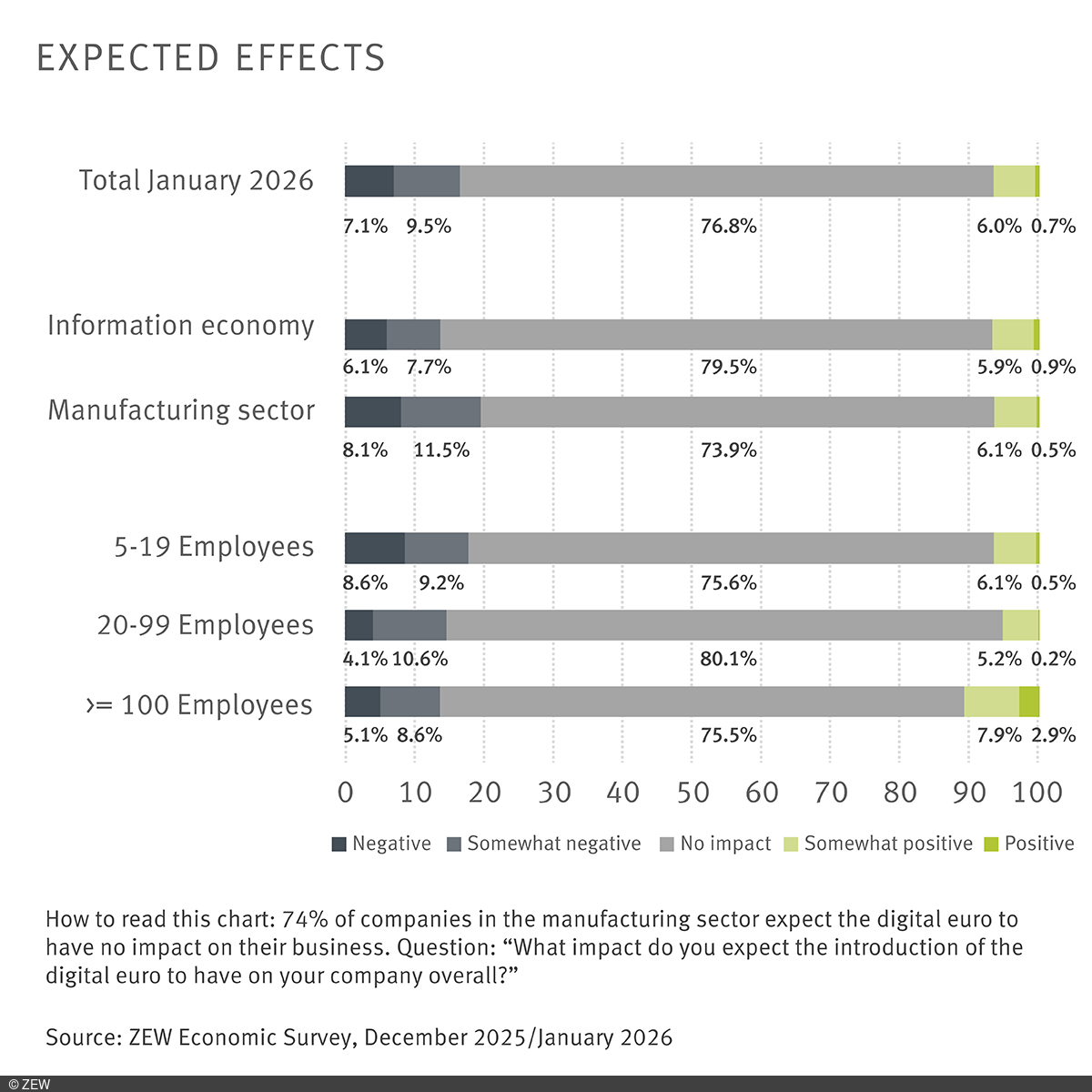
At around 77%, the vast majority of companies expect the digital euro to have no impact on their business. Around 17% expect negative or somewhat negative effects, while 6% expect somewhat positive effects. Only a negligible proportion of 0.7% expect positive effects.
“So far, the ECB has not succeeded in convincing companies of the positive impacts and to inspire them with its enthusiasm. Large companies with at least 100 employees were most receptive: Almost 3% of these companies expect positive effects, while a further 8% anticipate somewhat positive effects,” says Vincent Rost.
Majority of companies are aware of the ECB’s plans
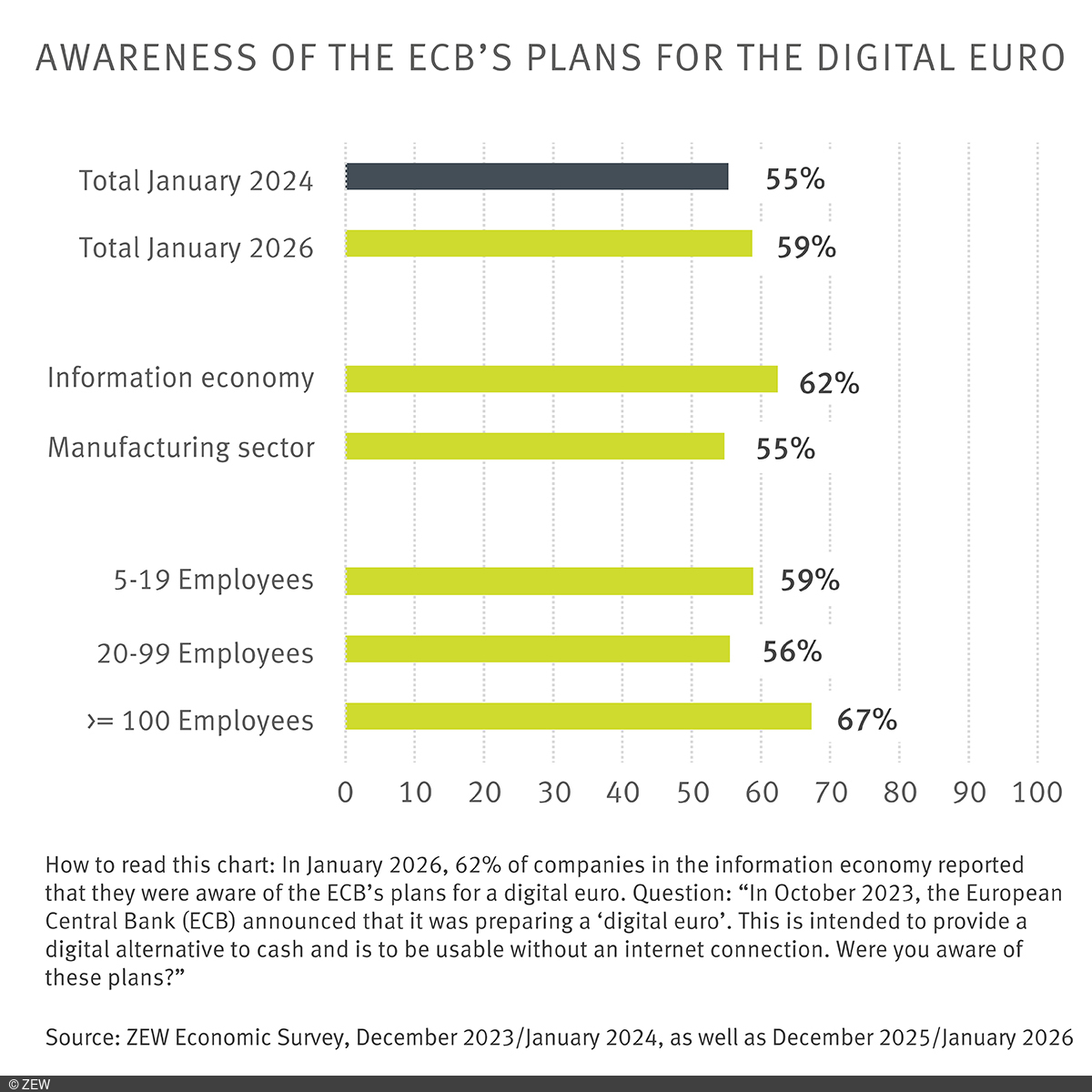
Almost 60% of companies are aware of the ECB’s plans for the digital euro. This figure is even higher among large companies with at least 100 employees (67%) than among small companies (59%) and medium-sized companies (56%). Awareness has therefore increased slightly within the space of two years; in January 2024, 55% of companies reported that they were aware of the plans for the digital euro.
Few expect adjustments to be necessary
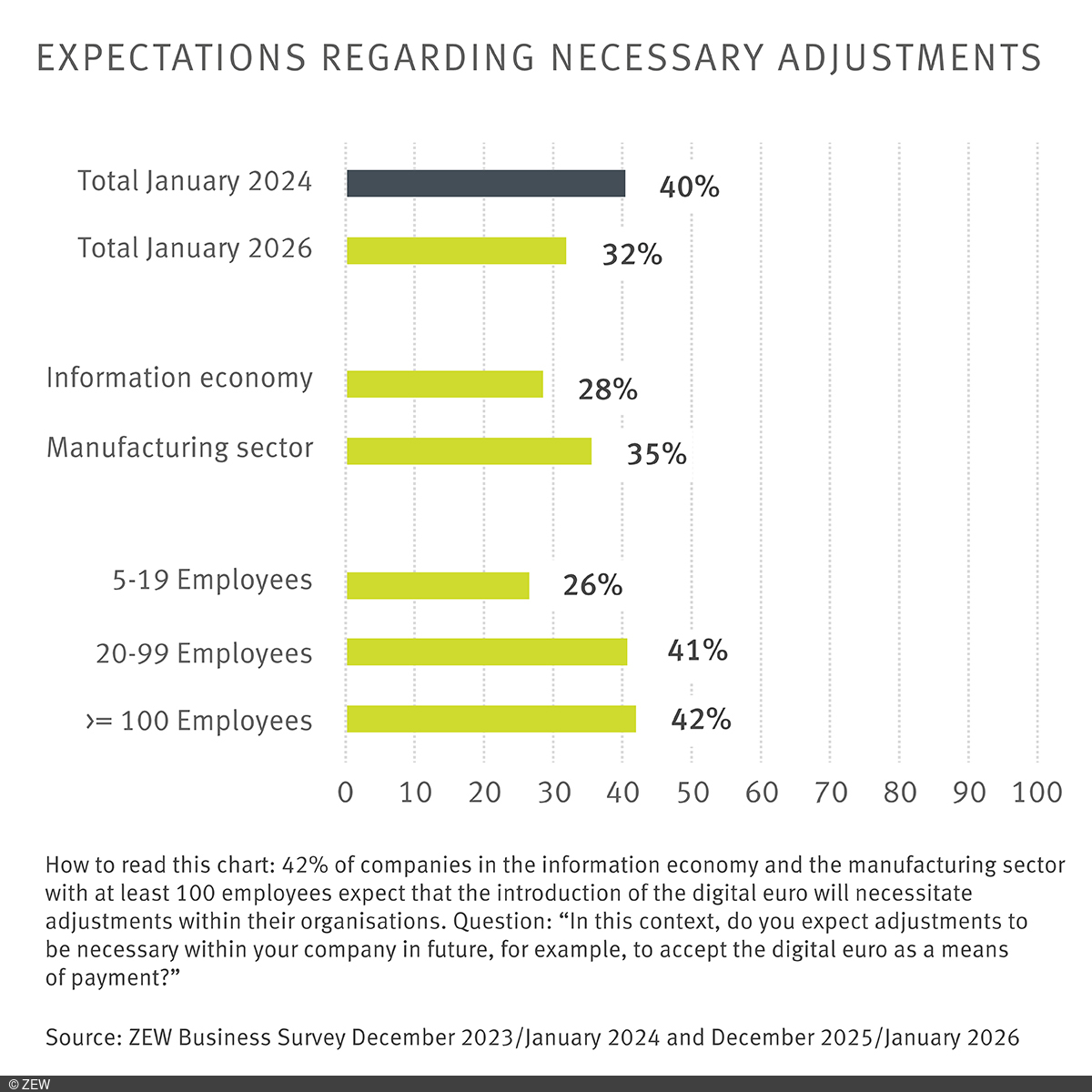
At 32%, just under a third of companies expect that the introduction of the digital euro will force them to make adjustments. Two years earlier, a slightly higher proportion of companies (40%) had anticipated this.
“If most retailers are indeed obliged to accept the digital euro as a means of payment, companies may need to make adjustments, such as upgrading their infrastructure and processes for receiving payments. But it is also possible that these adjustments will be handled by banks and payment service providers, meaning the company itself will not have to take action,” says Rost.
800 companies surveyed
The data for January 2026 was collected as part of the ZEW Sector Report for the Information Economy. To this end, the researchers conducted a representative survey of around 800 companies in Germany. Comparative data was collected in January 2024. The companies surveyed are from the manufacturing sector and the information economy, which comprises the ICT sector, media service providers and knowledge-intensive service providers.