Nobel Laureate Sheds Light on Market Mechanisms in Online Advertising
Public Events
09.10.2025
Paul Milgrom at ZEW’s “First-Hand Information on Economic Policy” Event
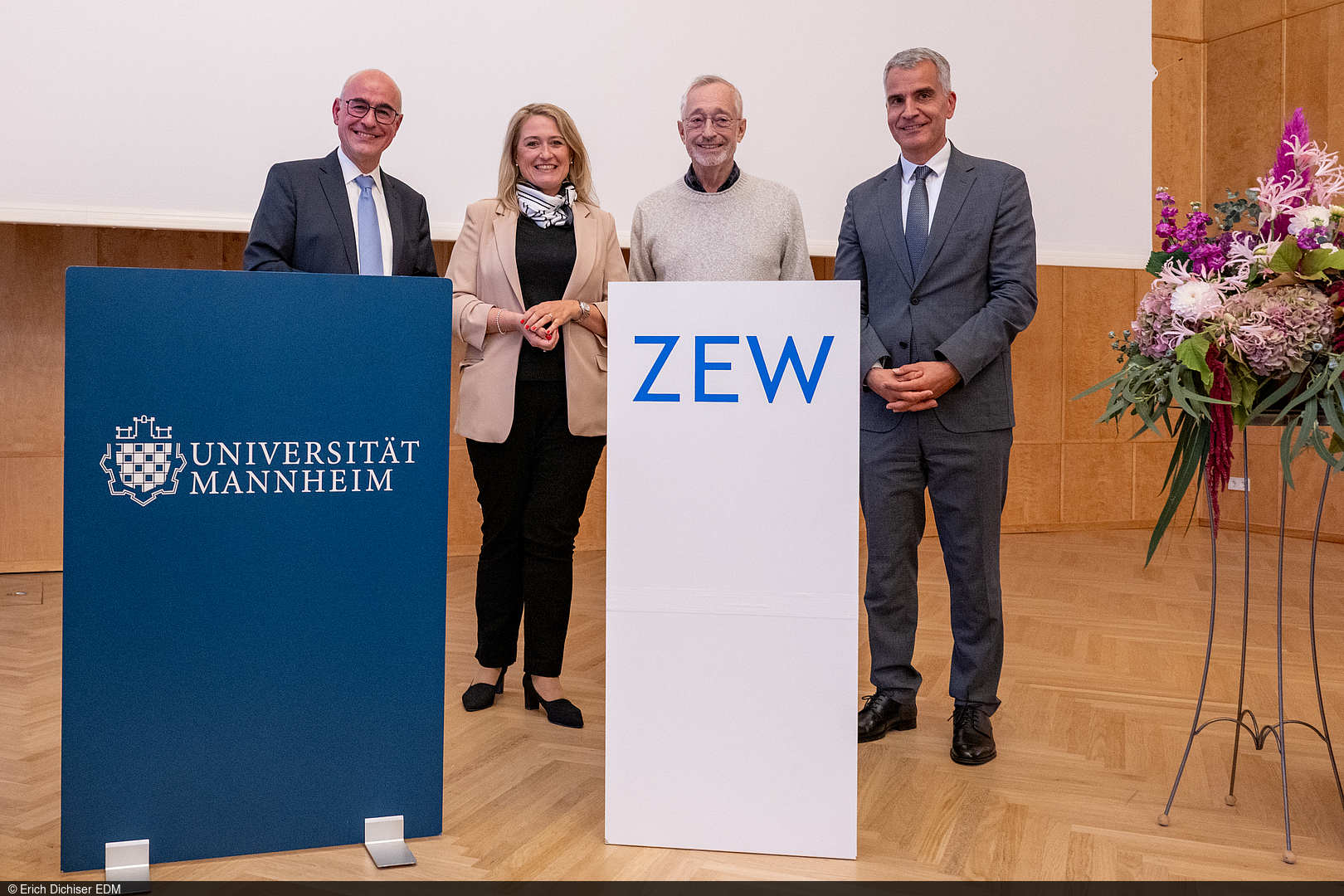
In the digital advertising market, complex auctions determine the interactions between market players. In addition to high bidder numbers, short-term transactions and a broadly diversified media market, the bundling of bids on advertising platforms and provider behaviour across platforms increase this complexity. Paul Milgrom, Professor of Economics at Stanford University and laureate of the Nobel Prize in Economics, explained the effects of this and the role market design plays in this context during a talk at a “First-Hand Information on Economic Policy” event organised by ZEW on 8 October. The event was supported by the ZEW Sponsors' Association and organised in cooperation with the Department of Economics at the University of Mannheim. It was held at the University Aula and attracted around 300 guests.
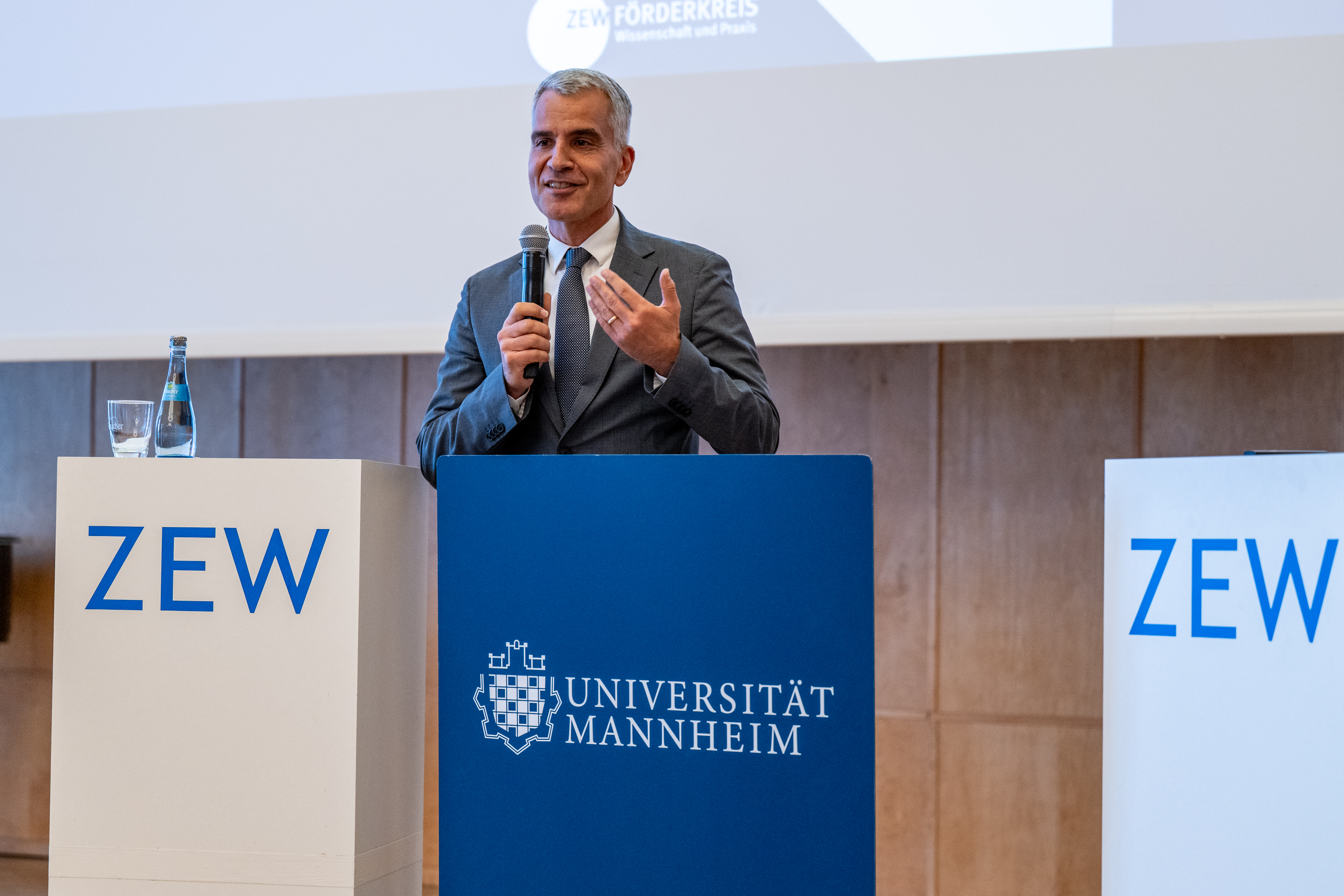
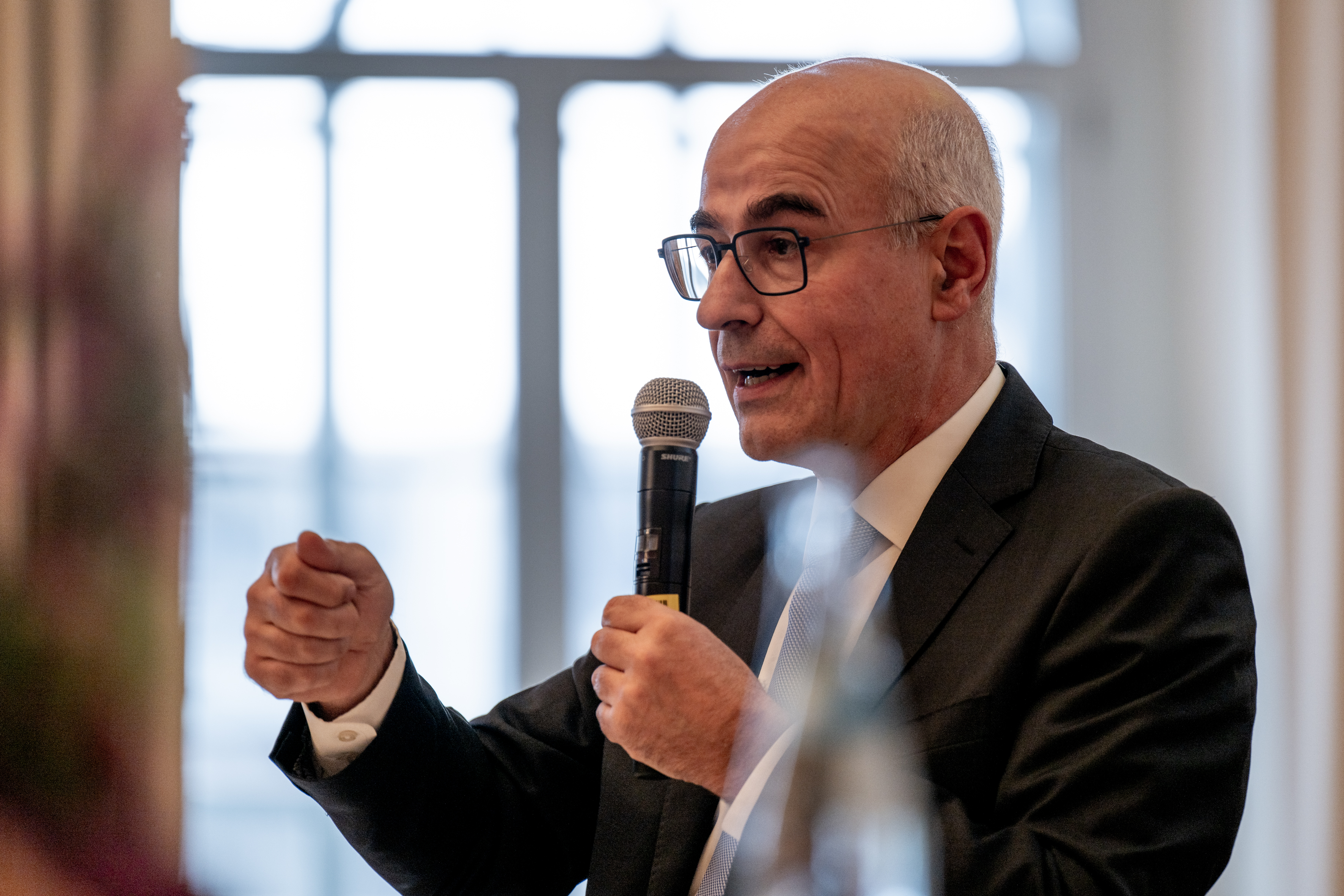
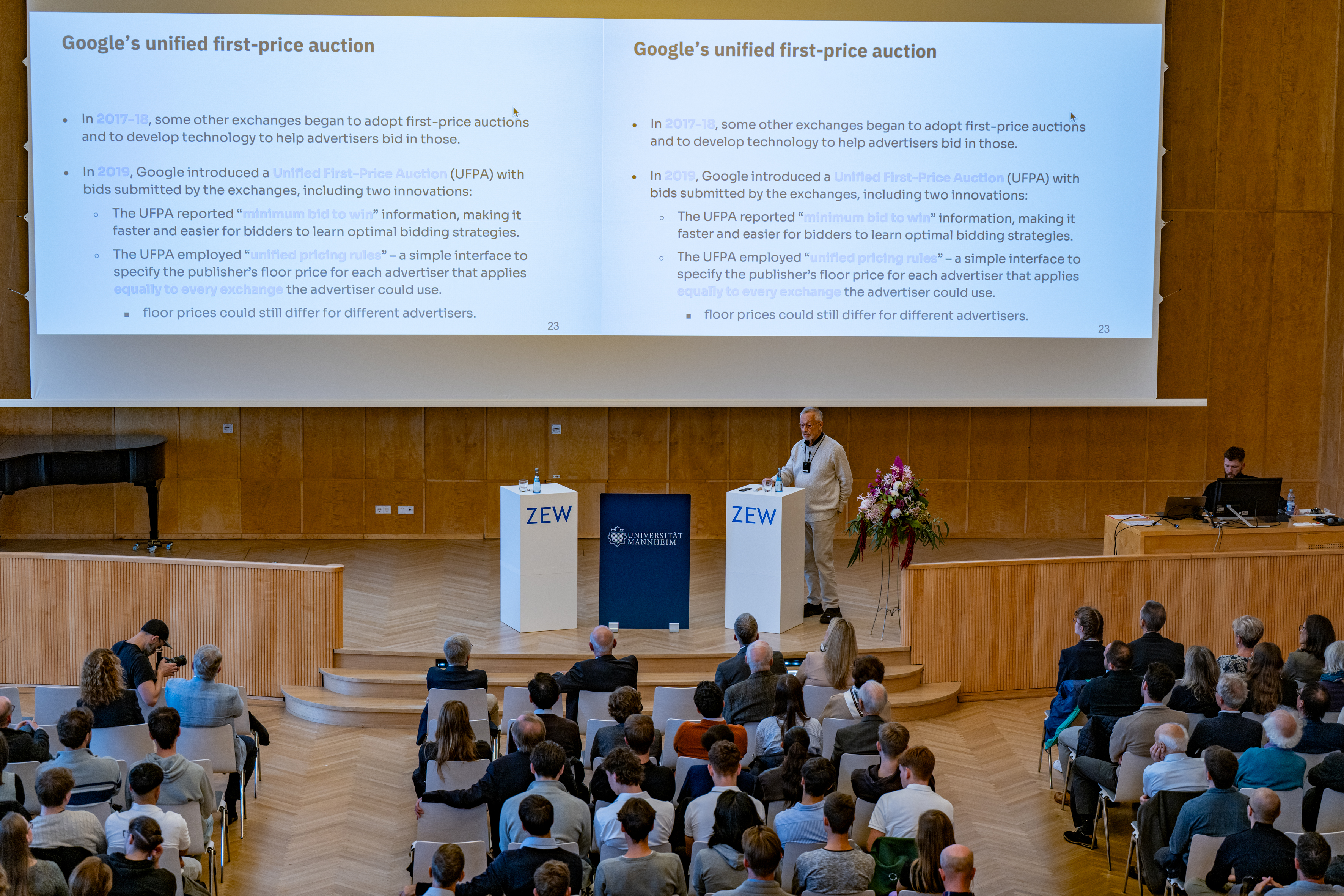
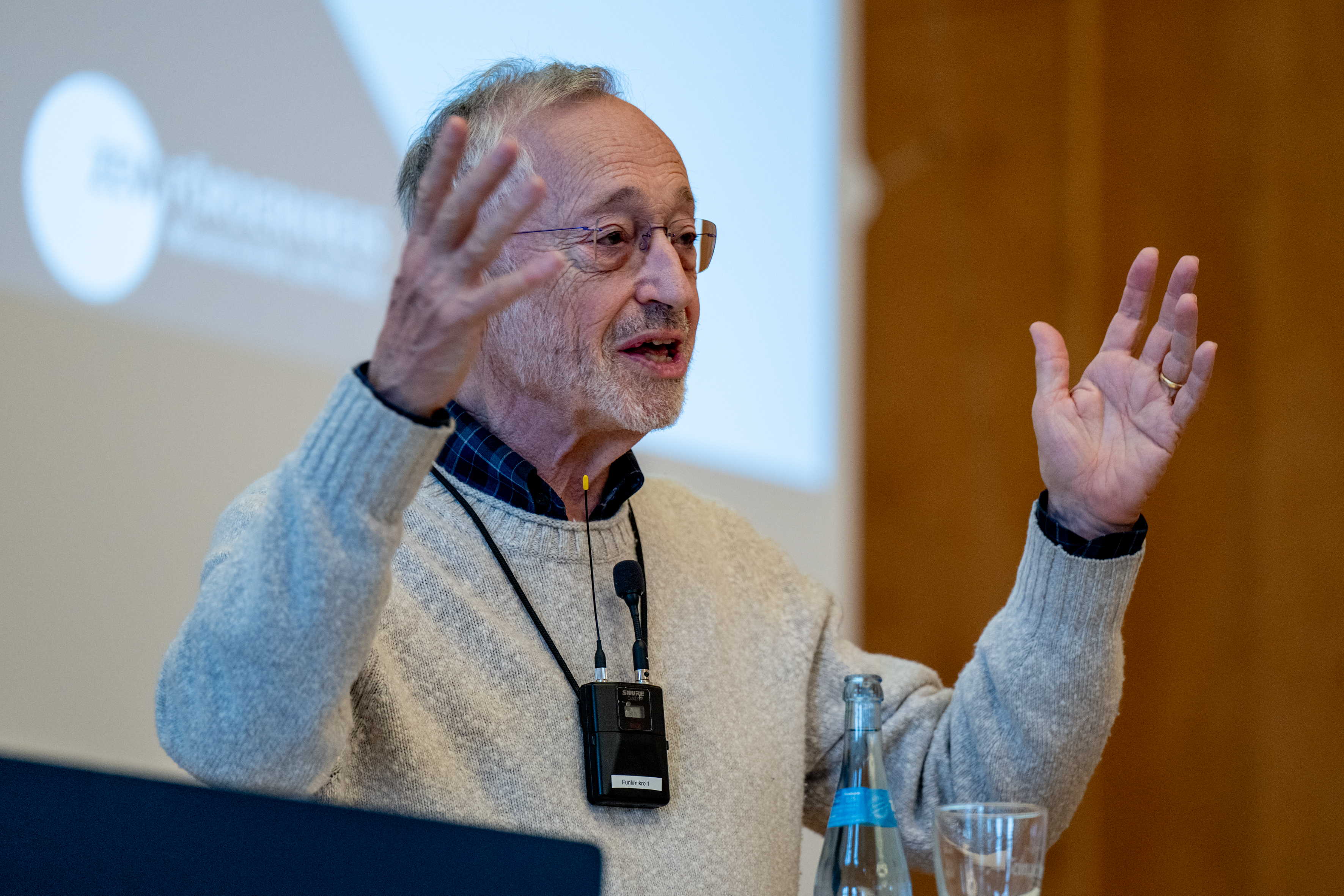
In his welcoming words, ZEW President Professor Achim Wambach, PhD emphasised the relevance of the online market, stating that large tech companies employed chief economists who work on further developing and optimising the market design of their digital services. Paul Milgrom, who was awarded the Nobel Memorial Prize in Economic Sciences in 2020, then gave his presentation on “Online Display Advertising: History, Technology and Market Design Analysis”. He provided insights into the historic development of online advertising and how these markets have changed over the years.
Auction mechanisms in the digital advertising market
According to Milgrom, the second-price auction traditionally dominates real-time auctions. The highest bidders win the bid but only have to pay the second-highest price. Milgrom said that in practice more and more platforms were switching to first-price auctions and this was significantly changing the strategic behaviour of advertisers. He showed how this change affects prices, bidding strategies and market results.
The Nobel laureate also noted that one problem with modern online advertising markets was the information asymmetries between the various advertisers. Performance advertising, where the immediate success of an advert can be measured by clicks, had more precise information on the value of a single impression. In brand management, on the other hand, which was aimed more at long-term brand awareness, less precise information was available. Milgrom explained that this often led to ‘adverse selection’, with some advertisers only receiving the less attractive advertising space.
He concluded his presentation by stressing that his research provided practical implications: Platforms could increase the overall efficiency of the adverts displayed by adapting their auction design; advertisers would thus gain a better understanding of how to optimise their bids. Milgrom advocated that regulatory authorities and platform operators should be provided with more models for the assessment of transparency and fairness.
Ensuring efficiency and fairness through intelligent market design
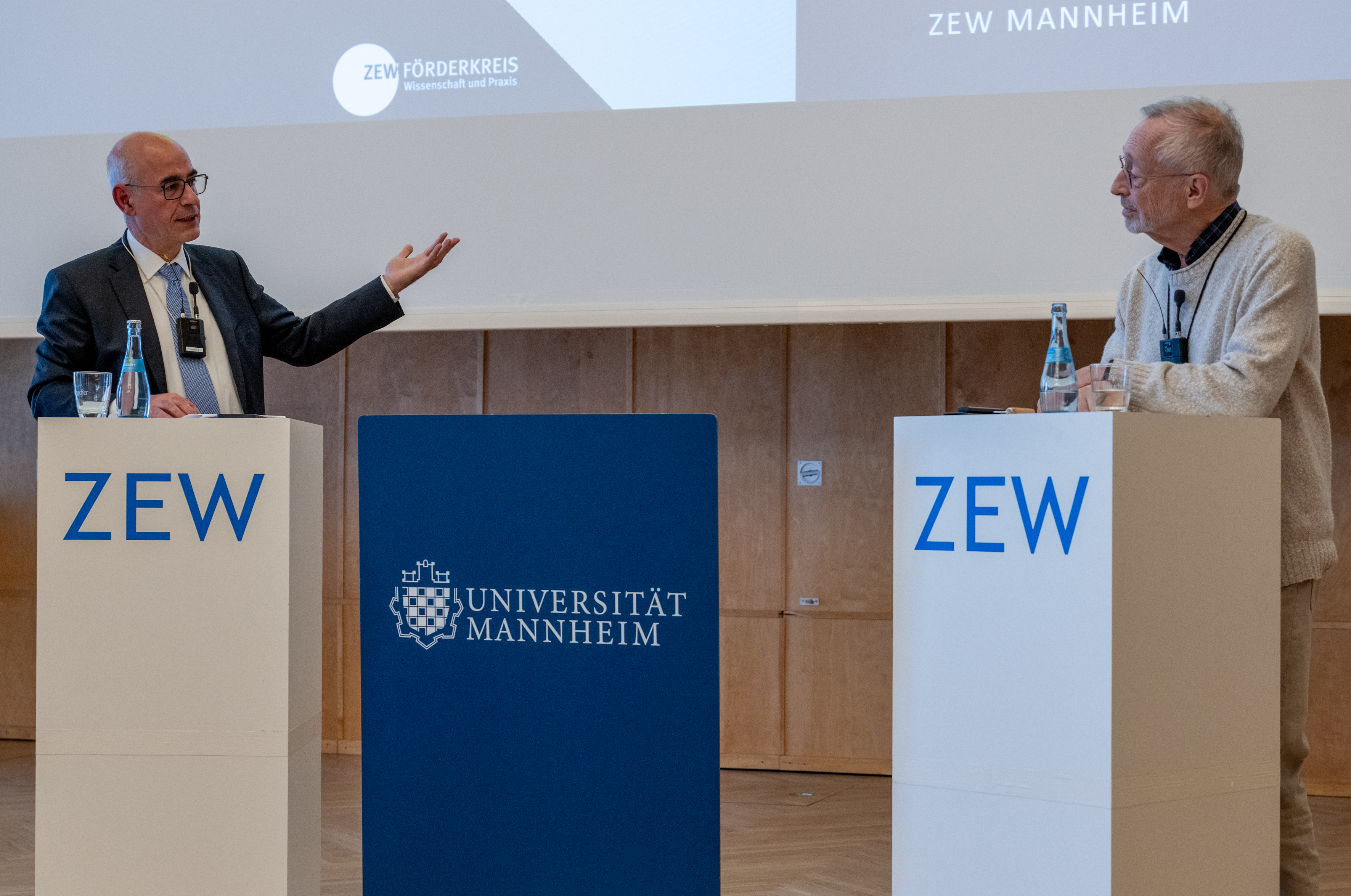
In the discussion following the talk, Paul Milgrom and Achim Wambach focussed on how digital advertising markets could be designed to be both fairer and more efficient. Responding to Milgrom’s remarks, Wambach emphasised the regulatory challenges arising from the growing market power of large platforms. He also stressed how other fields of economics, such as the expansion of the energy infrastructure, could also benefit greatly from Milgrom's market design approaches.
Both economists agreed that auctions in the digital space should be designed in such a way as to promote competition as well as transparency. Wambach also underlined that policymakers faced the challenge of creating suitable regulatory conditions without preventing innovation. According to Wambach, this is precisely where ZEW’s “Market Design” Research Unit can make a contribution and provide valuable impetus.