Climate Policy: More Economic Rationality
OpinionOpinion Piece by Achim Wambach and Axel Ockenfels
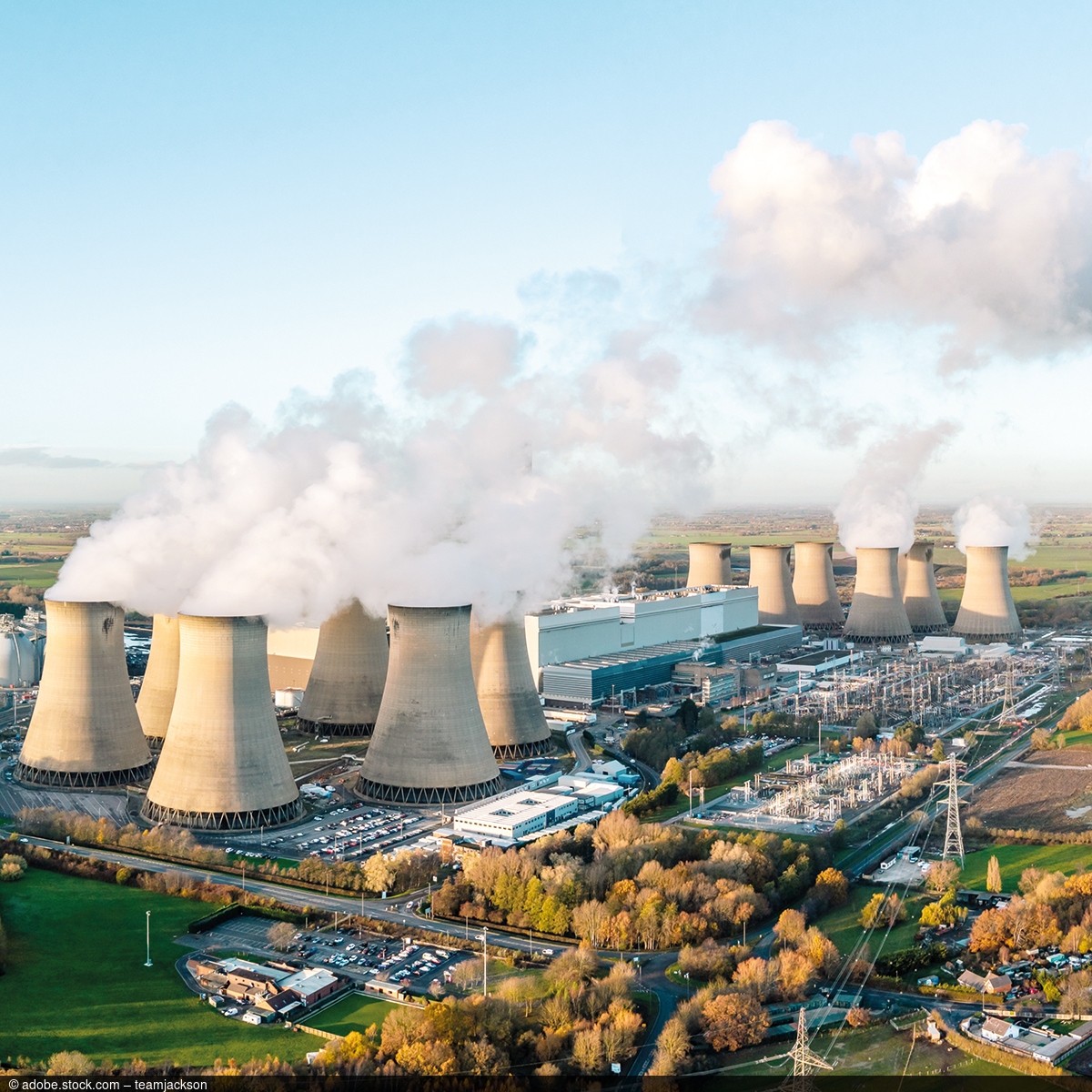
In a contribution in the journal Wirtschaftsdienst, ZEW President Achim Wambach and Axel Ockenfels from the University of Cologne use the example of the cancellation of emission allowances to show how German climate policy sometimes loses sight of both climate action and economic rationality.
At the end of last year, we could observe yet another example of how German climate policy at times loses sight of the goal of climate action, and also of economic rationality. By the end of 2025, 514,000 CO₂ emission allowances are to be cancelled. According to the German Environment Agency, this step follows the shutdown of the Neurath A and Frechen coal-fired power plant units in 2022. The application for cancellation was submitted in Brussels already in early April by the previous government. Therefore, the Environment Agency and the Federal Ministry for the Environment, Climate Action, Nature Conservation and Nuclear Safety announced that this would secure the climate benefits of the coal phase-out. Many media outlets largely followed this interpretation, explaining that, combined with this measure, the decommissioning of German coal-fired power plants would now actually result in lower CO₂ emissions. However, this interpretation is incorrect: European CO₂ emissions are declining, but this does not require a coal phase-out. It would equally have been possible to remove the emission allowances from the market independently of the plant closures. The ineffectiveness of a measure is not remedied by the success of a different one.
Emissions go down in one place, but they rise elsewhere
Under the European Emissions Trading System, the total amount of CO₂ that power plants and industry in the electricity sector may emit is capped across the EU. When a power plant in Germany is shut down, this reduces the demand for emission allowances but not the total quantity of allowances available. Unused allowances are simply transferred to the chimney stacks at other power stations – for example, coal-fired plants in other EU countries. German emissions fall, but European emissions do not. This is known as the waterbed effect: emissions go down in one place, but they rise elsewhere.
This effect is routinely ignored in national climate policy. Sometimes you hear the argument that even if national measures failed to reduce emissions in the EU, lower CO₂ prices would lead to greater political acceptance. This is hardly convincing. A unilateral effort that leads to an increase in the costs of climate action at home, eases the burden on polluters abroad and fails to reduce emissions across the EU, does not help the climate, but rather acts as a relief for other countries. In an effort to avoid the waterbed effect, some policymakers now want to ensure the effectiveness of the coal phase-out by taking the freed-up allowances permanently out of the market instead of reselling them. However, invalidating the allowances will not help to mitigate the waterbed effect created by Germany’s coal phase-out. After all, a policy that simply removes emission allowances, without allocating additional billions to a national coal strategy, would achieve the same climate impact at a much lower cost. Some argue that the Market Stability Reserve and adjustments to the emissions cap ensure that national efforts ultimately do have an effect. The Market Stability Reserve adjusts the supply of allowances by transferring to the reserve surplus allowances withheld from auctions and either releasing or cancelling them at a later stage. However, these mechanisms are complicated and it is at least controversial whether and to what extent they are effective. Ultimately, this question is irrelevant to our argument, because in all these cases, unilateral measures cost additional resources without achieving a reduction in emissions beyond the cancelled allowances.
Let Emissions Trading Do Its Job
The fact that policymakers are often not entirely serious about ensuring the international effectiveness of their climate policy is also evident in the selective use of the waterbed argument. Anyone who wants to justify national measures through cancellations would also have to consistently invalidate allowances when implementing other national policies to avoid CO₂ emissions – such as the subsidised expansion of renewable energies in Germany. However, this aspect is ignored. The question of whether unilateral efforts make sense also arises when it comes to cancelling certificates. The number of certificates is set so that Europe can achieve its climate targets. From this follows that any cancellation of allowances would have to be based on the argument that these targets are not sufficient and that additional national cancellations are therefore justified. This argument plays no role in the political debate.
Germany must and will phase out coal. Nothing is more important in the fight against climate change than moving away from coal. The question is therefore not whether to do so, but how. The effectiveness of emissions trading is demonstrated by EnBW. The Baden-Württemberg energy supplier is planning to phase out coal by 2028, without billions in subsidies and without certificate revenues. Economically, coal is simply no longer viable. Rather than attempting to retrospectively justify an ineffective and expensive national climate policy through another measure, it would be better to let emissions trading do its job and to use the financial resources saved where they promise to achieve the greatest global climate benefit. In particular, this includes innovations that make green energy cheaper and thereby facilitate the transition in all countries around the world.
This opinion piece first appeared in the journal Wirtschaftsdienst (in German language).