History of the Institute
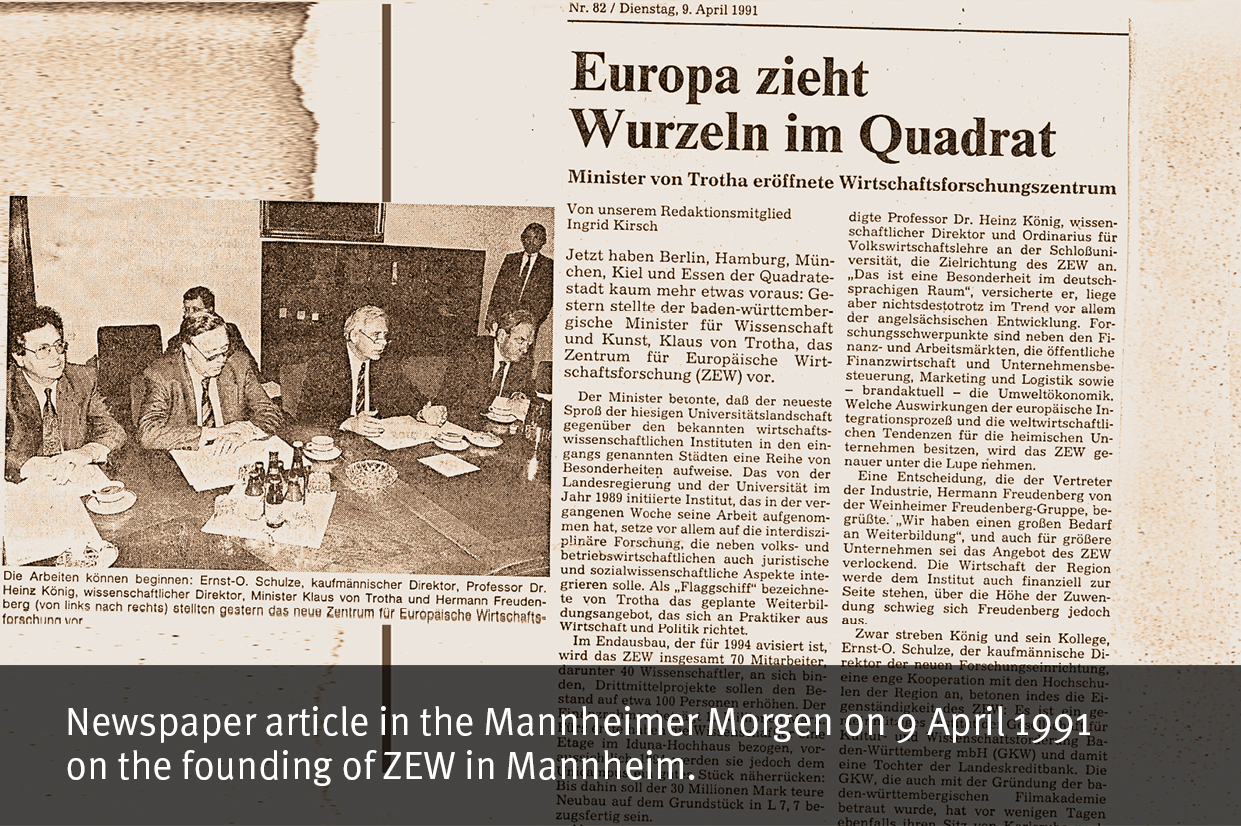
In 1991, under the leadership of Professor Dr. Dr. h. c. Heinz König and the first commercial director Ernst O. Schulze, the ZEW began its work with 17 employees and five student assistants, initially focusing on the areas of financial markets, labor markets, industrial economics, corporate taxation, and environmental economics. The institute was founded on the initiative of the Baden-Württemberg state government under then-Minister President Lothar Späth and the Baden-Württemberg business community.
Since its founding, the ZEW Financial Market Test has surveyed experts from banks, insurance companies, and the finance departments of selected large companies on a monthly basis to obtain their assessments of financial developments. The results are used to derive the ZEW Economic Expectations, an early indicator of economic development in Germany.
In 1992, ZEW conducts research on one floor of the Iduna high-rise building near Mannheim Central Station. Until 1996, the Iduna building, together with the HUK building, is home to many ZEW researchers. The institute then moves into the new building in Quadrat L 7.1, closer to the University of Mannheim.
The Federal Ministry of Research and Technology commissioned the ZEW for the first time to conduct the German Innovation Survey as part of the European Innovation Survey. The Mannheim Innovation Panel was developed as part of this commission.
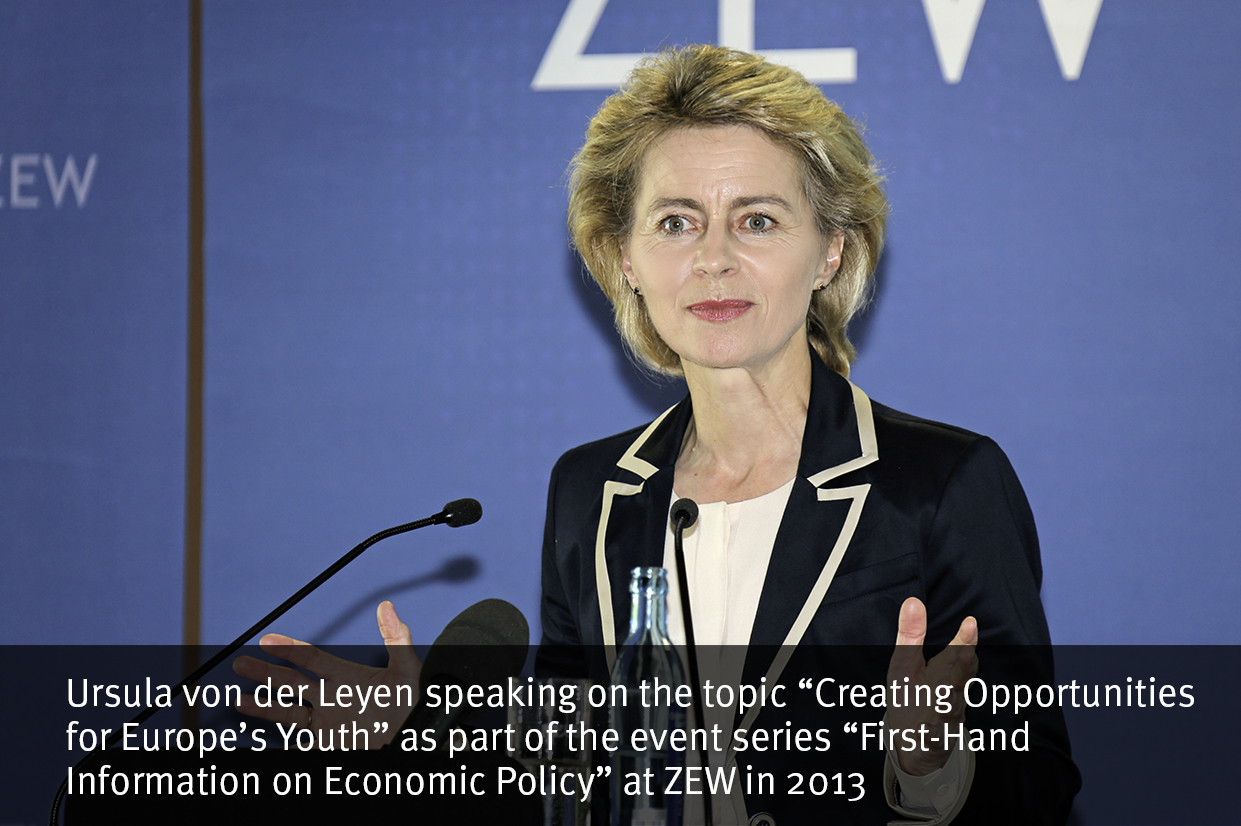
In 1993, the ZEW organized the first series of lectures on economic policy in the Knights' Hall of Mannheim Palace. Urgent economic policy issues and developments are the focus of the event series, which features speakers from politics, business, and academia.
The ZEW – Förderkreis Wissenschaft und Praxis e.V. (ZEW – Association for the Promotion of Science and Practice) is founded. It facilitates a trusting dialogue between science and practice. The association initiates practice-oriented research projects, sponsors events, and awards prizes for outstanding scientific work at ZEW.
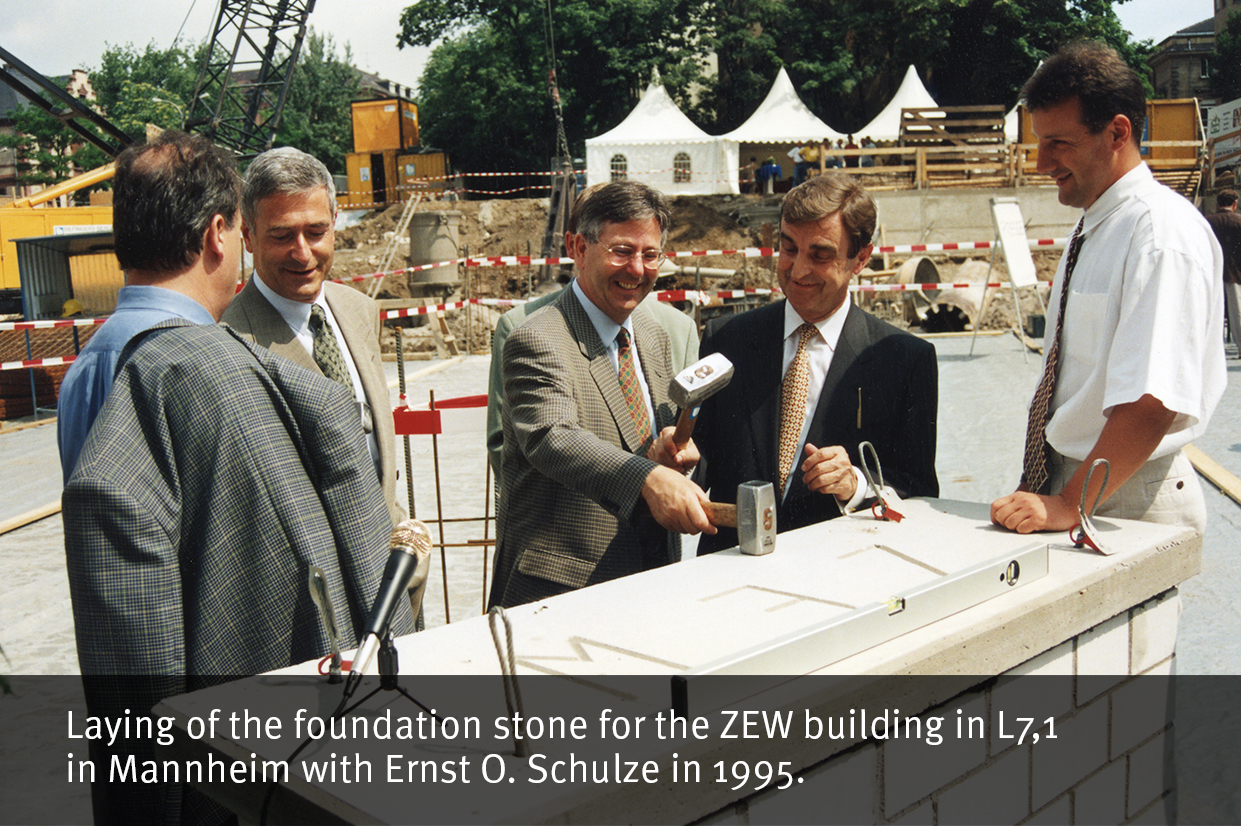
In 1995, the foundation stone for the current institute building in Mannheim's Quadrate district is laid.
In 1996, ZEW researchers move into the new atrium building in Quadrat L 7, 1. The move not only creates more space, but also promotes cooperation within the institute. Initially, ZEW shares the building with the Mannheim Center for European Social Research.
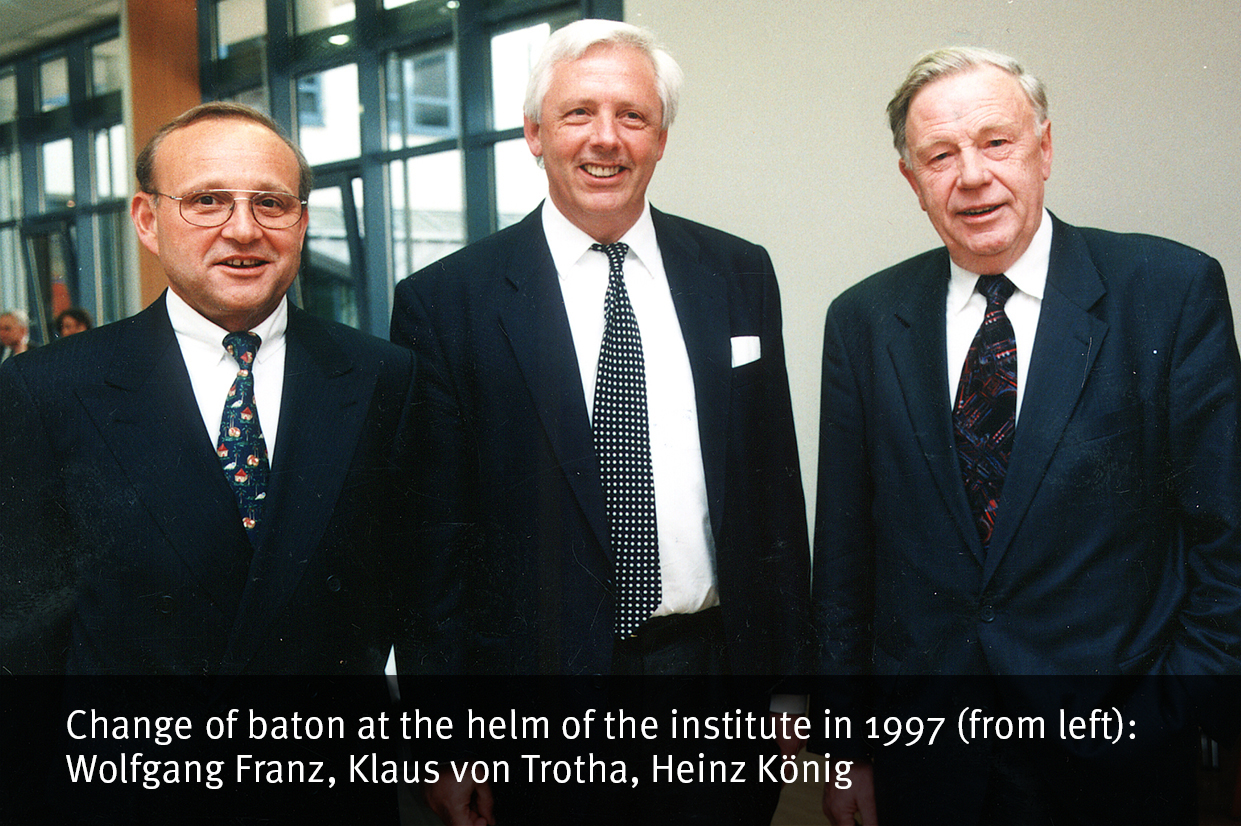
In 1997, Professor Dr. Dr. h. c. mult. Wolfgang Franz took over as scientific director of the institute from Professor Dr. Dr. h. c. Heinz König, who retired in April 1997.
In 1998, the German Council of Science and Humanities visited the ZEW and recommended its inclusion in the so-called Blue List. This was a prerequisite for the institute's admission to the Leibniz Association, which took place in 2005.
In 2001, on the occasion of its tenth anniversary, the institute received the Initiative Award for promoting the reputation of the city of Mannheim as a cultural and economic metropolis.
In 2003, Professor Dr. Dr. h. c. mult. Wolfgang Franz is appointed to the German Council of Economic Experts for the second time. He had already been a member of the council from 1994 to 1998. In 2009, he takes over as chairman and remains one of the five “economic wise men” until the end of 2013.
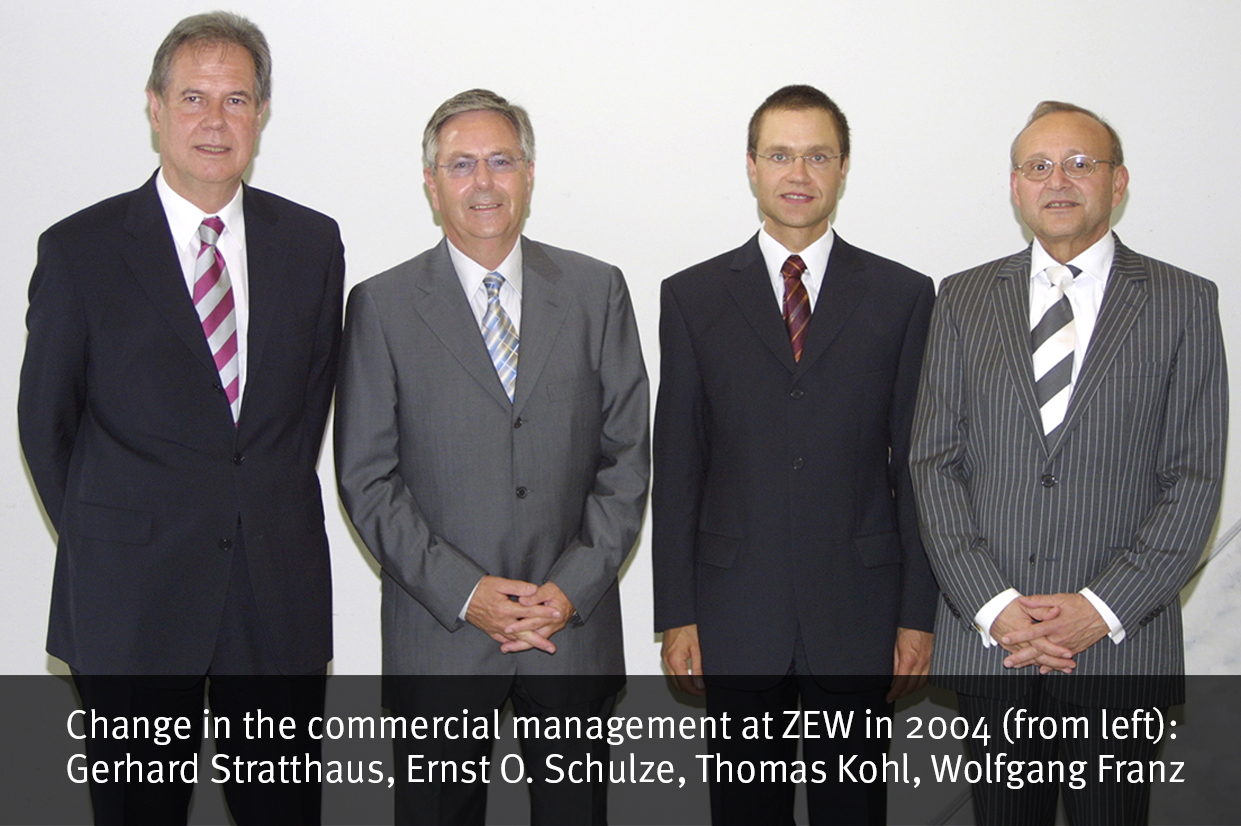
In 2004, Thomas Kohl took over the commercial management of ZEW from its founding director, Ernst O. Schulze, who retired.
In memory of the founding president of ZEW, the Heinz König Award, worth €5,000, is presented for the first time for outstanding scientific work. It is aimed at young scientists under the age of 35 who have made a demonstrable impact in their field of research and strive to transfer their findings to a wider audience.
This year also sees the establishment of the current ZEW research unit “Digital Economy.” The unit investigates how digitalization affects production, innovation, and the world of work, how digital markets and platforms function, and the significance of underlying digital infrastructures. In its first year, the unit organizes the “Conference on the Economics of Information and Communications Technologies,” one of the most important scientific events in the field of digital economics.
In 2005, the institute became a member of the Leibniz Association, one of Germany's four major non-university research institutions. Admission was contingent upon a recommendation by the German Council of Science and Humanities in 1998.
The ZEW research group “Growth and Business Cycle Analysis” begins its work and focuses on the economic development of national economies and the accuracy of forecasts.
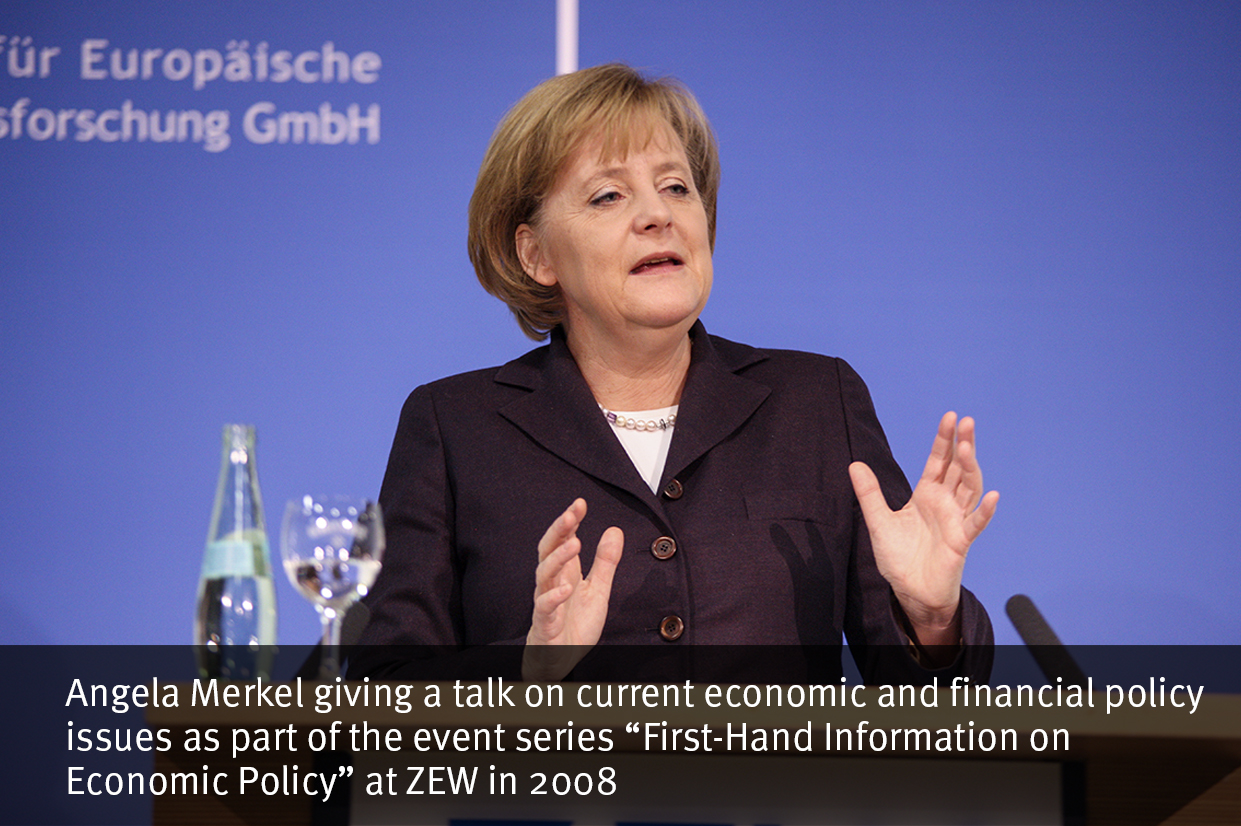
In 2008, German Chancellor Dr. Angela Merkel visits the ZEW as part of the lecture series “First-hand Economic Policy.” Speaking to around 570 guests, she discusses current economic and financial policy issues and presents key aspects of the economic stimulus package planned for 2009.
In 2009, the institute is successfully evaluated by the Leibniz Association for the first time. Based on an excellent evaluation result, the Senate of the Leibniz Association recommends that the federal and state governments continue to support ZEW as an institution of supraregional importance and national scientific policy interest.
In 2010, the international research program “Strengthening Efficiency and Competitiveness in the European Knowledge Economies” (SEEK), funded by the state of Baden-Württemberg, was launched at ZEW. Scientists analyze the most pressing issues in European economic policy through application-oriented research. After more than ten years, SEEK will come to an end in March 2021.
In 2012, the ZEW Research Data Center (ZEW-FDZ) is accredited by the German Data Forum (RatSWD). External researchers can now access various microdata for scientific use at the ZEW-FDZ. The data comes from ZEW surveys such as the Mannheim Innovation Panel (MIP) or the ZEW ICT Survey.
The Leibniz Science Campus Mannheim Centre for Competition and Innovation (MaCCI) is founded. The ZEW and the Faculty of Law and Economics at the University of Mannheim collaborate on scientific projects focusing on competition, regulation, and innovation.
The ZEW research group “Competition and Regulation” begins its work and examines economic issues in the field of competition and regulation. A particular focus is on network industries such as the gas and electricity industries or rail and air transport.
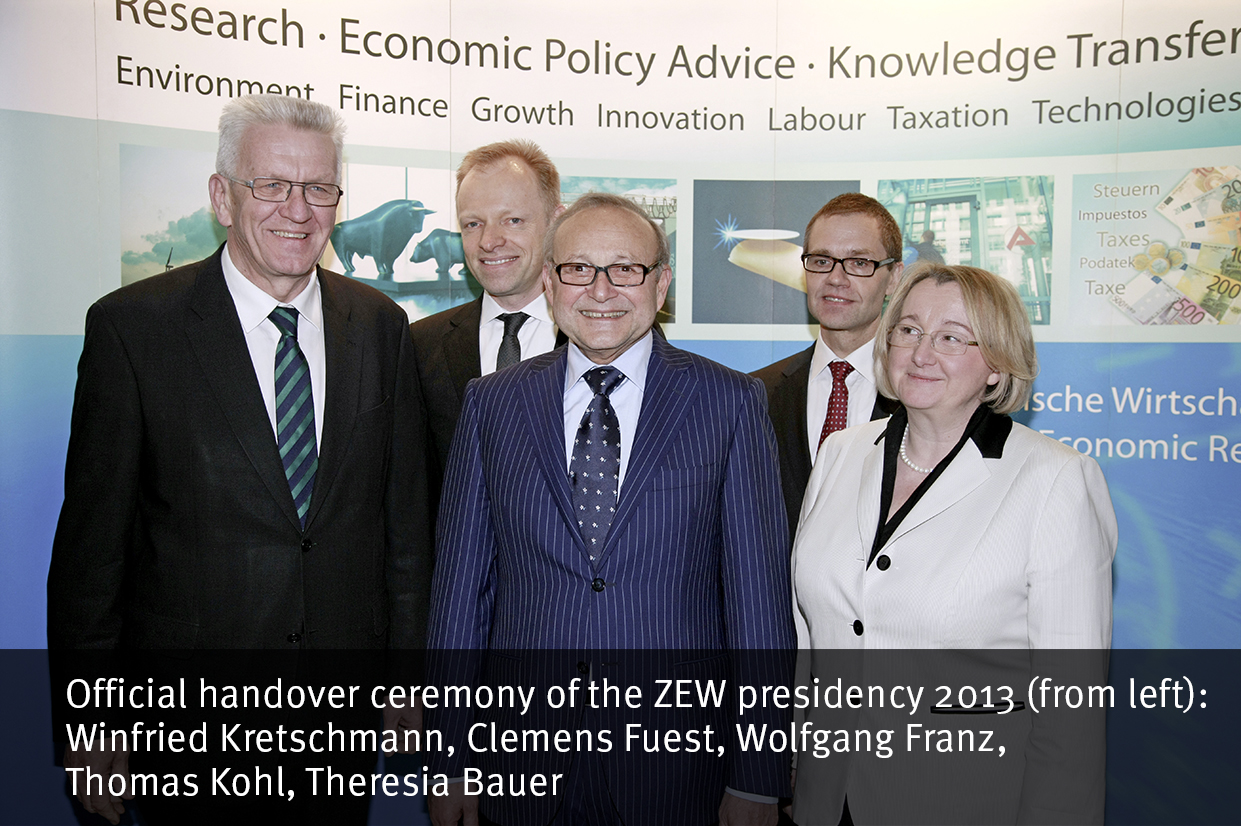
In 2013, Professor Dr. Dr. h. c. Clemens Fuest becomes the new president of ZEW. He succeeds Professor Dr. Dr. h. c. mult. Wolfgang Franz, who is retiring.
In 2014, the Leibniz Science Campus “MannheimTaxation” begins its work as a joint project between ZEW and the University of Mannheim. The main theme is the design of future tax policy against the backdrop of European integration and in view of economic challenges such as digitalization and globalization.
With the ZEW Lunch Debates, the institute establishes a series of discussions in Brussels at the Baden-Württemberg State Representation: ZEW researchers present their research findings and discuss them with representatives from politics and academia. The series is aimed at stakeholders from European institutions, businesses, and the media.
The current ZEW research group “Inequality and Distribution Policy” begins its work. It analyzes social policy measures in terms of their distributional effects.
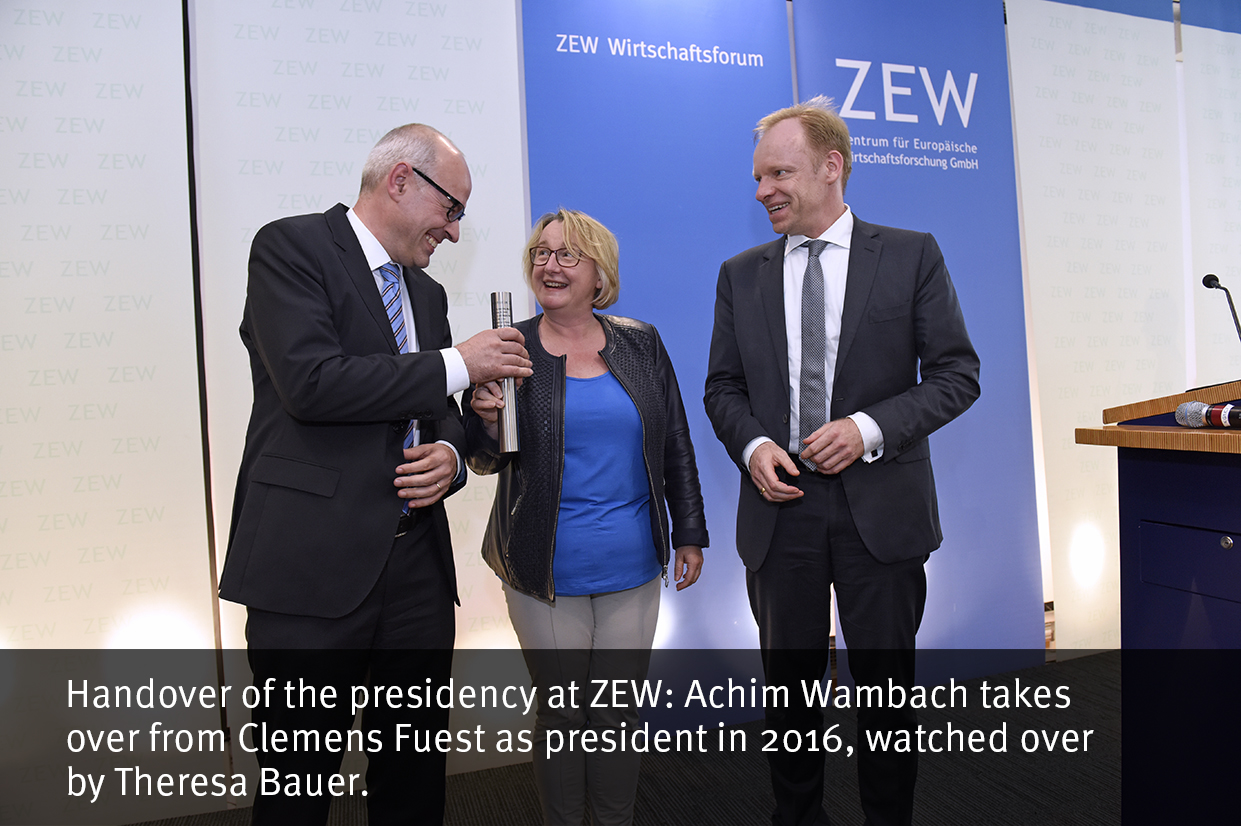
In 2016, Professor Achim Wambach, PhD becomes president of ZEW. He succeeds Professor Dr. Dr. h. c. Clemens Fuest, who moves to Munich to join the ifo Institute.
Shortly before that, Achim Wambach will take over as chairman of the Monopolies Commission for a period of four years, having been a member since 2014. As an independent body, the Commission advises the German government, legislative bodies, and the public on competition policy, competition law, and regulation.
ZEW acquires the institute building at Quadrat L7.1 in Mannheim.
In 2017, Professor Achim Wambach, PhD takes over as chair of the Verein für Socialpolitik (VfS), one of the largest German-speaking associations of economists, for a two-year term.
ZEW participates for the first time as a scientific partner in the YES! – Young Economic Solutions (formerly Young Economic Summit) competition, a Germany-wide school competition focusing on economic and social challenges under the patronage of the Federal Ministry for Economic Affairs and Climate Protection. The teams of students supported by ZEW regularly achieve top rankings.
In 2018, ZEW establishes the Market Design Research Group at the institute, which is dedicated to the analysis and optimization of markets. After evaluating the expansion project, the German Council of Science and Humanities recommends the continued funding of this field of research.
In 2019, Professor Dr. Irene Bertschek, head of the ZEW Research Department “Digital Economy,” will be appointed to the Expert Commission for Research and Innovation (EFI). The EFI's task is to provide scientific policy advice on behalf of the German federal government on the topics of education, research, and innovation.
ZEW is setting up a structured training program for doctoral students in cooperation with the University of Mannheim, thereby further strengthening scientific exchange. Depending on their specialization, doctoral students are trained at the Center for Doctoral Studies in Economics (CDSE) or at the Center for Doctoral Studies in Business (CDSB) in the graduate program at the University of Mannheim.
In 2020, ZEW economist Professor Dr. Sebastian Siegloch receives a Starting Grant from the European Research Council (ERC).
In 2021, the research group “Health Markets and Health Policy” begins its work at ZEW, focusing on the analysis of health markets and the evaluation of health policy measures.
In 2022, the institute and the University of Mannheim establish the Mannheim Institute for Financial Education (MIFE) under the direction of Professor Dr. Tabea Bucher-Koenen and Professor Dr. Carmela Aprea, which is dedicated to comprehensive research on issues related to financial education.
Professor Dr. Irene Bertschek, head of the Digital Economy Research Department at ZEW, is appointed to the newly established Future Council of the German Chancellor in the same year.
In 2023, ZEW undergoes the Leibniz Association's evaluation process again and receives an excellent rating.
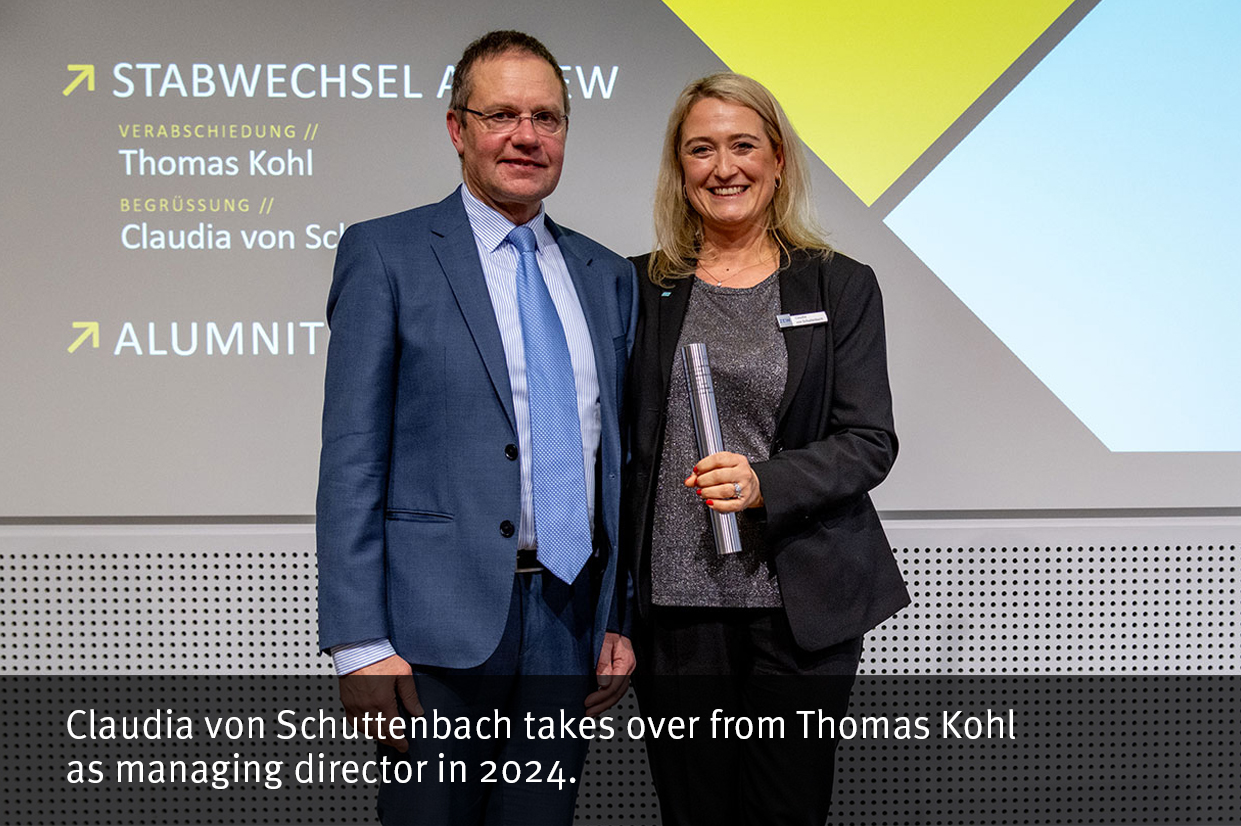
In 2024, Claudia von Schuttenbach took over as Commercial Director. Former Commercial Director Thomas Kohl retired. He had been with ZEW since 1992, including 20 years as Managing Director.
In October of the same year, ZEW President Professor Achim Wambach, PhD becomes a member of the German Ethics Council. The Council deals with ethical, social, scientific, medical, and legal issues, as well as the consequences of research and development on individuals and society.
Current and Past ZEW Presidents
Achim Wambach // since 2016
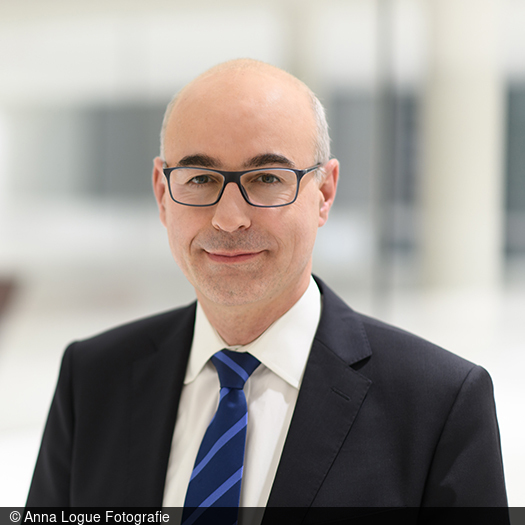
Achim Wambach
ZEW President since 2016Professor Dr. h. c. Achim Wambach, PhD has been the president of ZEW since April 2016 and is professor of economics at the University of Mannheim. He initiated the establishment of the Research Unit “Market Design” as well as the Research Group “Health Care Markets and Health Policy” at ZEW. He also launched the joint doctoral programme with the University of Mannheim. He was a member of the Monopolies Commission from 2014 to June 2022 and served as its chair from 2016 to September 2020. He was chairman of the Verein für Socialpolitik (German Economic Association) for the 2017/2018 term of office. He is also a member of the Academic Advisory Board of the Federal Ministry for Economic Affairs and Energy, which he chaired from 2012 to 2015. In 2024, Achim Wambach was appointed to the German Ethics Council.
Clemens Fuest // 2013-2016
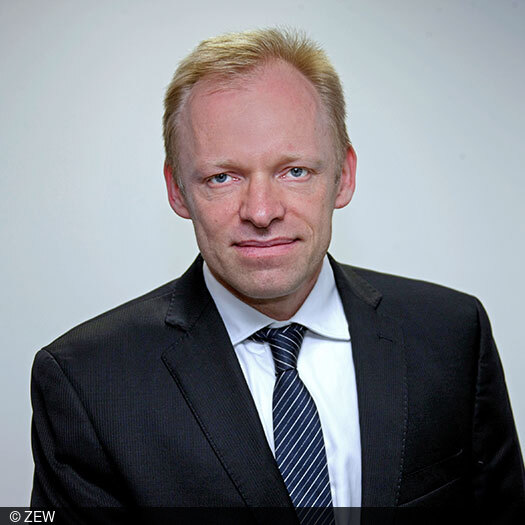
Clemens Fuest
ZEW President from 2013 to 2016Professor Dr. Dr. h. c. Clemens Fuest was President of ZEW from 2013 to 2016. During his tenure, he established the current ZEW Research Group “Inequality and Public Policy” as well as the Leibniz ScienceCampus “MannheimTaxation”. In addition, the international research programme “Strengthening Efficiency and Competitiveness in the European Knowledge Economies” (SEEK) at ZEW was successfully extended under his presidency. Since 2003, he has also been a member of the Scientific Advisory Board at the Federal Ministry of Finance.
Wolfgang Franz // 1997-2013
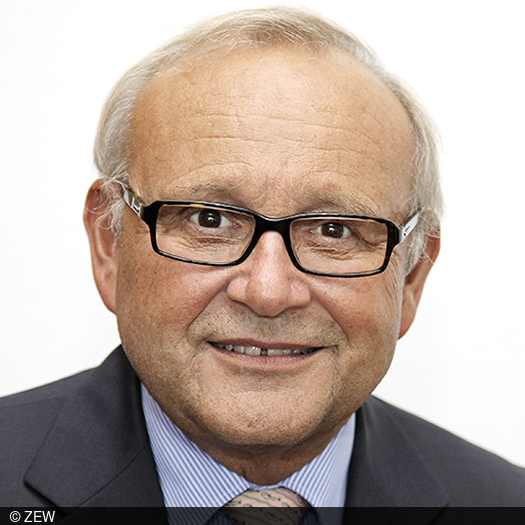
Wolfgang Franz
ZEW President from 1997 to 2013Professor Dr. Dr. h. c. mult. Wolfgang Franz, PhD served as President of ZEW from 1997 until 1997. He aligned the institute’s research agenda more closely with the pan-European context and intensified academic exchange with international research institutions. This, among other things, was reflected in ZEW’s involvement in the international research programme “Strengthening Efficiency and Competitiveness in the European Knowledge Economies” (SEEK). During his presidency, the Leibniz Association included ZEW in its federal and state funding programme due to the high scientific quality of the institute’s research. Wolfgang Franz also initiated the current Research Unit “Digital Economy”. Until 2013, he was chairman of the German Council of Economic Experts. In recognition of his outstanding commitment to ZEW, the Minister President of Baden-Württemberg, Winfried Kretschmann, awarded him the Order of Merit of the Federal Republic of Germany (Cross of Merit 1st Class), at his farewell from ZEW.
Heinz König // 1991-1997
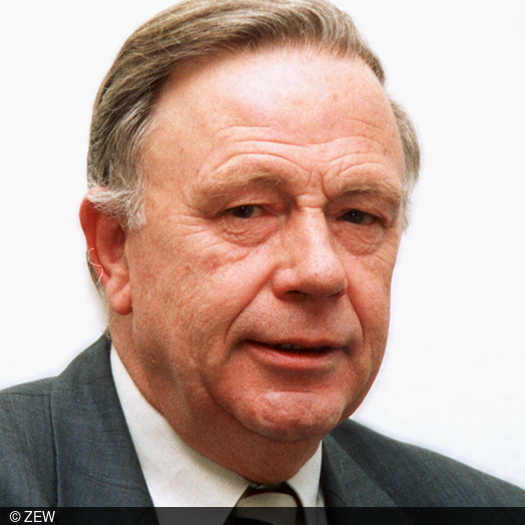
Heinz König
ZEW President from 1991 to 1997Professor Dr. Dr. h. c. Heinz König is the scientific founding father of ZEW Mannheim. As one of Germany’s leading economists, he was instrumental in establishing the research institute and helped ZEW to its current position in the international research landscape. He launched the ZEW event series “First-Hand Information on Economic Policy”, which continues to this day and features speakers from politics, business and academia. In addition, together with 14 companies from the Rhine-Neckar metropolitan region, König was a driving force behind the founding of the ZEW Sponsors’ Association.
Current and Past ZEW Managing Directors
Claudia von Schuttenbach // seit 2024
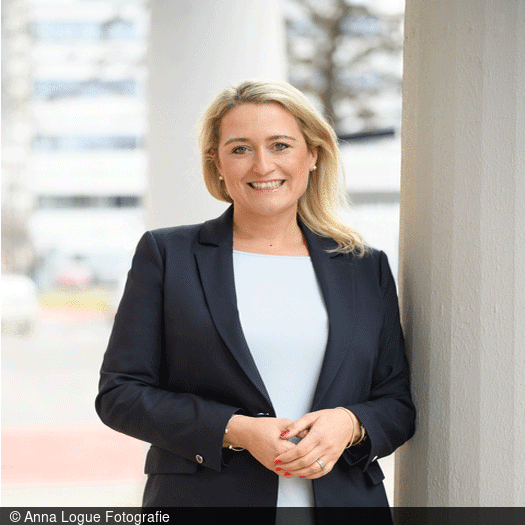
Claudia Schuttenbach
Managing Director since 2024Before joining ZEW, Claudia von Schuttenbach was chancellor of Hochschule Mannheim – University of Applied Sciences, specialising in finance, human resources, legal affairs and construction. She collaborated closely with various academic institutions and authorities and actively participated in statewide working groups addressing leadership topics, bureaucracy reduction, and digitalisation of administration.
Thomas Kohl // 2004-2024
Thomas Kohl
Managing Director from 2004 to 2024Thomas Kohl came to ZEW in 1992. Initially as head of Human Resources, he later took over responsibility for the “General Services” Unit. In 2004, he became the managing director of ZEW. Thomas Kohl has been a member of various national and international working groups, advisory boards and committees, and a visiting professor at two Chinese universities. He initiated and is one of the four founding directors of the Leibniz ScienceCampi “Mannheim Centre for Competition and Innovation” and “MannheimTaxation”.
Ernst O. Schulze // 1991-2004
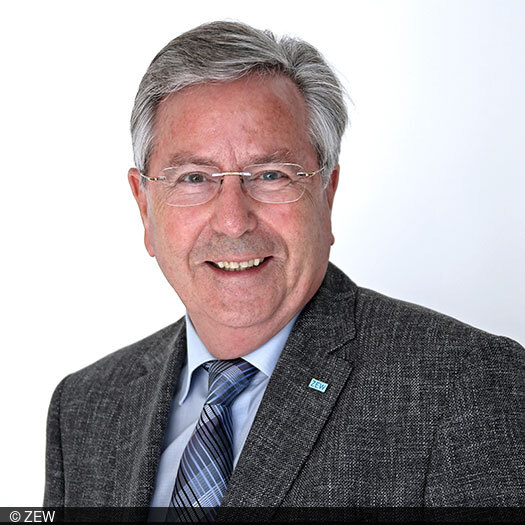
Ernst O. Schulze
Managing Director from 1991 to 2004Ernst O. Schulze joined ZEW at the end of 1990 and, as one of the two founding directors, played a key role in supporting and shaping the institute’s start-up phase. As a science manager, his expertise, experience and contacts in the fields of research and science played a decisive role in the successful development and expansion of ZEW. He was particularly instrumental in introducing modern management tools and techniques appropriate to the scientific field, such as a flexible financial statute and computerised planning and control instruments.