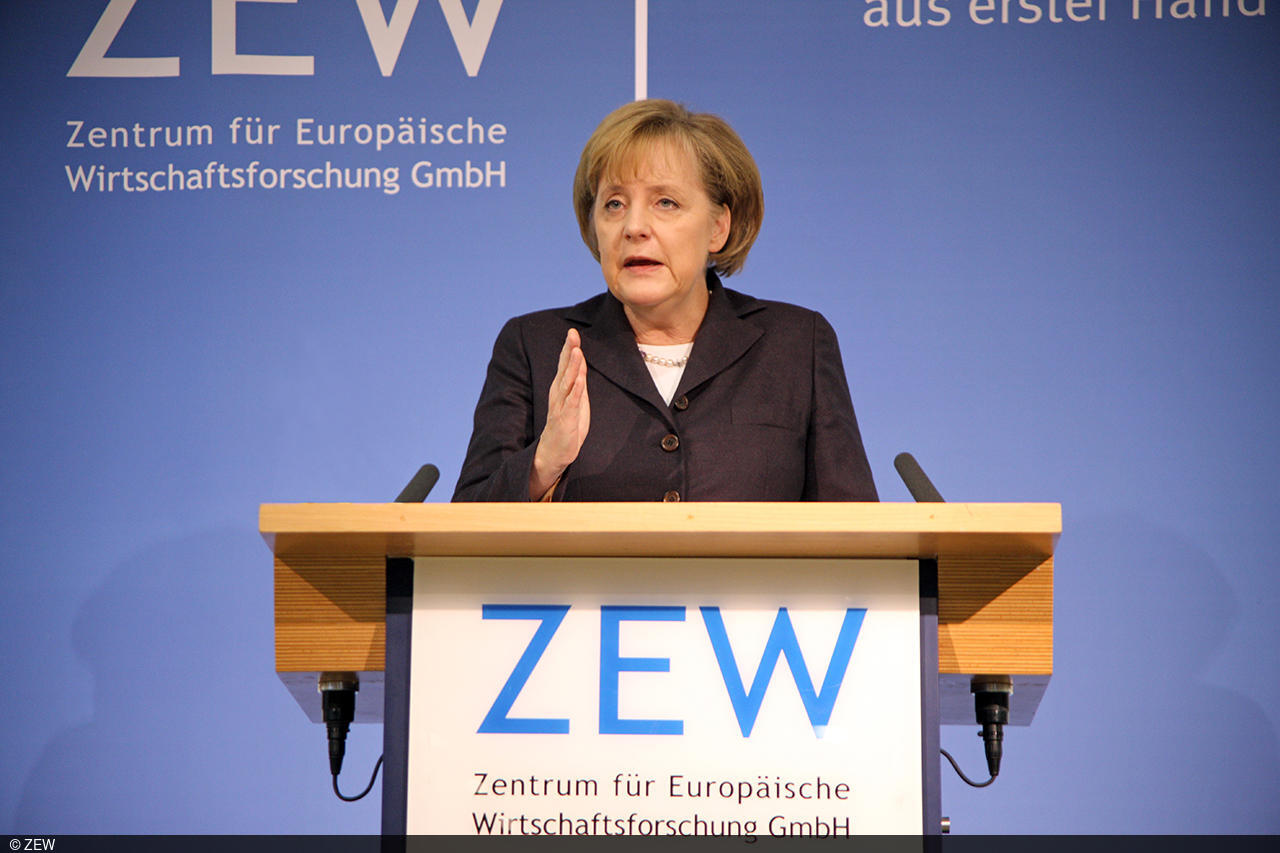
Wolfgang Franz, president of the Centre for European Economic Research (ZEW) and professor at the University of Mannheim, turns sixty-five on the 7th January 2009. He is known to the…
The economic development of many eurozone countries has been levelling up in the last few years. In particular large economies like Germany, France and Italy are increasingly in…
Recipients of unemployment benefits II who are assisted by consortiums (ARGEs) are more likely to start a job covering their expenses. Licensed municipal institutions, however, are…
The leading indices of the German and US stock markets, Dax and Dow Jones, will recover somewhat next year. This is the result of a survey among 250 financial market experts conducted…
In early December, the European Union passed a regulation stipulating that new cars’ CO2 emissions be lowered by 12 grams/km by 2015. Today, a stricter goal as of 2020 is already…
The recession does not stop at Germany’s borders, and many Germans have lost their jobs. In times of economic weakness, employers blame applicants’ unemployment on the economic…
The ZEW Indicator of Economic Sentiment for Germany increased in December 2008 by 8.3 points. The indicator now stands at minus 45.2 points after minus 53.5 points in the previous…
At the World Climate Conference in Poznan, Poland, states entered in negotiations towards a successor agreement to the Kyoto Protocol for the time after 2012. However, a solo run by…