How can the energy transition be driven forward if no one wants to participate? And how can scepticism be turned into acceptance? The second round of the event series organised by ZEW and the MVV Stiftung Zukunft on 22 October 2025 was dedicated to precisely these questions. Professor Martin Kesternich (University of Paderborn/ZEW), Professor Linus Mattauch (Potsdam Institute for Climate Impact Research/TU Berlin), Sara Hagemann (Bertelsmann Foundation) and Dr. Elisabeth Dütschke (Fraunhofer Institute for Systems and Innovation Research in Karlsruhe) discussed the psychological and economic factors of the energy transition and the measures needed to increase public acceptance. The event was moderated by Dr. Oliver Schenker, deputy head of the ZEW Research Unit “Environmental and Climate Economics”.
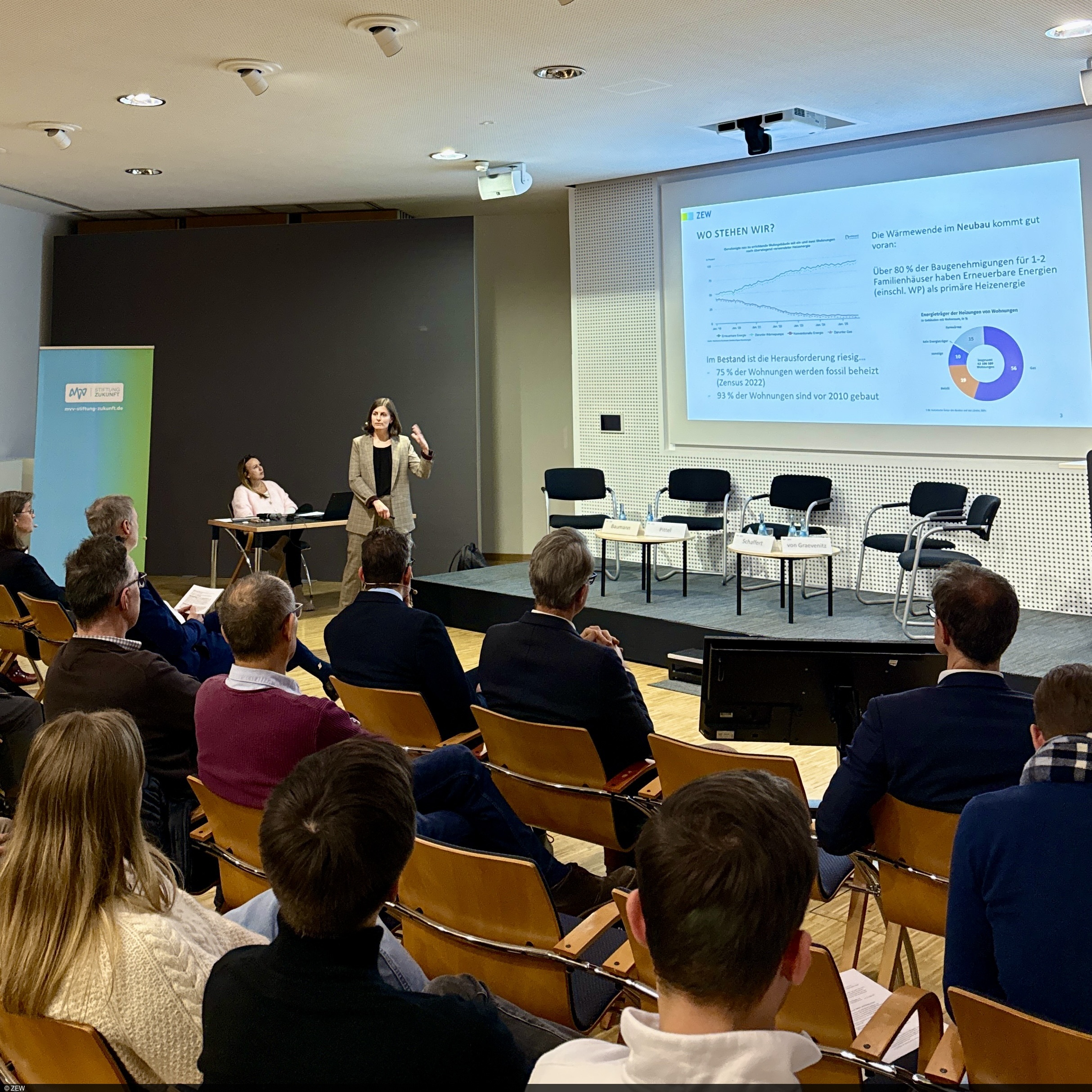
In his welcome address, Dr. Gabriël Clemens, chair of the Board of Trustees of the MVV Stiftung Zukunft, emphasised the significance of the topic, pointing out that acceptance for and the success of the energy transition are closely linked. This required honest and reliable communication, but also respect for different opinions. Clemens emphasised that, after housing and food, energy was one of the most important issues for citizens. Therefore, easily accessible communication channels had to be created. He said that fairness was also essential for acceptance.
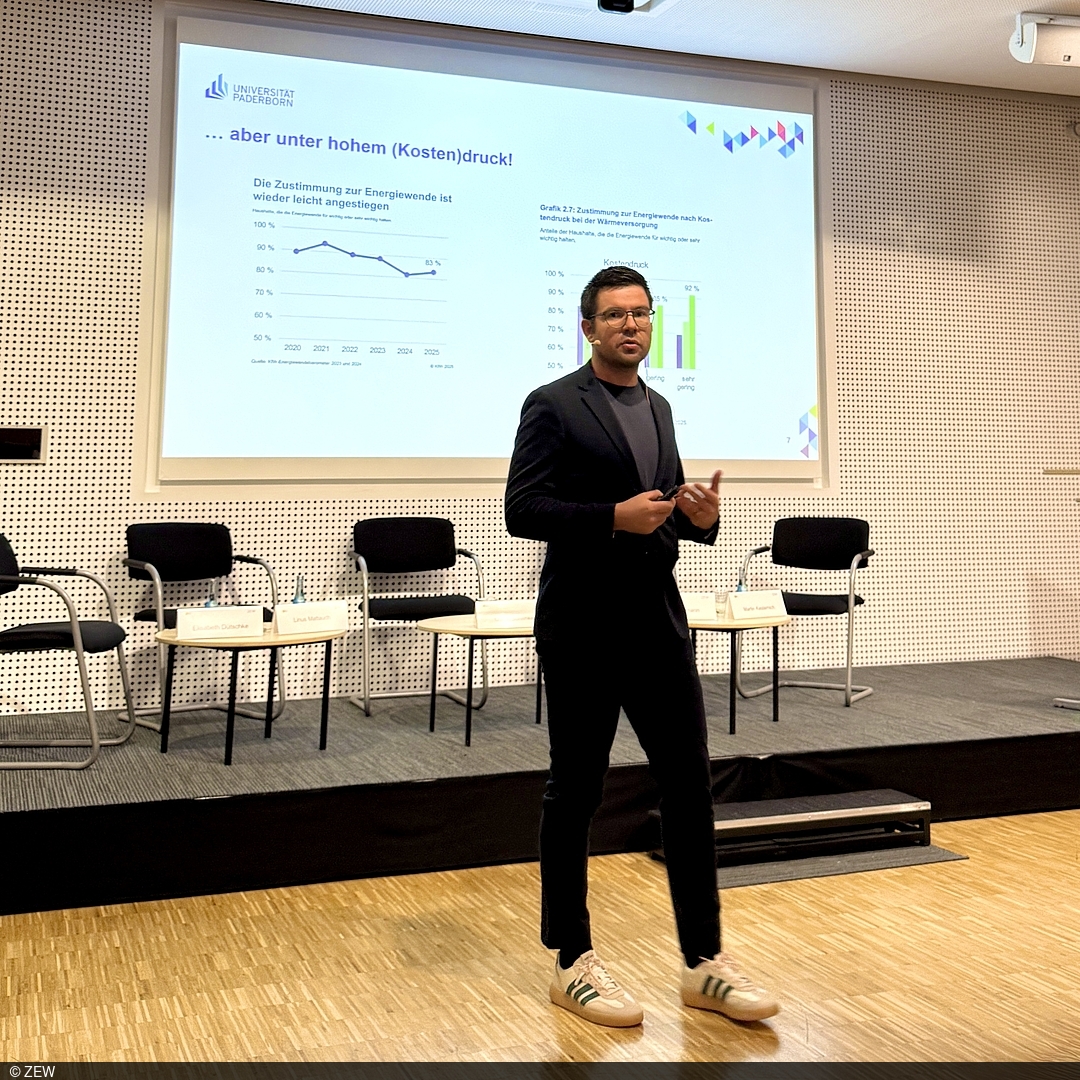
In the subsequent keynote speech, Martin Kesternich addressed the psychological mechanisms within the energy transition and shared insights from a behavioural study conducted in collaboration with MVV. According to the study, support for the energy transition remains very high but depends on the perceived costs. Kesternich said that for concrete measures to succeed, public understanding and transparency about their functioning were essential. As an example, he noted that the Klimageld (‘climate money’), i.e. the redistribution of revenues from carbon pricing to the population, received the least support in discussions because it seemed illogical to many people. Here, the communication needed to be improved.
He also cited other psychological reasons for a lack of acceptance, such as loss aversion (people place greater weight on losses than on gains), the status-quo bias (preferring the existing situation to change) and distrust of information when it comes from political opponents.
In the subsequent discussion round, moderator Oliver Schenker addressed the question of which forms of participation are decisive for acceptance. Sara Hagemann explained that many citizens perceive the energy transition as a burden. Therefore, individual measures – both feasible and affordable – were needed. For example, a person with an old house and little money needed different support than city dwellers connected to an existing heating network. Taking this into account was crucial to ensure that carbon prices were not perceived as a threat.
Elisabeth Dütschke explained the steering effect of the carbon price and pointed out that prices do have an effect in principle, but only up to a certain point. For this reason, appropriate infrastructure measures should precede the introduction of a concept like the Klimageld. People might be able to buy heat pumps, but without available craftsmen and equipment the whole approach would not work. Linus Mattauch said that although many solutions were being discussed, none could be considered perfect. Every policy measure, he argued, had “features” that some found appealing, while others did not. Seventy per cent of acceptance was determined by the message and choice of words and only 30 per cent by the figures. In his opinion, more attention needs to be paid to this.
Martin Kesternich added that there was no alternative but to test and evaluate different types of communication if larger and more heterogeneous groups were to be reached. Another crucial factor was planning stability regarding future policies – an aspect that the scientific community often mentioned in its feedback to policymakers.
Dütschke and Hagemann cited the topic of smoking as a positive example of society dealing with a cross-cutting issue. However, positive narratives had to be convincing, which Hagemann doubted would be the case if politicians promised something that the population did not believe they could achieve. Dütschke stressed that narratives had to be jointly negotiated between the public, academia and politics. This, she concluded, was essential for broad acceptance.
![[Translate to English:] Eine Podiumsdiskussion mit fünf Personen auf einer Bühne. Vier Frauen und ein Mann sitzen in einer Reihe auf modernen Stühlen. Hinter ihnen befindet sich eine große Projektionsfläche mit einer farbigen Grafik und Text zur Energiewendepolitik. Die Teilnehmenden sprechen miteinander, einige halten Notizen in der Hand. Vor ihnen stehen kleine Tische mit Wasserflaschen und Namensschildern. Der Raum wirkt professionell ausgestattet, mit hellen Wänden und einem Holzboden.](/fileadmin/_processed_/b/6/csm_MVVxZEW_20112025_525b715938.jpeg "MVVxZEW_20112025")