Digitalisation in the National Budget
Federal Digital Budget Disclosed for the First Time
Digitalisation is one of the most important future-oriented tasks for the public sector – but how much does the government actually invest in this field? A team of researchers from ZEW’s “Digital Economy” and “Corporate Taxation and Public Finance” Units for the first time systematically examined the financial resources ear- marked for digitalisation in the federal budget. The analysis of more than 20,000 budgetary items in the federal budgets of 2019, 2021, 2023 and 2024 shows that the German government planned an expenditure of more than 60 billion euros.
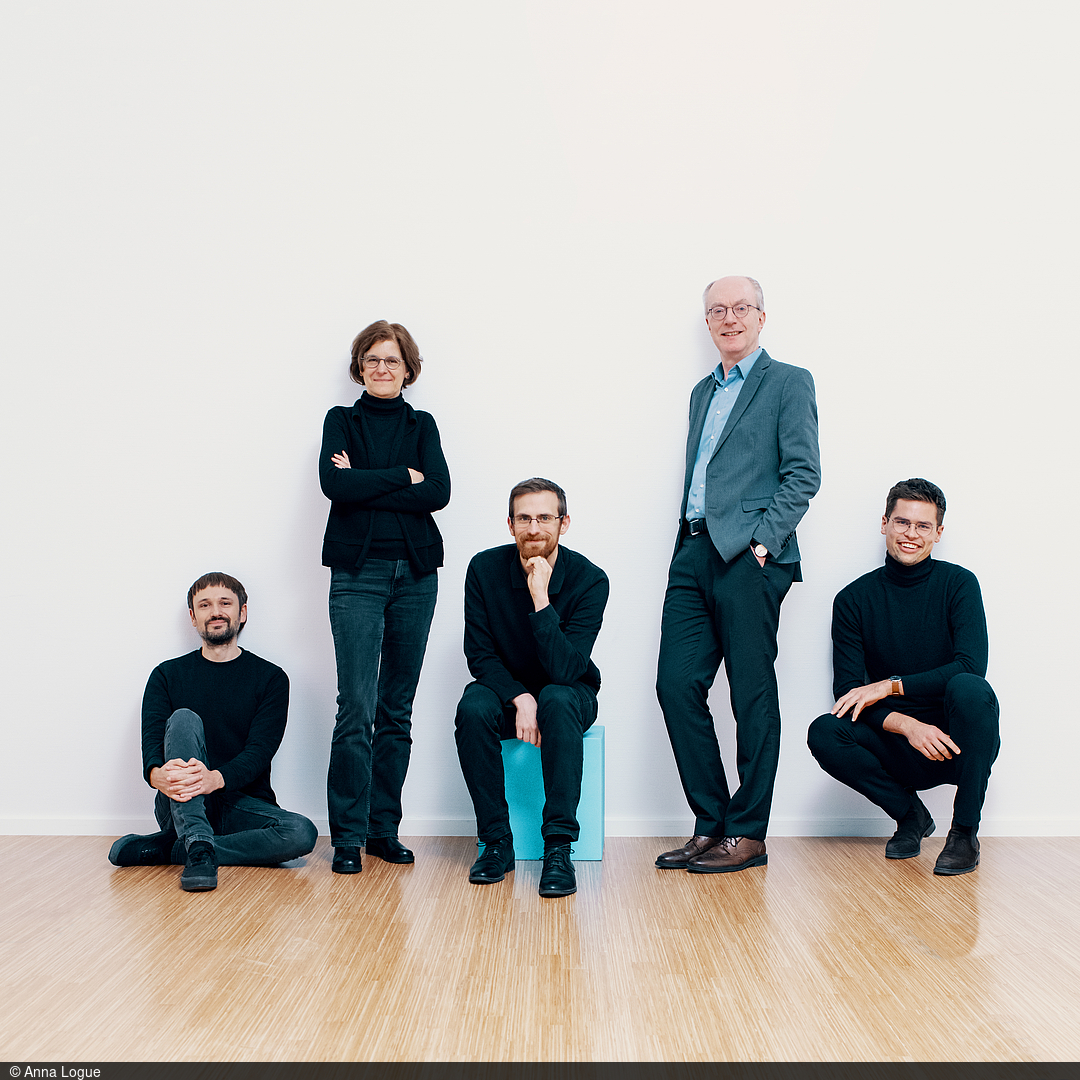
(Thomas Niebel, Irene Bertschek, Patrick Breithaupt, Friedrich Heinemann and Jacob Schildknecht (from left to right))
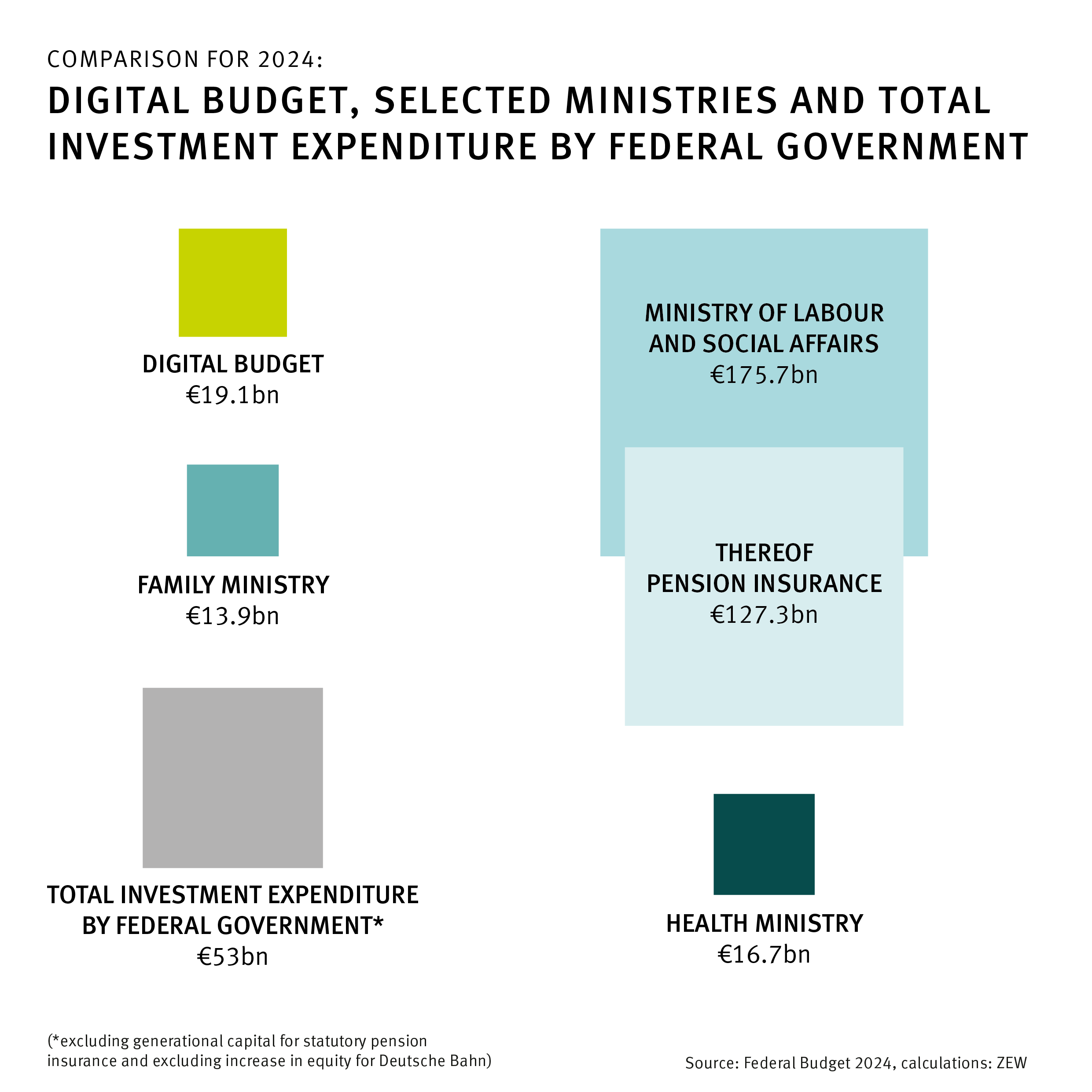
A team of researchers from ZEW’s Research Units “Digital Economy” and “Corporate Taxation and Public Finance” for the first time systematically examined the financial resources earmarked for digitalisation in the federal budget. For the budget years 2019, 2021, 2023 and 2024, planned expenditure is more than 60 billion euros: Depending on the definition used, digitalisation expenditure ranges between 62.2 and 67.1 billion euros. The calculation is based on an evaluation of more than 20,000 budget items. However, the lack of a systematic structure and the insufficient level of detail in the explanations of these items pose considerable challenges.
Between 2019 and 2023, planned expenditure on digitalisation increased significantly or even more than doubled. One major driver was the COVID-19 pandemic, which triggered additional investment in digital infrastructure and administrative processes. The analysis highlights several key developments:
Growing importance of digitalisation: Federal digitalisation spending has more than doubled since 2019 and has gained significantly more importance overall.
Focus on administration: The largest share of expenditure is allocated to the digitalisation of public administration, followed by digital infrastructure and research and innovation.
Efficacy is crucial: A successful digitalisation policy depends not only on the amount of funds allocated but also on their effective and efficient use.
Lack of transparency: So far, digital expenditure has not been systematically tracked in the federal budget, which complicates detailed analysis.
The findings of the study, which was conducted for the think tank Agora Digitale Transformation, show that a systematic presentation of a ‘digital budget’ could help to make digitalisation expenditure more visible and thus anchor digitalisation more firmly in the budget in the long term. At the same time, it is clear that, alongside the amount of funding, its targeted use is crucial to the success of the digital transformation.

Thomas Niebel
ZEW Research Unit „Digital Economy““There is no standardised system that would make the digital spend transparent. At present, it is not always clear from an external perspective which public funds are spent on digitalisation measures. This should be addressed, especially when considering that digitalisation is one of the major transformations this country is experiencing.”

Digital Economy
The Research Unit “Digital Economy” is renowned for its expertise in measuring digitalisation and analysing its economic impact.
About the Research Unit
Corporate Taxation and Public Finance
The “Corporate Taxation and Public Finance” Research Unit addresses questions related to corporate taxation and empirical public economics within the context of European integration.
About the Research Unit
Contact

Prof. Dr. Irene Bertschek
Head Email irene.bertschek@zew.de Phone +49 (0)621 1235-178
Prof. Dr. Friedrich Heinemann
Head Email friedrich.heinemann@zew.de Phone +49 (0)621 1235-149