Absence Rates
Call In Sick or Go Into Work? What Research and Practice Reveal
Absence due to sickness is increasingly the focus of economic and political discourse. In the interview, Nicolas R. Ziebarth, head of the ZEW Research Unit “Labour Markets and Social Insurance”, explains the current reform proposals from a scientific perspective and shows what measures can effectively reduce absence rates.

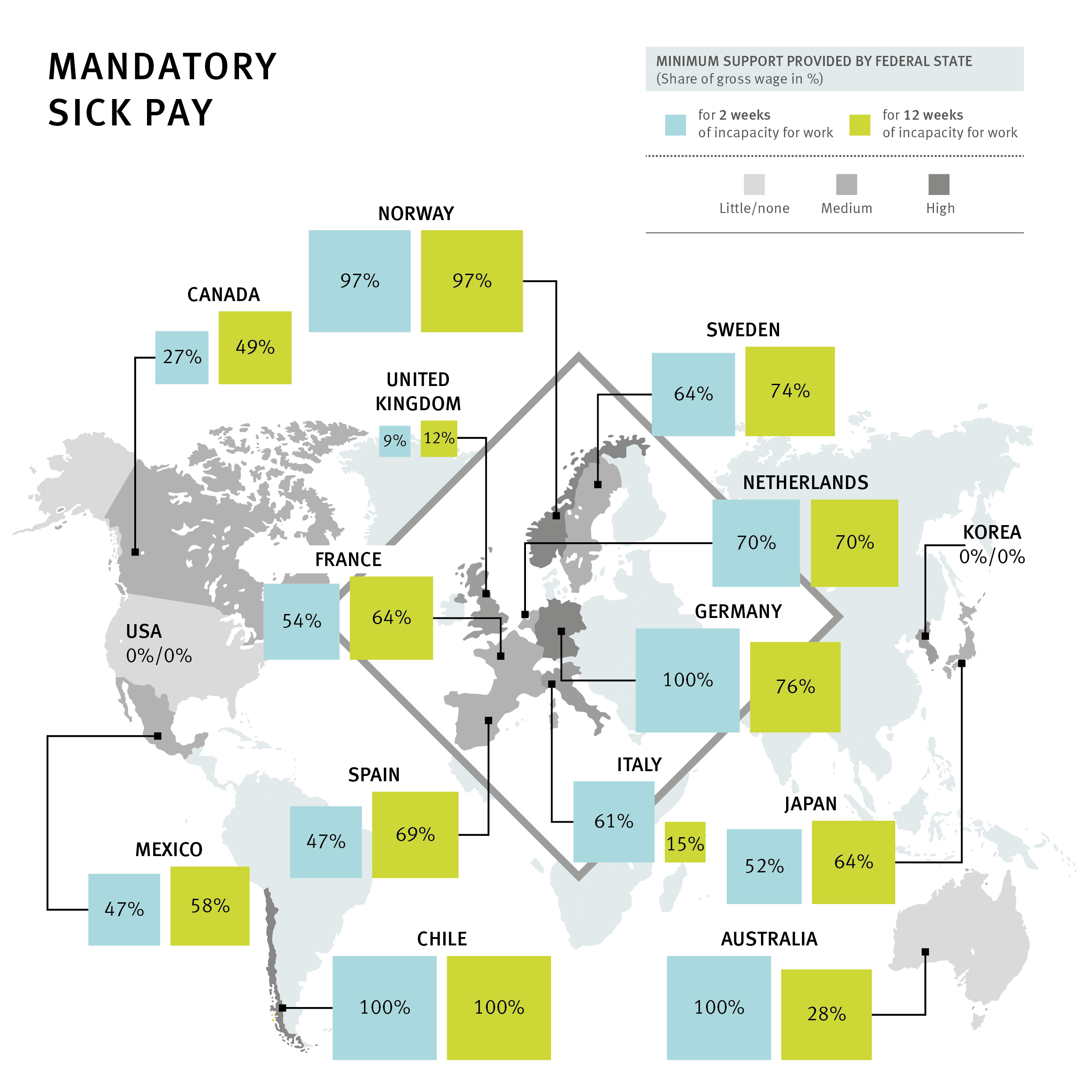
ZEW: Some companies and some politicians are calling for the introduction of waiting periods or lower sick pay. In 1996, following a similar debate, the then federal government – comprising the CDU/CSU and FDP – reduced sick pay to 80 per cent of gross wage for a period of six weeks of incapacity for work. This was subsequently reversed in 1999 by the newly elected red-green coalition government. Was the reform a failure?
Nicolas R. Ziebarth: Germans consider it socially unjust to be penalised for being ill. That is why most trade unions successfully negotiated the measure away by collective bargaining. At the time, employers in almost all industries agreed to voluntarily continue to pay 100 per cent of wages, making the statutory reduction blunt sword. Moreover, the sick pay cut exacerbated inequality across jobs because it primarily affected employees in lower-paid professions who were not covered by collective agreements. Since then, no party has raised the issue in a federal election campaign.
Are there also scientific reasons for or against waiting days and temporary wage cuts?
Studies do show that measures such as waiting days or the reduction of paid sick leave (‘wage replacement rate’) do indeed reduce absence rates on average. For example, if the wage replacement rate were reduced by 20 per cent, the number of sick days taken would also fall by 20 percent – but only for a good half of all employees in the private sector, especially those in jobs not covered by a collective agreement, who would be effectively affected by the measure.
However, at the same time, cuts in sick pay would result in more presenteeism, in other words, employees working sick. This is an undesirable consequence in itself, but particularly so if these employees working while ill are infectious – and then infect co-workers. In economics, this is referred to as negative externalities.
Also, a study from Sweden shows that waiting days would lead to an unnecessary prolongation of existing periods of reported illness, because employees do not want to risk having to pay for the waiting day again in the event of a relapse.
The reason is that the waiting day applies for each new episode of illness and means a loss of income of a good 200 euros gross per waiting day for an average earner.
In your studies and interviews, you instead advocate for part-time sick leave based on the Swedish model. How is that supposed to work?
Part-time sick leave would indeed be a good solution. It would modernise our system of paid sick leave and make it more flexible. In the Scandinavian countries, the part-time sick leave approach has been applied for decades and proven its effectiveness. Depending on the nature of the illness and the job, it is indeed possible in certain cases to work half a day instead of a full one: for example, people can work a few hours from home with a mild cold, back pain or mental health conditions. However, the doctors issuing the sick notes would need to be trained accordingly.
If just ten per cent of sick days – a good 900 million – could be converted into half-day sick leaves, the German economy would gain around 45 million working days. This is roughly the same as if a national holiday were abolished.
Last year, some companies made headlines for paying attendance bonuses. That sounds like a self-contradiction. Where does this idea come from?
Studies in psychology and behavioural economics show that rewards are more effective than penalties. Companies could design positive incentive systems which reward employees with fewer days of absence with cash bonuses, in other words ‘attendance bonuses’. But these must be designed wisely and depend on the number of days of absence. Research has also shown that ‘all-or-nothing’ bonuses can lead to undesirable behavioural reactions among employees.
Because absenteeism always reflects the job satisfaction of the workforce, firms have many opportunities to develop targeted measures to reduce absence. As a general rule, employees will be less likely to take sick leave when their job satisfaction is high and they identify with their role and the company.
For several years now, accident insurance providers have been promoting occupational health management. Is there anything companies could do in this regard?
There is an example that clearly illustrates how absenteeism could be reduced through measures that are sometimes easy to implement. By international standards, flu vaccination rates in Germany are very low, at around one-third of adults – and this is despite a significant rise in absence rates due to various colds and flu since the end of the COVID-19 pandemic. One reason is that, following the pandemic experience, some people are much more cautious about colds and report sick more readily.
This could be countered very effectively by motivating employees and offering low-barrier options for flu and Covid shots through occupational health management.

Labour Markets and Social Insurance
The Research Unit “Labour Markets and Social Insurance” examines institutional frameworks and structural changes of labour markets in Europe and America. It analyses labour market outcomes of individuals, firms and regions. Specifically, it studies the consequences of education and (health-related) social insurance for employment, wages, and equality of opportunity.
About the Research Unit
Contact