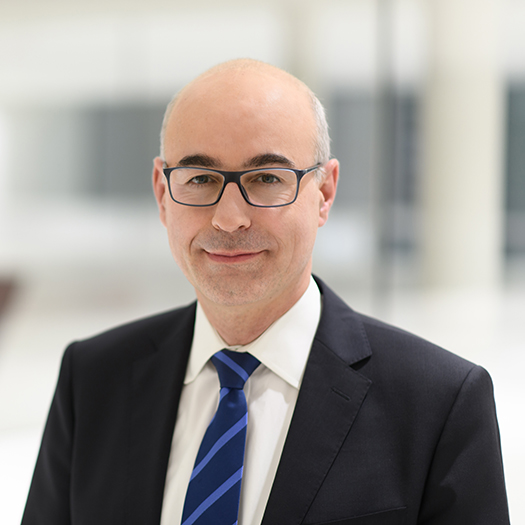
Achim Wambach
Greater than the sum of its parts: “We” as the key to impactful research
An inconspicuous word with considerable power
It consists of just two letters and one syllable. And yet it perfectly encapsulates one of the most profound questions facing individuals, institutions and society at large: When do individuals become “we” – and who belongs to this group?
Linguistically, “we” is a common pronoun – grammatically simple, yet semantically dense. Unlike “I”, “we” presupposes a boundary: an inside and an outside, a dimension of belonging as well as exclusion. Language creates social reality; whoever says “we” constructs a community while simultaneously drawing a boundary line. The power of this tiny word lies in this duality: “we” both connects and divides.
Sociology has long grappled with the concept of “we”. Émile Durkheim demonstrated that social cohesion emerges not just from shared interests, but more particularly from shared symbols, practices and morality. Similarly, Georg Simmel showed how groups forge their identity at the intersection of proximity and distance; the “we” emerges from the tension between inclusion and exclusion. From this perspective, “we” is not merely an aggregation of individual interests, but an emergent social reality that arises through the establishment of a collective. Later approaches have emphasised that “we” is not a given; it must be continually renegotiated. This is underscored by Henri Tajfel’s “minimal group paradigm” experiments, which show that even the arbitrary sorting of individuals into two groups (based on something as trivial as a colour preference or coin toss) is enough for participants to systematically favour their own group when distributing resources. In an increasingly fragmented society, where people act in many different roles and contexts, the collective must be constantly nurtured, strengthened and redefined.
“We” implies interaction; economists analyse “we” using game theory. The central question is: When do rational individuals choose to cooperate? The Prisoner’s Dilemma, a famous game theory scenario, illustrates the underlying problem in its purest form: Two suspects who cannot communicate are incentivised to confess – even though they would be better off by remaining silent. The logic of “every man for himself” thus produces a collectively suboptimal outcome.
The solution to this dilemma lies in repetition, in trust-building and foresight. Two actors in a game calculate differently if they know they will meet again. A “tit-for-tat” strategy – i.e. cooperating as long as your counterpart does, but punishing breaches of trust – proves superior in repeated games. Research communities are an ideal example of this set-up: Researchers meet repeatedly, reputation is paramount and the time horizon is long. In this scenario, cooperative gains far exceed the sum of what any party could achieve alone, thus ensuring win–win outcomes. The opposite of this is the zero-sum game – that is, when one person’s gain is another’s loss.
Why “we” is particularly important today
In 2025, this insight was much more than abstract theory. Climate change, geopolitical uncertainties, technological upheaval and profound structural change all present coordination problems that no societal actor can solve alone. Leaders who succumb to zero-sum logic lose the ability to solve problems collectively. Similarly, institutions that fail to cultivate the common good become sabotaged by particularist interests. Furthermore, scientific endeavour that fails to align itself with a broader social mission risks sacrificing its legitimacy. The question of “we” thus informs whether we can solve the defining challenges of our era.
The four levels of “WE” at ZEW
At ZEW, we embody this “we” in our daily work. While research is frequently portrayed as a solitary endeavour – the lone researcher toiling away at 3 a.m., developing a new hypothesis or evaluating datasets – the truth is quite different. Knowledge is generated through dialogue, dissent, replication and critique; today, the single-author paper is the exception, not the rule.
The “WE” of researchers
Our researchers are the core “WE” at ZEW – the immediate community where questions are formulated, methods developed and insights produced. The “WE” of our researchers determines whether the institution is a true intellectual community or merely a collection of isolated projects. This applies to our nine research units, which often work jointly across research areas. In 2025, our units closely collaborated on the year’s most pressing issues: structural change, weak growth, climate change and artificial intelligence. The quality of our research hinges on this first level of “WE” – including in particular a continuous exchange of ideas, critical feedback on preliminary findings and openness to peer review.
The “WE” of the institution
The second level of “WE” at ZEW is the institution – namely, its history, mission and responsibility to our sponsors, the scientific community and society at large. At this level of “WE”, reputation is earned collectively. The thirty-fifth anniversary of ZEW in 2026 provides an opportunity to reflect on what underpins our institution and what we aim to build on in the future.
The “WE” of our networks
The third “WE” at ZEW is that of our networks, which arise through our work on committees and commissions, through collaborations with German and foreign research institutions, and through joint projects both within and outside the Leibniz Association. These networks facilitate ongoing exchange, thus turning standalone projects into trusting partnerships. In 2025, we expanded our ties to the broader European research landscape, forming new partnerships and platforms for dialogue that bring together academics, policymakers and business leaders under a common roof.
The “WE” of social responsibility
Society at large represents the fourth and broadest dimension of “WE” at ZEW: We act as a player in the democratic discourse of the public sphere. In this discourse, which is different from exchange within a research community, we provide evidence-based policy advice to decision-makers in the realms of government and business. In 2025, we pursued this responsibility in various ways, evaluating public investment programmes, analysing options for the reform of the social insurance system, and advising on the design of climate policy and the competitiveness of European companies. In addition to their publishing activities, our researchers take on impactful roles – e.g. serving on the Commission of Experts for Research and Innovation, on the German Science and Humanities Council, on the Pensions Commission and on the German Ethics Council. These commitments underscore that we treat policy advising not just as a task, but as a core mission.
The societal impact of our work is supported by various initiatives in science communication: the ZEW Co-Design platform offers a space for the cross-fertilisation of research and practice; new outreach formats such as the ZEW podcast Wirklich Wirtschaft (‘Economics Actually’) are driving the dissemination of research insights; and our publication series ZEW Policy Initiatives is reconceptualising policy advice.
Outlook: Shaping the future together
ZEW will continue to work across these four levels of “WE” in the coming year. Yet we are also expanding into new domains, including building a research unit for health economics and partnerships that transcend established research centres. The most urgent economic questions all demand new partnerships and new perspectives: How to transition to climate neutrality? How to achieve sustainable healthcare financing that copes with demographic change and innovation in the medical field? And how to design a competitive European industrial policy that does not undermine competition in general?
Sustainable economic policy is not created in a vacuum. It emerges from a dialogue between academics, policymakers and civil society, through the distillation of guidance from insight, so that analysis can be translated into actionable recommendations. ZEW is helping to shape this transformation.
We research, we advise, we connect – and we enable.
This annual report offers a glimpse into the “WE” of ZEW: the people, projects, and questions that drive us. Far from being a mere collection of facts and key figures (although these are not neglected), this report spotlights what becomes possible when research, networking, policy advising converge under promising enabling conditions. In the language of game theory, we don’t play zero-sum games. Rather, we focus on win–win outcomes – as showcased throughout this report.
Contact