Fossil Fuels
How Economic Arguments Strengthen the Case for the Abolition of Fossil Fuel Subsidies
Fossil energies are still being heavily subsidised – but what are the consequences for climate action and national economies? ZEW economists Sebastian Rausch and Tim Kalmey from the Research Unit “Environmental and Climate Economics” show that a phase-out of these subsidies would not only help to considerably reduce emissions. It would also be in the self-interest of many countries as it would enable them to generate additional revenue through reforms, achieve welfare gains and, in many cases, meet their climate targets.

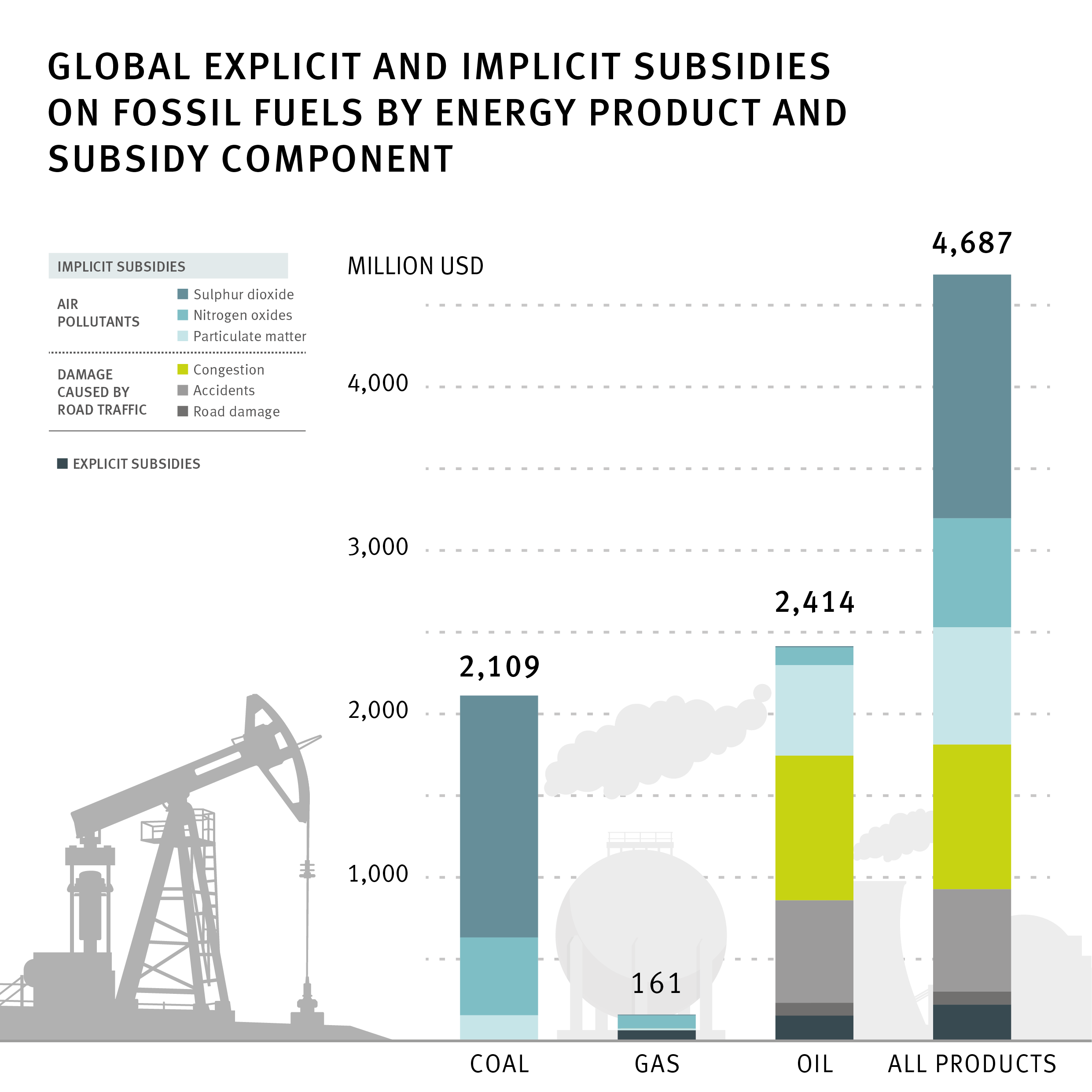
Fossil energies such as coal, oil and natural gas are still being heavily subsidised worldwide. In addition to support measures for specific industries, including, for example, tax exemptions or reduced energy taxes, a key element of subsidies is that the social costs arising from fossil fuel use – in particular the health impacts of air pollution – are not factored into the price. These so-called external costs are borne by society at large.

Tim Kalmey
ZEW Research Unit “Environmental and Climate Economics”“Phasing out explicit subsidies would only have a limited effect on CO₂ emissions. It is crucial that also the local externalities of fossil fuels, especially the harmful effects on health caused by local air pollution, are factored in. We estimate that this would reduce global CO₂ emissions by 32 per cent.”
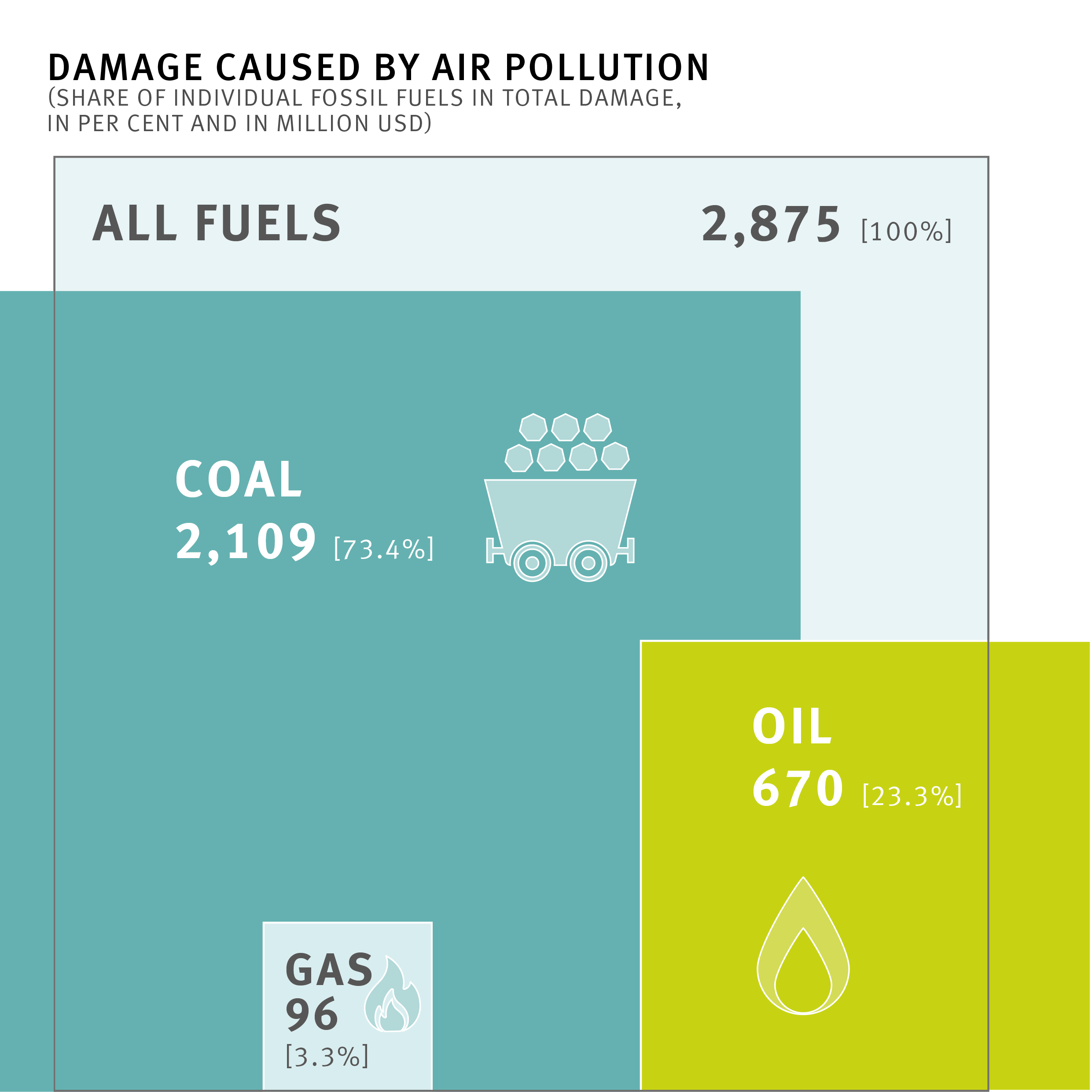
Global climate action is progressing only slowly. A major obstacle is that, while the benefits of reducing CO₂ emissions are felt globally, the costs of climate protection measures are incurred mainly at the national level. This contrast is not easy to reconcile and makes it difficult to coordinate policy measures.
A ZEW study examines the potential of phasing out fossil fuel subsidies to overcome this dilemma. The study focuses on the question as to whether countries have incentives to reduce the use of fossil fuels independently of global cooperation. The findings show that this is often the case: By phasing out explicit and implicit subsidies, countries not only could reduce emissions but could also generate additional tax revenue, boost their economic welfare and lower the costs of meeting national climate targets – particularly by taking greater account of local environmental and health costs.
The study also shows that around a third of countries could meet their climate targets simply by phasing out fossil fuel subsidies, without the need for additional measures such as carbon pricing. A comprehensive global elimination of these subsidies would reduce global CO₂ emissions by around 32 per cent, thereby making a decisive contribution to achieving the Paris Agreement’s 2-degree target by 2030.

Sebastian Rausch
ZEW Research Unit “Environmental and Climate Economics”“The unilateral elimination of explicit and implicit subsidies on fossil fuels would improve public finances in virtually all countries, generate considerable additional fiscal revenues and significantly reduce the economic costs of achieving the climate targets.”

Environmental and Climate Economics
The Research Unit “Environmental and Climate Economics” investigates the role that individual and collective human behaviour, markets and institutions play in the emergence and solution of environmental problems. We focus in particular on issues of climate change and sustainable energy supply.
About the Research Unit
Contact

Tim Kalmey genannt Beckmann
Researcher Email tim.kalmey@zew.de Phone +49(0)621 1235-163